


Sick of shots that swing from sour to bitter and you have no idea why?
Shot timer logs turn the mystery into numbers you can read.
They show when a shot finishes too fast (sour) or drags too long (bitter), and reveal spikes that mean channeling.
In this post you’ll learn the timing patterns to watch, the one change to try first, and how to log results so you stop guessing and start pulling repeatable, better-tasting shots.
Interpreting Shot Timer Logs to Diagnose Sour and Bitter Espresso

Shot timer logs turn guesswork into data. Every pull generates a timing pattern that ties directly to what you taste. A shot that blows through too fast usually lands sour and thin because water didn’t stick around long enough to pull sweetness or body. A shot that drags forever yanks out harsh, bitter stuff that should’ve stayed behind. Your timer catches these patterns as curves, timestamps, and flow changes that map straight to the cup.
Most espresso recipes hit their sweet spot between 25 and 30 seconds. Inside that window, water has time to dissolve sugars, acids, and oils in decent proportion. You get a shot that tastes sweet, clean, full. Anything under 20 seconds? Almost always sour, acidic, hollow. Extraction quit before sweetness showed up. Push past 35 seconds and you’re into bitter, astringent, burnt territory because water kept going after the good stuff was gone. These aren’t random numbers. They reflect solubility chemistry and how water moves through coffee at standard pressure.
But timing alone doesn’t tell the whole story. Curve shape matters. A smooth, steady climb from zero to your target yield means even flow and balanced extraction. Jagged spikes, sudden jumps, flat segments? That’s channeling, uneven tamping, grind problems creating pockets of over and under extraction in the same puck. Pre-infusion length affects taste too. Too short and you risk channeling. Too long and you might stall the ramp, inviting sourness. When your log shows a clean curve and lands in the 25 to 30 second range, taste should follow: balanced acid, natural sweetness, minimal bitterness.
Sour timing patterns: Steep volume curve finishing before 20 seconds, early surge then quick drop, high initial flow with weak resistance.
Bitter timing patterns: Slow, dragging curve past 35 seconds, shallow slope, long tail with barely any flow at the end.
Timing thresholds: Under 20 seconds signals under extraction and sourness. Over 35 seconds signals over extraction and bitterness.
Smooth vs. jagged curves: Smooth means even puck prep and stable flow. Jagged means channeling, uneven tamp, particle size chaos.
Pre-infusion timing: Short or skipped pre-infusion raises channeling risk and sourness. Too long can stall extraction and flatten the curve.
Grind adjustments based on timing: Shot finishes under 22 seconds? Grind finer. Exceeds 35 seconds? Grind coarser. Make one or two clicks at a time and log again.
Shot Timer Log Components That Influence Espresso Flavor
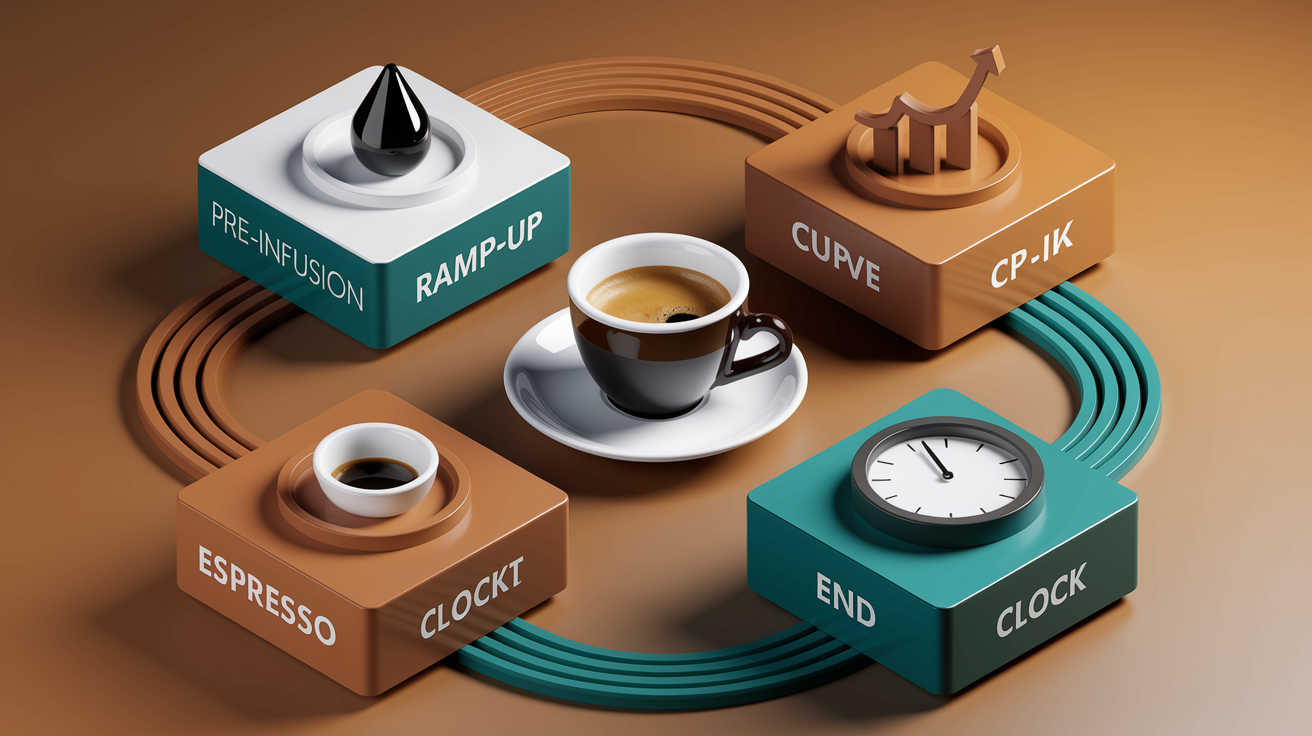
A complete shot timer log breaks extraction into phases: pre-infusion, ramp up, peak extraction, tail. Pre-infusion is the low pressure wetting phase where water saturates the puck without building full pressure. Ramp up is the jump from pre-infusion to stable extraction pressure, usually around 9 bar. Main extraction is where most soluble material dissolves and flows into the cup. The tail is when flow slows and concentration drops. Time stamped logs let you see exactly when each phase starts and ends, how long each lasts, and whether transitions are smooth or all over the place. One number (total time) becomes a diagnostic story.
Logs also show flow rate stability and mechanical weirdness. A steady slope means consistent resistance and even water distribution through the puck. Sudden spikes? Water found a crack or weak spot and rushed through. That’s channeling. Abrupt drops or flat segments suggest clogging, uneven tamping, grind clumping. Pressure signatures show whether your pump holds stable at 9 bar or bounces around. If pressure dips mid extraction, your log flattens and taste suffers. Either sour from lost extraction or bitter from uneven contact.
| Stage | What Logs Show | Taste Impact |
|---|---|---|
| Pre-infusion | Low or zero flow, time before pressure ramps, wetting duration | Too short = channeling and sourness. Too long = stalled extraction and flat flavor |
| Ramp-up | Curve slope steepens, flow accelerates, pressure builds to ~9 bar | Smooth ramp = balanced. Erratic ramp = uneven extraction and mixed sour/bitter notes |
| Peak Extraction | Steady linear rise, consistent flow rate, main volume accumulation | This phase delivers sweetness and body. Disruptions here cause hollow or harsh shots |
| End/Tail Phase | Flow slows, curve flattens, final grams trickle in | Long tails add bitterness. Abrupt cutoffs may leave sourness if total time is short |
Establishing Baseline Timing Targets for Sour and Bitter Shot Prevention
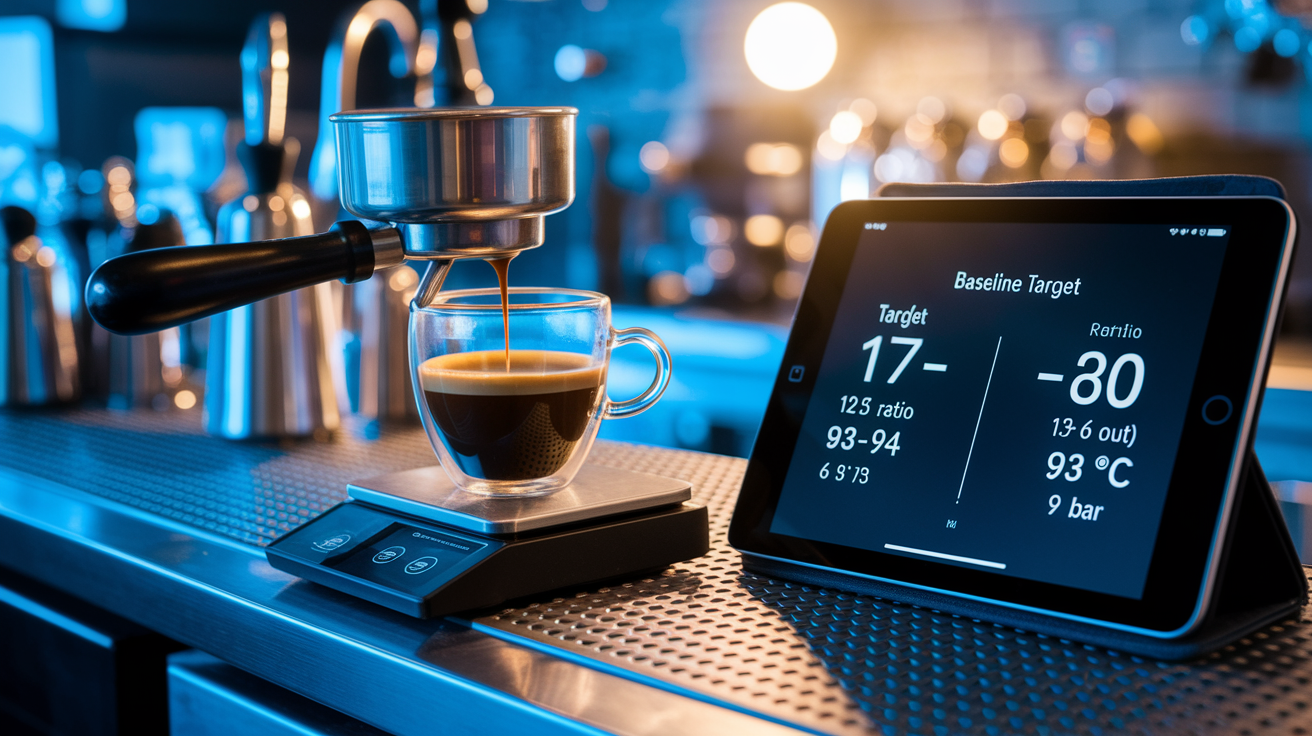
Building a consistent baseline removes variables so you can test one change at a time. Start by defining your recipe in measurable terms: dose, yield, temperature, pressure. A common double shot baseline is 18 grams in, 36 grams out, brewed at 93 to 94 °C and 9 bar. This 1:2 ratio works as a neutral starting point for most medium roasts. Once you set these parameters, pull multiple shots and confirm that timing and flow curves repeat. Inconsistent baselines mean you’re chasing noise instead of signal.
Temperature and pressure need to stay stable across baseline pulls. Machines need 15 to 20 minutes to reach thermal equilibrium. Flush the group head before each shot to clear residual heat and purge stale water. Confirm your PID or brew thermostat holds within ±1 °C. Pressure should hover near 9 bar during main extraction. If your machine drifts or spikes, your logs will show erratic curves and your baseline becomes unreliable. Fix the machine before you troubleshoot the coffee.
Set dose: Weigh exactly 18.0 grams into a clean, dry basket every time. Small dose changes alter puck resistance and timing.
Set yield target: Program or manually stop the shot at 36 grams output. Use a scale with 0.1 g resolution to stay consistent.
Set temperature: Dial in 93 to 94 °C for medium roasts. Adjust ±2 °C for lighter or darker beans only after baseline is stable.
Pull 3 baseline shots: Record total time, curve shape, taste notes for each. Aim for all three to finish within a 2 second window (like 27 to 29 s).
Compare curve consistency: Overlay or compare logs. If curves vary wildly, address grinder retention, distribution technique, or tamp pressure before moving on.
Recognizing Sour Shot Timing Signatures in Shot Logs

Sour shots announce themselves in the log before you taste them. The curve climbs steep and finishes early, often under 20 seconds. Flow rate starts high and stays high because water hits too little resistance. The puck might be too coarse, dose too light, tamp too weak. Light roasts are especially prone to sourness when extraction time is short because their denser structure and higher acidity need longer contact to develop sweetness. If your log shows a shot hitting 36 grams in 18 seconds, expect sharp, lemony acidity with little body or sweetness to balance it.
Pre-infusion length and brew temp also shape acidity. A very short or skipped pre-infusion can let water channel right away, creating fast, uneven flow that shows as an early surge in the log followed by a quick taper. Low brew temperature, especially below 91 °C for light roasts, slows sugar and oil dissolution, leaving acids dominant even if total time looks okay. When your log shows a fast finish and you taste sourness, check both curve shape and temp setpoint. Raising temp by 2 to 3 °C and lengthening extraction time via finer grind often brings sweetness forward and tames the acid.
Distribution errors create another sour signature: spikes or sudden jumps early in the curve. If coffee clumps or sits unevenly in the basket, water finds the easy path and rushes through, leaving dry pockets behind. The log will show a brief spike as water breaks through, then a flattened or irregular slope as flow destabilizes. Taste reflects this chaos. Sourness from under extracted zones mixed with fleeting bitterness from the over extracted channel. WDT, even distribution, level tamp eliminate these spikes and produce a smooth curve that matches balanced flavor.
Recognizing Bitter Shot Timing Signatures in Shot Logs
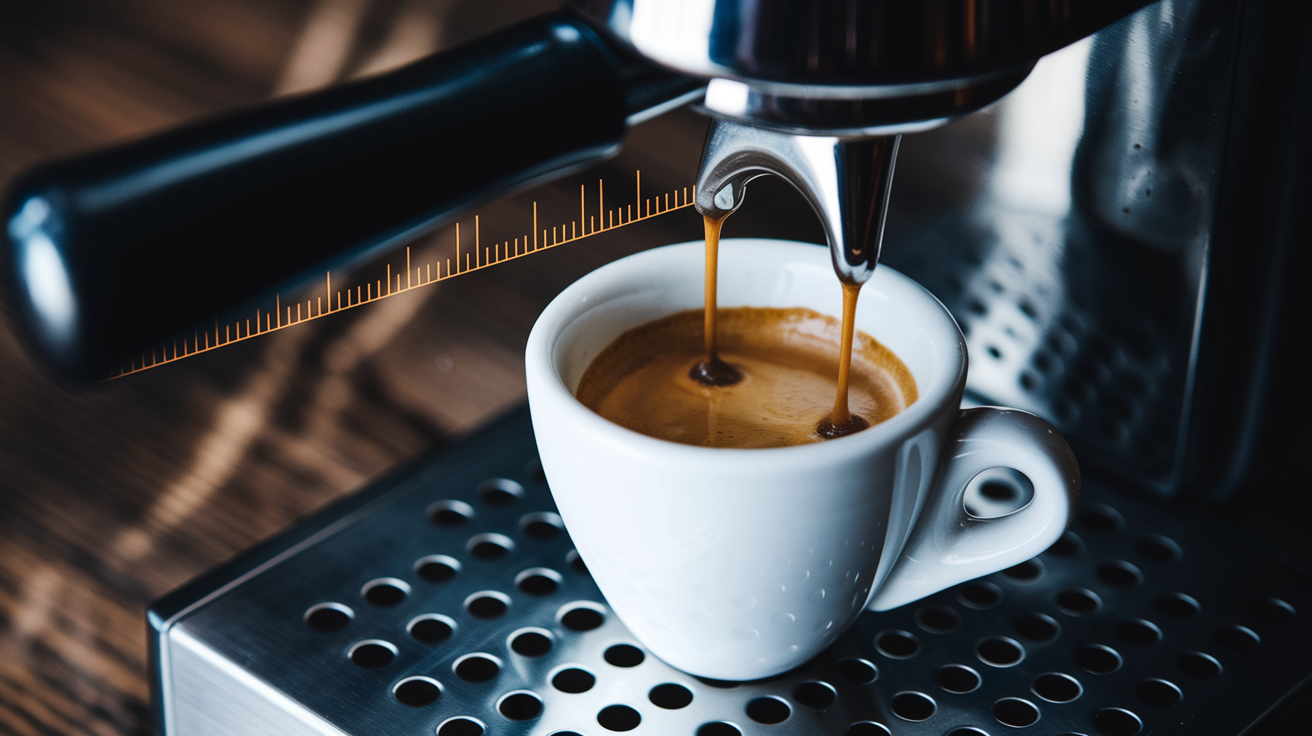
Bitter shots drag on. The log shows a shallow, prolonged curve stretching well beyond 35 seconds, sometimes past 40 or 45. Flow rate is low from the start because grind is too fine, dose too high, or puck over compacted. Water trickles through, extracting sugars and oils early but continuing long enough to pull astringent tannins, burnt flavors, harsh bitterness. Dark roasts are especially sensitive. Brewing above 93 °C or extending contact time beyond 30 seconds often tips the shot into bitter, ashy territory.
The tail phase is where bitterness piles up. An ideal log shows flow tapering smoothly as you approach target yield, then stopping. A bitter log shows a long, flat tail where flow slows to a crawl but never quite quits. Those final grams trickling in after 35 seconds carry almost no sweetness, just harsh compounds that should’ve stayed in the puck. If your log shows this signature and your shot tastes bitter, don’t just stop the shot earlier at the same grind setting. Coarsen the grind so the entire extraction window shortens and you hit your yield target in 25 to 30 seconds without a tail.
Slow ramp up signs: Curve takes more than 8 to 10 seconds to reach steady flow. Indicates excessive puck resistance or very fine grind.
Long tail markers: Final 10 to 15 grams take longer than 10 seconds to accumulate. Flow rate drops below ~1 g/s. Bitterness intensifies.
Pressure related cues: If pressure exceeds 10 to 11 bar or fluctuates during extraction, over compaction or partial clogging may extend timing and add harshness.
Temperature caused bitterness: High brew temp (>95 °C for dark roasts) can produce bitterness even at 28 to 30 seconds. Lower temp 2 to 3 °C and re-test if log timing looks acceptable but taste is harsh.
Detecting Channeling and Flow Instability Using Shot Timer Logs
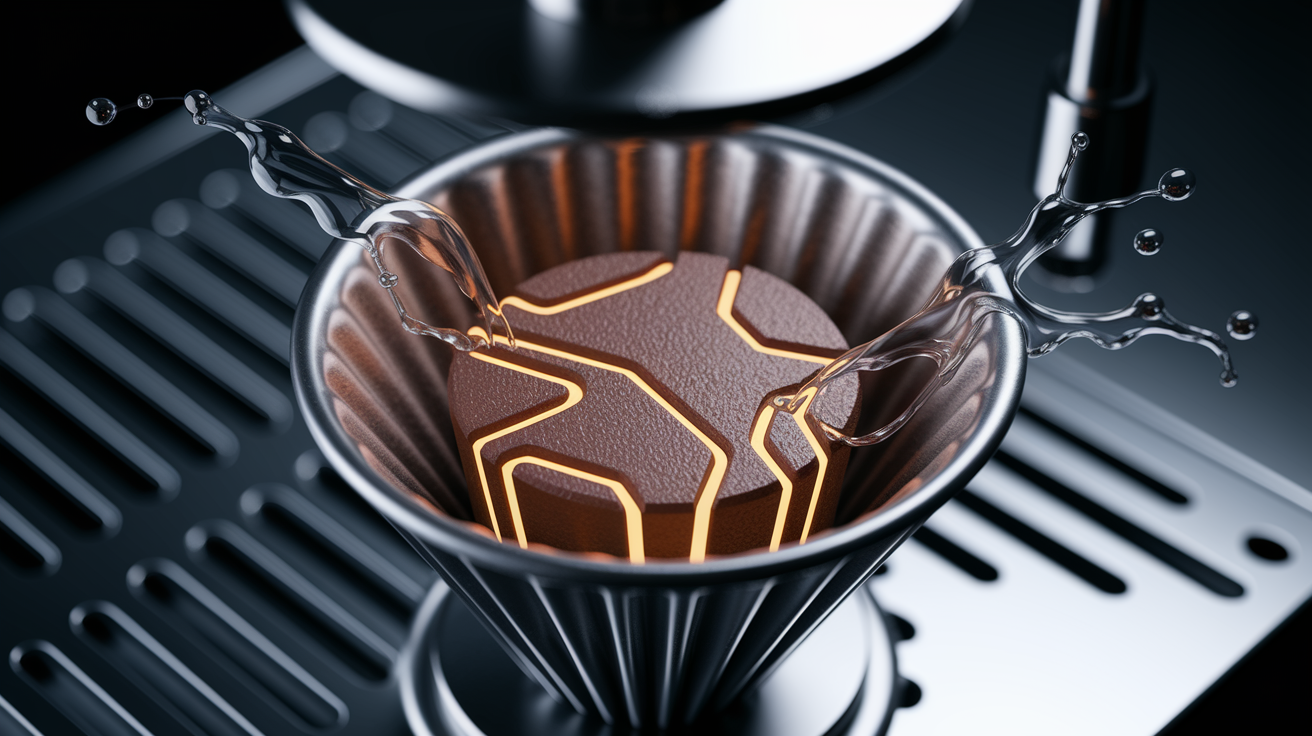
Channeling shows up as chaos in the log. Instead of a smooth, linear rise, you see jagged spikes, sudden jumps, abrupt flat segments. These anomalies mean water found a crack, a dry pocket, a clump and carved a path through the puck. Flow rate spikes briefly as water rushes through the channel, then drops or stalls as resistance shifts. The cup is a mess. Sour notes from under extracted zones mixed with bitter, burnt flavors from over extracted channels. One shot contains both extremes because extraction was wildly uneven.
Early channeling often appears in the ramp up phase. If your log shows a sudden surge right after pre-infusion, water likely broke through a weak spot before the puck could build stable resistance. Late stage channeling shows as erratic drops or secondary spikes as existing channels widen or new ones form. Both patterns point to puck prep failures: uneven distribution, off center or angled tamp, moisture on the basket rim, coffee clumping in the grinder. A naked portafilter makes channeling visible. Spraying or uneven streams confirm what the log already told you.
Use WDT: Stir grounds with a thin needle or WDT tool to break clumps and even out density before tamping.
Level the tamp: Press straight down with consistent force (~30 lb / 13 kg). Don’t rock or angle, which creates thin spots and channels.
Dry the basket: Wipe rim and walls with a dry towel. Moisture causes grounds to stick unevenly and disrupts flow.
Clean basket holes regularly: Clogged or partially blocked holes redirect flow and create artificial channels. Backflush and inspect baskets weekly.
Adjusting Grind, Dose, and Temperature Based on Timing Data
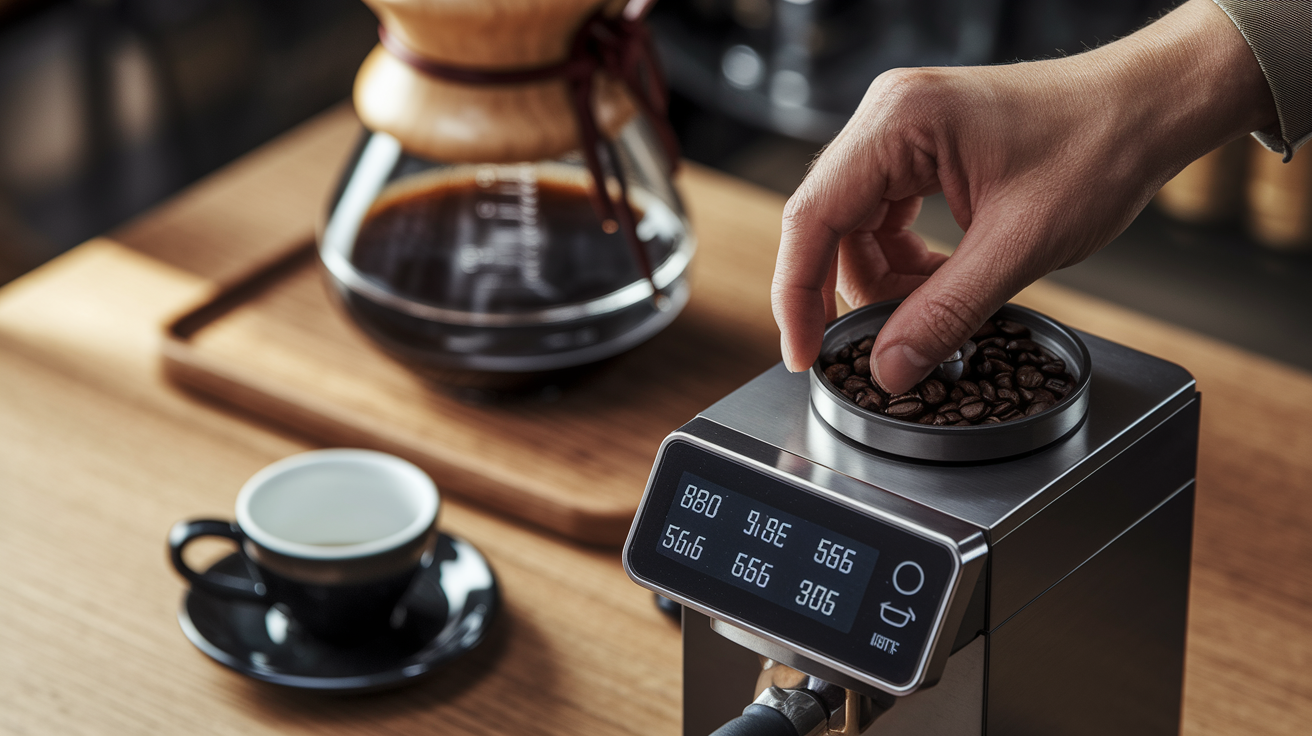
Grind size is the first lever. If your log shows a shot finishing in 16 seconds with a steep curve and you taste sourness, grind finer. One or two clicks on a stepped grinder, or a small turn on a stepless model. Pull another shot and check the log. The curve should climb slower and finish closer to 25 to 30 seconds. If it only moves to 22 seconds, grind finer again. Repeat until timing and taste align. If your log shows 42 seconds with a long tail and you taste bitterness, coarsen the grind by the same small increments. Each adjustment should shift timing by 3 to 6 seconds. Larger jumps mean you over corrected.
Dose adjustments influence puck resistance and contact time. Increasing dose by 0.5 to 1.0 gram adds depth to the puck and slows flow, which can rescue a sour shot if grind adjustments alone aren’t enough. Decreasing dose by the same amount reduces resistance and speeds flow, which helps if you’re grinding as coarse as your grinder allows but shots still choke. Dose changes are secondary to grind. Use them to fine tune after grind size brings you into the ballpark. Always weigh dose to the tenth of a gram. Guessing introduces variability that logs will expose as inconsistent curves.
Temperature shifts flavor without changing flow. If your log shows 27 seconds (right in the target window) but you still taste sourness, raise brew temp by 2 to 3 °C. Higher temp accelerates extraction and pulls more sweetness and body. If your log shows 28 seconds but you taste harshness or bitterness, lower temp by the same increment. Temperature adjustments work best when timing is already dialed. Using temp to fix a 19 second or 38 second shot masks the real problem.
| Issue | Likely Cause | Adjustment |
|---|---|---|
| Sour, fast finish (<20 s) | Grind too coarse, dose too low, temperature too low | Grind finer by 1 to 2 clicks, increase dose +0.5 g, raise temp +2 to 3 °C |
| Sour, flat curve (20 to 24 s) | Weak puck resistance, inadequate pre-infusion | Grind slightly finer, lengthen pre-infusion by 1 to 2 s, confirm tamp pressure |
| Bitter, long extraction (>35 s) | Grind too fine, dose too high, temperature too high | Grind coarser by 1 to 2 clicks, reduce dose -0.5 g, lower temp -2 to 3 °C |
| Bitter, long tail only | Grind slightly too fine, flow chokes at end | Grind coarser by 1 click, confirm basket holes are clean |
| Channeling spikes | Uneven distribution, angled tamp, clumping, moisture | Use WDT, tamp level, dry basket, reduce grinder retention/static |
| Inconsistent ramp-up | Grinder retention, dose variability, machine warm-up incomplete | Purge grinder, weigh every dose, flush group head before shot |
Using Shot Timer Logs for A/B Testing and Trend Analysis

Shot timer logs turn single shot troubleshooting into long term learning. When you change one variable (grind, dose, temperature, distribution technique) and pull two or three shots before and after, overlaying the logs shows exactly what shifted. A curve that moved from 18 seconds to 27 seconds after grinding finer proves the grind change worked. A curve that stayed at 28 seconds but taste improved after raising temp by 3 °C confirms timing wasn’t the issue. Heat was. Logs make cause and effect visible.
Tracking logs over days or weeks reveals patterns that single shots hide. If your 27 second shots slowly drift to 24 seconds over a week, your grinder burrs may be dulling, humidity may be drying your beans, or retention may be building up in the chute. If morning shots consistently run faster than evening shots, your machine may not be holding temp or you may be rushing warm up. Comparing time stamped logs across sessions isolates these variables. When you spot a trend, you can step in before shots turn undrinkable.
Define your test variable: Choose one thing to change (grind size, dose, or temperature) and leave everything else locked.
Pull baseline shots: Record three shots with current settings. Note timing, curve shape, taste for each.
Make the adjustment: Change your chosen variable by a small, measurable amount (grind two clicks finer or raise temp by 3 °C).
Pull test shots and compare logs: Record three more shots. Overlay or compare curves to baseline. Confirm timing and taste both improved. If not, revert or adjust further and repeat.
Preventive Maintenance Insights Revealed by Shot Timer Logs
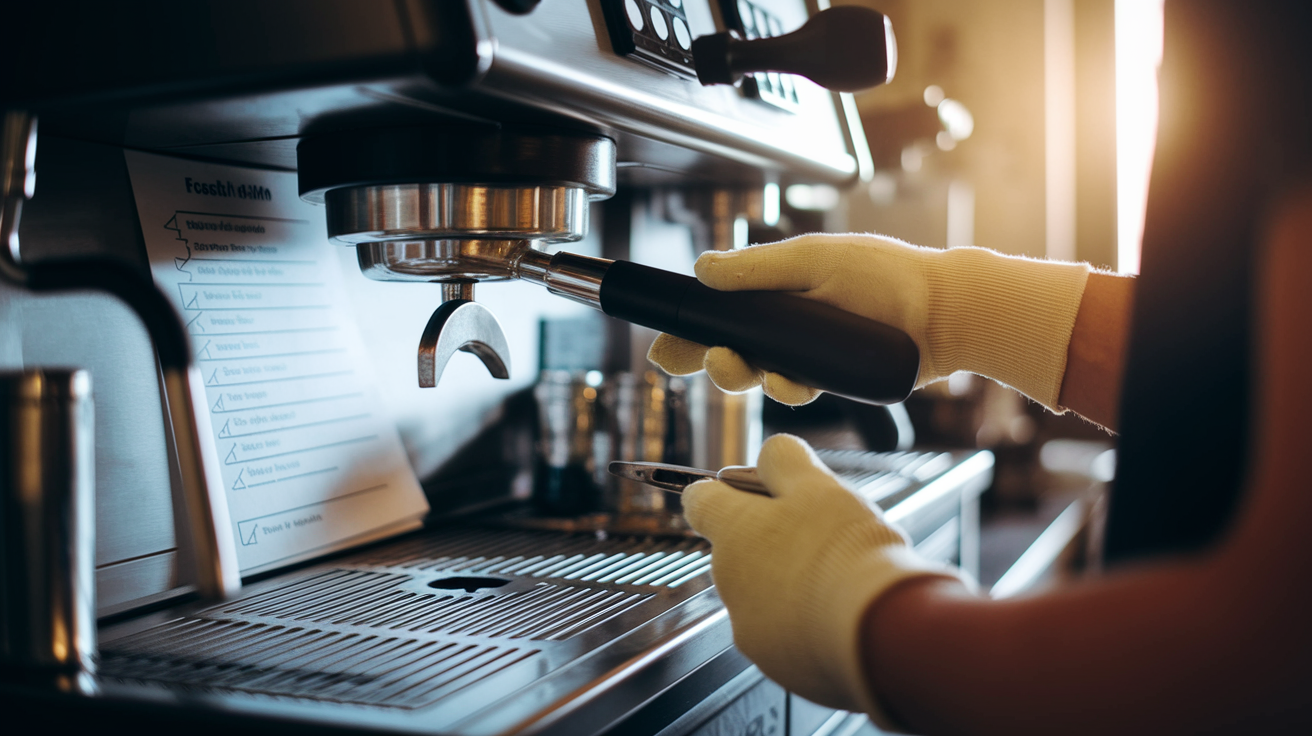
Logs often diagnose machine problems before you see or taste them. A slow, gradual drift toward longer extraction times (without any grind changes) usually means something is clogging. Dirty shower screens, blocked basket holes, coffee oils building up in the group head all increase resistance and stretch timing. If your shots crept from 28 seconds to 34 seconds over two weeks and taste turned bitter, backflush the group, soak the basket, inspect the screen. After cleaning, timing should snap back to baseline and bitterness should disappear.
Pressure drops during extraction show up as flattened or stair stepped curves. If your log normally shows a smooth ramp to 9 bar and steady flow, but recently displays a mid extraction dip or hesitation, check the pump, the group gasket, the portafilter seal. Worn gaskets leak pressure and create uneven flow. A failing pump can’t sustain 9 bar under load. Either problem will stretch timing, reduce yield consistency, muddy flavor. Replacing a gasket or descaling a pump restores stable pressure, and your logs will show it. Curves return to smooth, repeatable slopes.
Burr wear and grinder drift also leave signatures in long term logs. If you used to hit 27 seconds at setting 10 but now need setting 8 for the same result, your burrs are dulling and producing a broader particle distribution. Logs may show inconsistent ramp ups or simultaneous sour and bitter notes because fines over extract while boulders under extract. When logs stop responding predictably to grind adjustments, service or replace your burrs. Fresh burrs restore tight particle distribution, and timing becomes predictable again. Small grind changes produce proportional shifts in the curve.
Final Words
In the action, shot-timer logs show fast, steep ramps for sour and long, slow tails for bitter—read total time and the flow first.
Keep 25–30 seconds as your go-to target and watch pre‑infusion and spikes for channeling.
- Fast finish, early surge
- Thin, high flow
- Thresholds: <20s, >35s
- Smooth slope = stable
- Short pre‑infusion ups acidity
- Grind finer if too fast
Finish using shot timer logs to troubleshoot sour or bitter shots and you’ll get steadier, better cups.
FAQ
Q: How to tell if an espresso shot is sour or bitter?
A: How to tell if an espresso shot is sour or bitter is to check taste and timing: sour is bright and acidic with a fast extraction (<20–22 s) and thin stream; bitter is harsh with a long slow tail.
Q: What is the 30 second rule for espresso?
A: The 30 second rule for espresso says aim for total extraction near 25–30 seconds for balance; under ~20 seconds leans sour, over ~35 seconds leans bitter—use it to guide grind and dose.
Q: How do you fix sour shots?
A: How to fix sour shots is to grind finer or increase dose, raise brew temperature 2–4°C, lengthen extraction toward 25–30 seconds, and check distribution and tamp to eliminate early channeling.
Q: What is the 2 1 rule for espresso?
A: The 2 1 rule for espresso is a 2:1 yield ratio—aim for a beverage weight about twice the dry dose (for example 18 g in → 36 g out), usually in 25–30 seconds.