
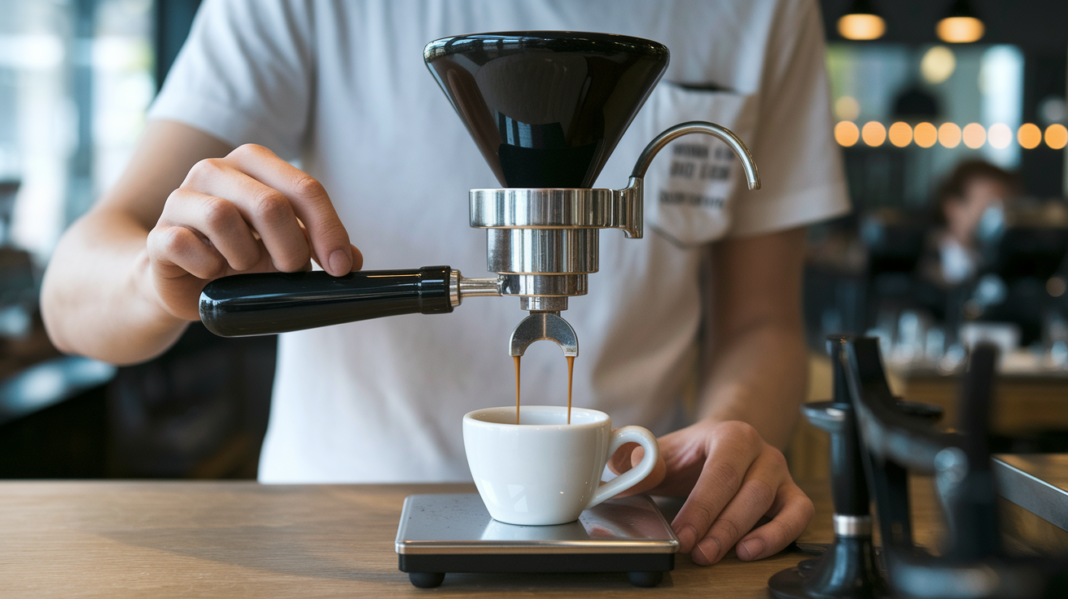

Most espresso problems come down to two numbers: grind size and dose.
They control how much resistance water meets and that sets shot time and flavor.
Too fine or too much coffee and the shot chokes.
Too coarse or too light and it runs fast and tastes thin.
Follow a simple workflow: measure dose, time, and yield, change one variable at a time, and test until you hit 25 to 30 seconds.
You’ll learn when to go finer or coarser, when to add or shave a gram, and how to confirm the fix by taste and timing.
How to Fix Espresso Shot Time Fast (Grind Size + Dose)
Your shot runs in 15 seconds and tastes sharp and thin. Or it drips for 45 seconds and turns bitter and dry. Both problems come down to grind size and dose. These two variables control how much resistance water hits when it moves through your puck.
Grind size changes resistance by adjusting particle surface area. Finer particles pack tighter and slow flow. Coarser particles leave bigger gaps and speed flow. Dose changes resistance by adjusting puck thickness. More coffee means more distance for water to travel. Less coffee means a thinner bed and faster extraction.
The standard target is 18 to 20 grams of coffee pulled in 25 to 30 seconds at a 1:2 brew ratio. 18 grams in, 36 grams out. When your shot misses that window, you adjust one variable at a time and test again. Here’s the corrective workflow.
-
Measure your current shot time and yield. Weigh your dose on a 0.1 gram scale, start your timer when the pump kicks on, and weigh the output. Write down all three numbers.
-
If your shot runs too fast (under 24 seconds), make your grind finer by one or two clicks. On most stepped grinders, one click adds two to five seconds. If you’re already near the finest setting, increase your dose by 0.5 to 1 gram instead.
-
If your shot runs too slow (over 31 seconds), make your grind coarser by one or two clicks. If you’re already coarse and still slow, reduce your dose by 0.5 to 1 gram.
-
Pull another shot after each single adjustment. Don’t change grind and dose together. You won’t know which one fixed the problem.
-
Stop adjusting when you hit 25 to 30 seconds and the taste balances out. Lock in that setting, log it, and use it until your beans age or you switch bags.
Understanding Grind Size Mechanics
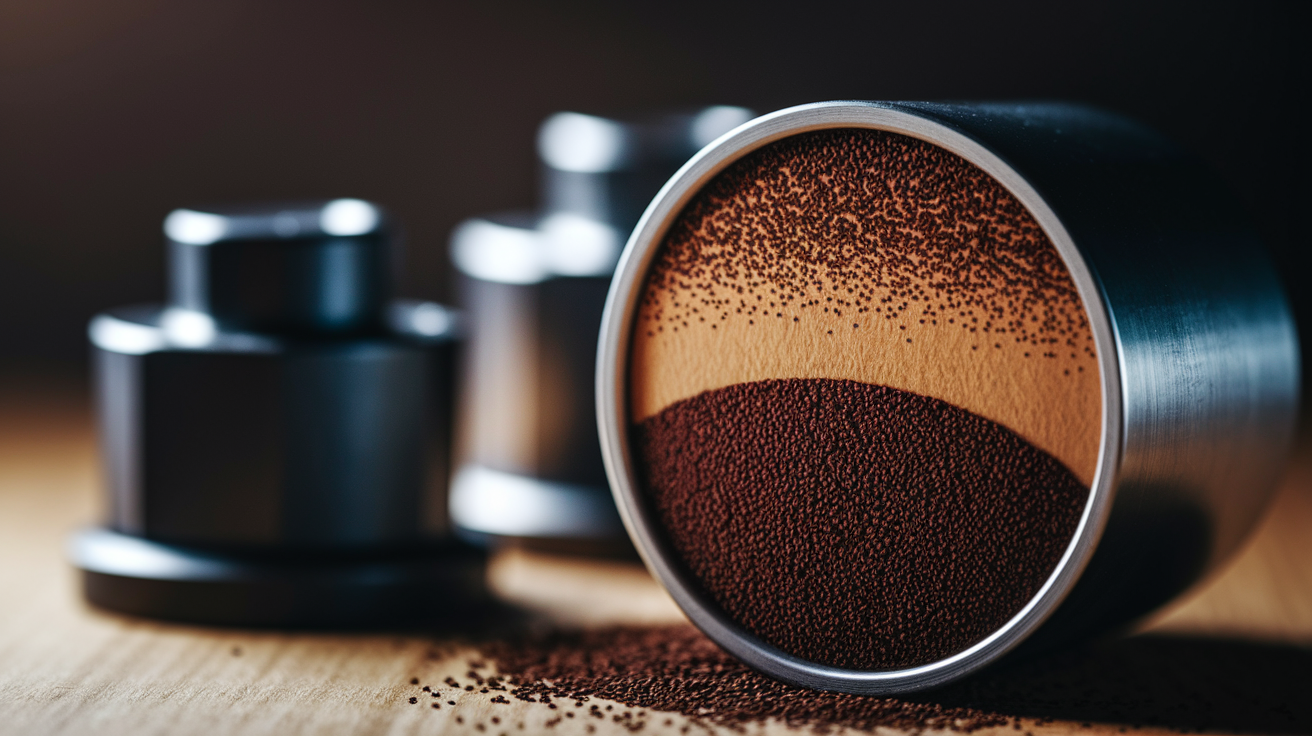
Grind size controls how tightly particles pack in the basket and how much surface area touches water. Smaller particles create more contact points, more friction, more resistance. Water slows down and spends more time extracting. Larger particles leave bigger channels between grounds. Water rushes through faster and extraction stops early.
When you move your grinder finer, you’re shrinking each particle by a fraction of a millimeter. That small change multiplies across thousands of particles in the puck. The cumulative effect is measurable. Moving two clicks finer on a typical stepped grinder adds three to six seconds to your shot time. The exact shift depends on your grinder’s burr geometry and step size, but the direction is always the same. Finer equals slower.
Burr type matters for consistency. Flat burrs tend to produce a narrower particle distribution, which means fewer fine dust particles mixed with boulders. Conical burrs create a wider range, which can speed flow slightly even at a nominally fine setting. Both work. But flat burrs usually require smaller grind adjustments to see the same timing change.
Understanding Dose Mechanics
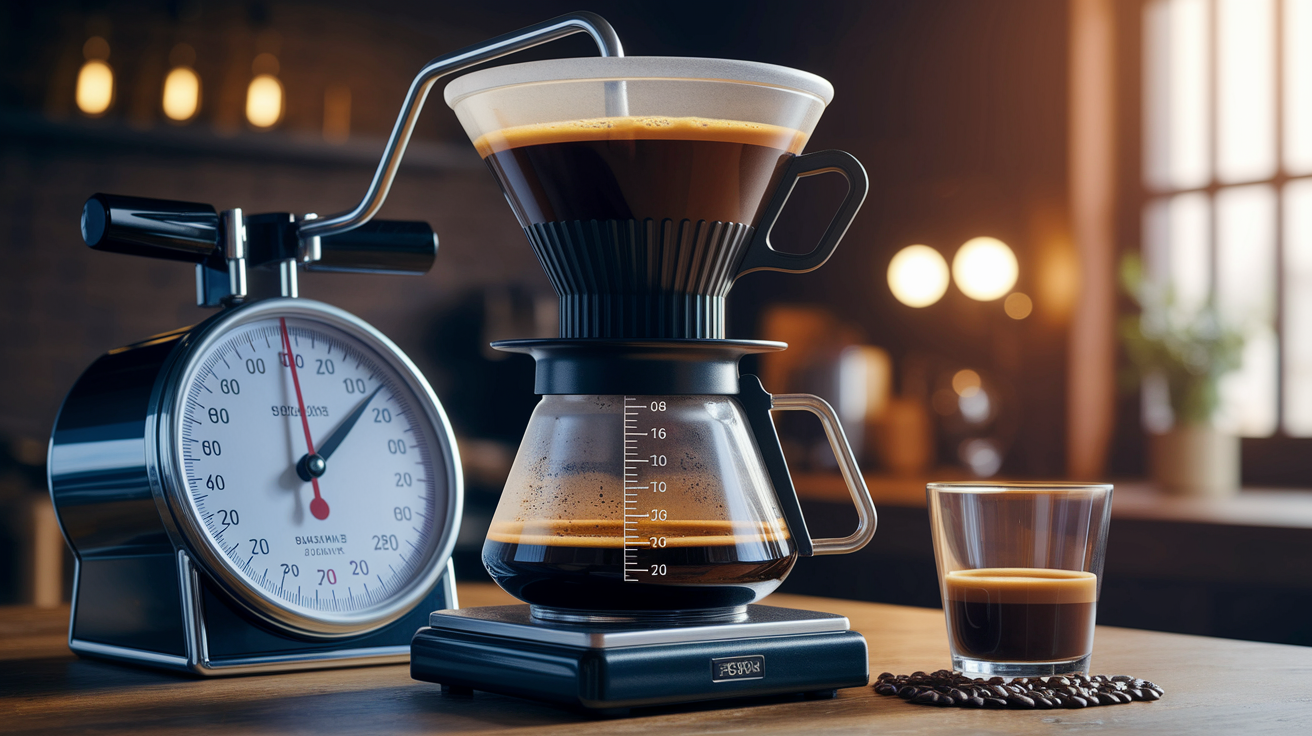
Dose controls puck thickness. When you add more coffee, you stack more layers of grounds between the shower screen and the basket floor. Water has to push through a taller bed, which increases resistance and slows flow. When you reduce dose, you shorten the bed. Water moves through faster and extraction finishes earlier.
A one gram increase adds one to three seconds to your shot time, depending on your basket size and grind setting. The effect is smaller than a grind adjustment, but it’s predictable. If you’re running 18 grams and your shot pulls in 22 seconds, bumping to 19 grams might land you at 24 or 25 seconds without touching the grinder.
Dose also interacts with headspace. Overfilling your basket compresses the puck against the shower screen, which can create uneven flow and channeling. Underfilling leaves too much space above the puck, and water can spread unevenly before it hits the coffee. Most double baskets are designed for 16 to 20 grams. Stay in that range and adjust grind first before pushing dose to the edges.
Taste Based Espresso Adjustments
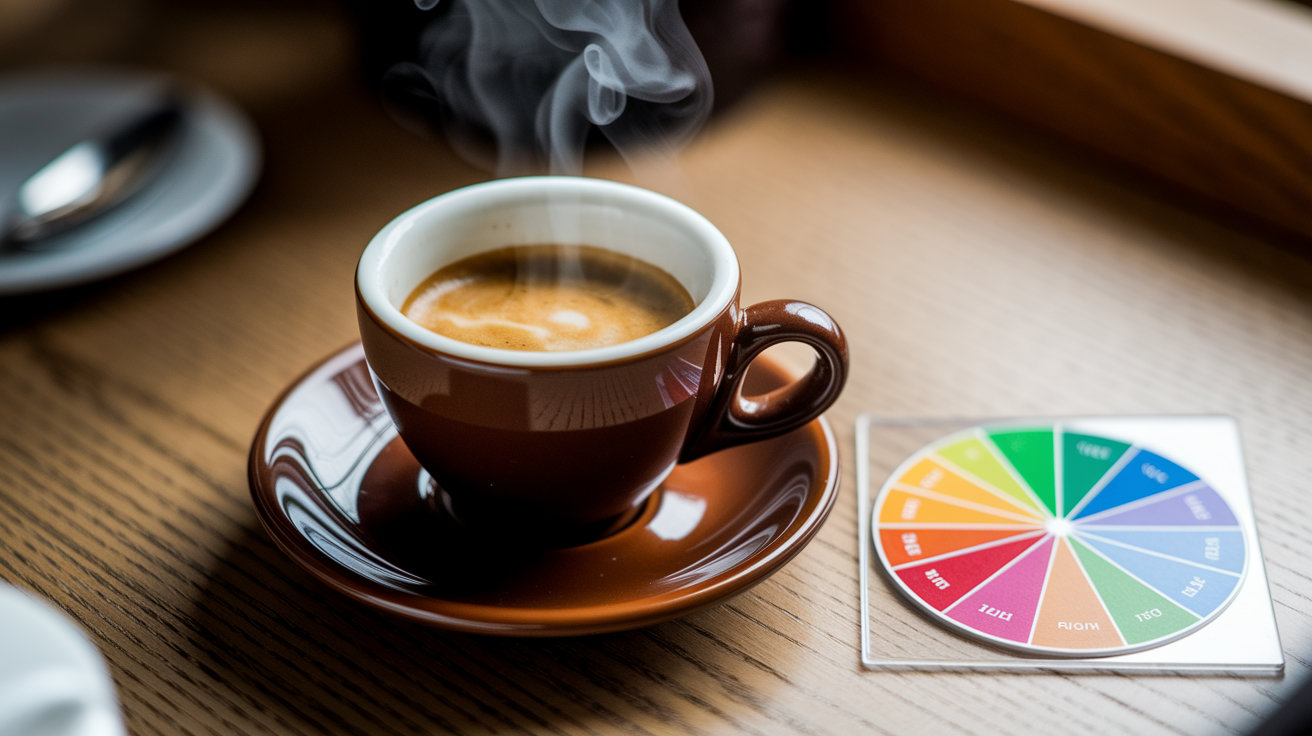
Timing fixes flow, but taste tells you whether the fix worked. Sour, sharp acidity that pinches your cheeks usually means under extraction. Water moved too fast and didn’t pull enough sweetness or body from the grounds. The clock might say 20 seconds, but your tongue says the shot ended early.
Bitter, dry, hollow flavors point to over extraction. Water sat in contact with the coffee too long and pulled out harsh tannins and astringent compounds. A 38 second shot that tastes like burnt paper tells you to back off. Grind coarser or drop your dose.
Here’s how to connect what you taste to what you change:
Sour and thin: Your shot ran too fast. Make your grind finer by one or two clicks, or increase dose by 0.5 to 1 gram. Target 25 to 30 seconds and pull again.
Bitter and dry: Your shot ran too slow. Make your grind coarser by one click, or reduce dose by 0.5 to 1 gram. Aim to shorten extraction time by three to five seconds.
Weak and watery at normal time: Your dose is too low or your brew ratio is stretched. Increase dose by one gram or reduce your target yield to tighten the ratio from 1:2 to 1:1.8.
Heavy and thick but unpleasant: You may be over dosing or running too fine. Drop dose by 0.5 grams or go one click coarser, then check for better balance.
Troubleshooting Workflow (Single Variable Method)
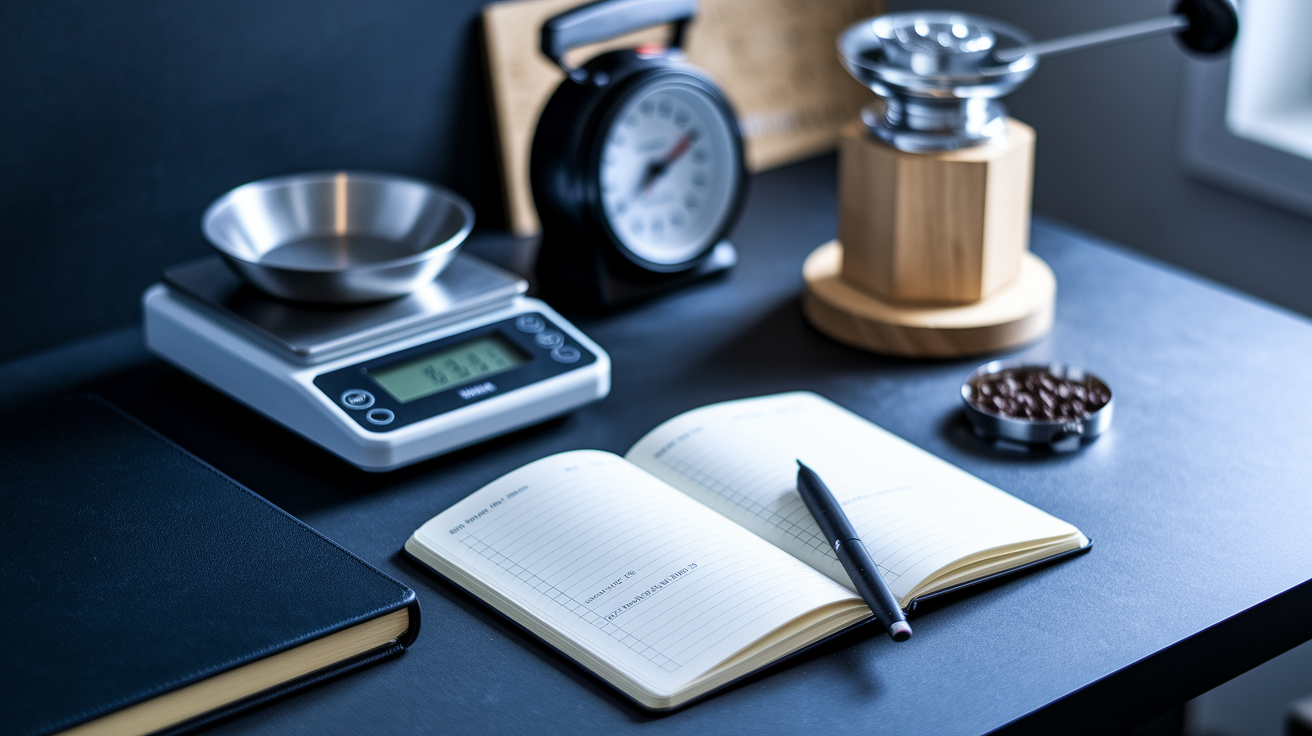
Changing grind and dose at the same time hides the cause. You don’t know which adjustment moved the needle, so you can’t repeat the fix. The single variable method isolates each change and builds a clear map from problem to solution.
Start by confirming your current numbers are accurate. Weigh your dry dose on a scale, pull the shot with a timer running, and weigh the liquid output. Write down dose, time, and yield. Taste the shot and note whether it’s sour, bitter, balanced, or weak.
Now pick one variable to change. Grind size is the most powerful lever, so adjust that first. If your shot ran fast, go finer by one or two clicks. If it ran slow, go coarser by one click. Pull another shot with the same dose and measure again. If the timing improved but taste is still off, make one more small grind adjustment. If timing is right but strength is wrong, then adjust dose by 0.5 grams.
Here’s the step sequence:
-
Verify your baseline. Dose, grind setting, shot time, yield, and taste. Log all five.
-
Adjust grind size only. Move finer if too fast, coarser if too slow. Change one or two clicks and pull again.
-
Measure the new shot. If time moved into the 25 to 30 second window, taste it. If still off target, make one more grind adjustment in the same direction.
-
Adjust dose only if grind alone didn’t work. Increase by 0.5 to 1 gram if you need more resistance or body. Decrease by the same amount if you need less.
-
Lock in the setting. Once you hit 25 to 30 seconds and balanced taste, write down the final dose and grind number. Use that combination for the rest of the bag, and re dial when you open fresh beans.
Real World Example Scenarios
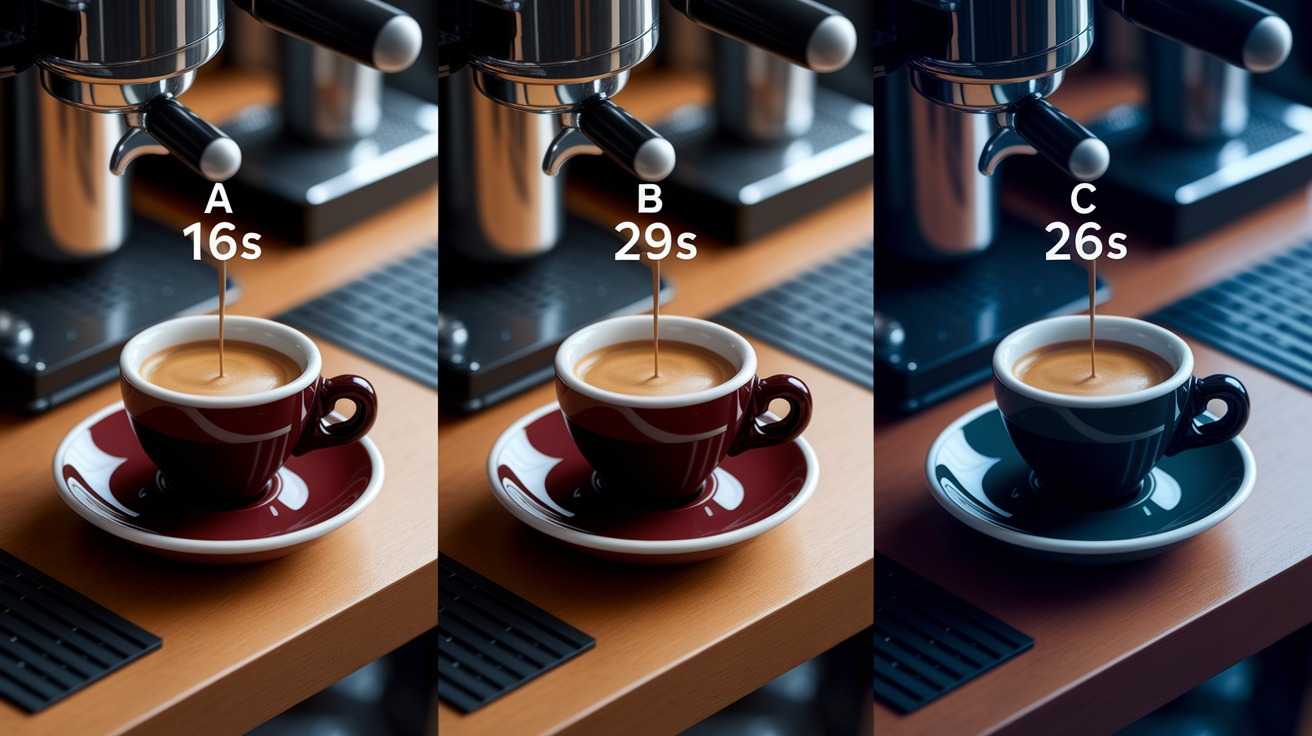
Concrete numbers make the method clear. These three scenarios show typical timing problems, the single adjustment that fixed each one, and the resulting change in shot time and taste.
Scenario A started with 18 grams dosed into a standard double basket. The shot ran in 16 seconds and yielded 36 grams of thin, sour espresso. Grind was set to position 5 on a stepped grinder. The fix was two clicks finer to position 3. The next shot ran in 27 seconds with the same 18 gram dose and 36 gram yield. Taste shifted from sour to balanced, with noticeable sweetness and body.
Scenario B used 20 grams and pulled a 42 second shot that tasted bitter and chalky. Yield was 38 grams. Grind setting was position 2 (very fine). The adjustment was one click coarser to position 3. The follow up shot ran in 29 seconds, and bitterness dropped significantly. The espresso tasted cleaner and more balanced without any dose change.
| Scenario | Issue | Adjustment | Result |
|---|---|---|---|
| A: 18 g, 16 sec, sour | Too fast, under extracted | Grind 2 clicks finer | 27 sec, balanced, sweet |
| B: 20 g, 42 sec, bitter | Too slow, over extracted | Grind 1 click coarser | 29 sec, clean, balanced |
| C: 17 g, 24 sec, weak | Low dose, thin body | Increase dose to 18.5 g | 26 sec, fuller body, better strength |
Scenario C ran 17 grams in 24 seconds and produced 34 grams of output. Timing was close to target, but the shot tasted weak and lacked body. Instead of touching the grinder, dose was increased by 1.5 grams to 18.5 grams. The new shot ran in 26 seconds and delivered noticeably more body and strength without any bitterness. The small dose bump was enough to improve extraction and flavor without over slowing the shot.
Final Words
In the action, you learned a fast workflow to fix shot time by changing grind and dose, and why finer grinds and higher doses slow shots while coarser and lower doses speed them.
Use the single-variable troubleshooting sequence: verify dose, check grind, change one step (two clicks or ±1 g), pull, and taste.
Keep adjusting grind size and dose to refine espresso shot timing. Do one change at a time and you’ll waste less coffee and pull steadier, better-tasting shots.
FAQ
Q: How do I fix an espresso shot that’s too fast?
A: A shot that’s too fast is fixed by grinding finer or increasing dose; try 1–2 finer clicks or add 0.5–1 g, aim for 25–30 seconds, then retaste.
Q: How do I fix an espresso shot that’s too slow?
A: A shot that’s too slow is fixed by grinding coarser or lowering dose; try 1–2 coarser clicks or remove 0.5–1 g, expect a few seconds faster, then taste.
Q: How much should I change grind setting to alter shot time?
A: Changing grind by two clicks typically shifts shot time about 3–6 seconds; start with one click, test, then adjust more if needed to avoid over‑correcting.
Q: How much should I change dose to affect shot time?
A: Changing dose by ±1 g noticeably changes puck resistance: +1 g slows flow a few seconds, −1 g speeds it; adjust 0.5–1 g per test and remeasure.
Q: What is a good target shot time and dose?
A: A practical target is 18–20 g dose and a 25–30 second shot with about a 1:2 brew ratio; use a scale and timer for repeatable results.
Q: How does grind size affect extraction and taste?
A: Grind size controls resistance and extraction: finer grinds slow flow and increase extraction (can taste bitter if too slow); coarser grinds speed flow and can taste sour if underextracted.
Q: How does dose affect puck density and channeling?
A: Dose changes puck density: higher dose packs the puck tighter and slows flow, lowering some channel risk; lower dose reduces resistance but can increase channeling if headspace grows.
Q: If my espresso tastes sour or bitter, what should I adjust?
A: If sour, it usually means underextraction—grind finer or raise dose. If bitter or hollow, it usually means overextraction—grind coarser or lower dose. Change one thing at a time.
Q: What’s the best troubleshooting workflow to fix shot time?
A: The best workflow is single‑variable: verify dose, check grinder setting, measure shot time, change one variable (1–2 clicks or 0.5–1 g), then taste and record.
Q: How do I test one change at a time and measure impact?
A: To test one change, note dose, clicks, and shot time; change only grind or dose by a small step, brew, record seconds and taste, then repeat until you reach target.