
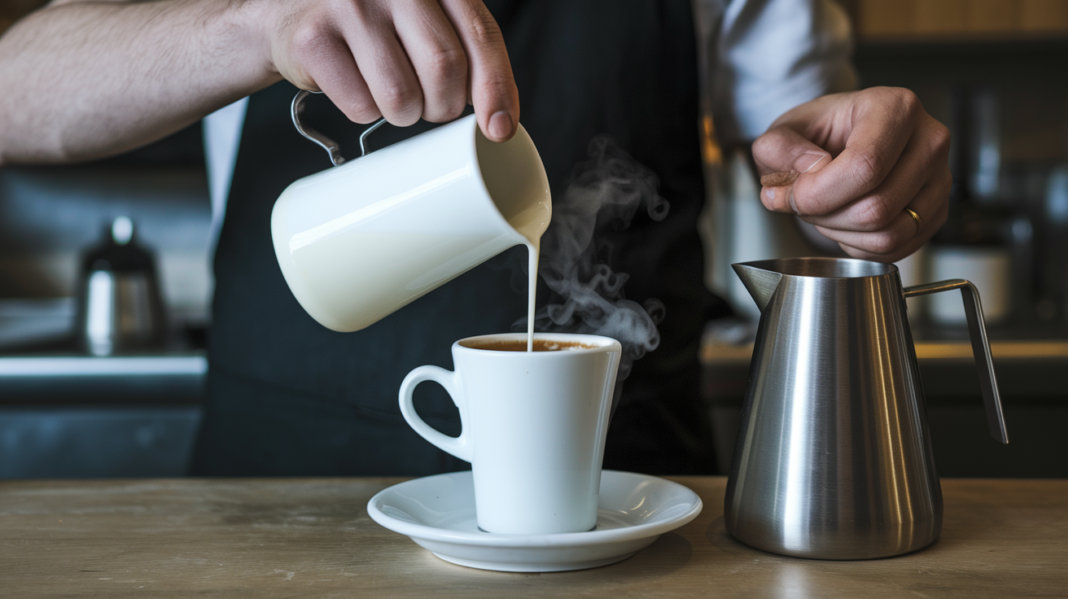

What if most wrist pain on the bar isn’t from the milk, but from how you angle the pitcher?
Small changes, like holding the pitcher at 15 to 30 degrees and setting the wand slightly off center, keep your wrist near neutral and cut strain fast.
This post gives the exact angles, easy self-checks, and one tweak you can try on your very next steam.
Do this and you’ll steam longer with less fatigue and steadier microfoam.
Core Principles of Ergonomic Steam Wand Angles for Immediate Wrist-Strain Reduction

Keeping your wrist neutral during steaming means you’re working inside a 15–45° pitcher tilt, with most baristas landing somewhere between 15–30°. That’s the sweet spot. Your wrist stays close to straight, your forearm lines up naturally with your hand, and you skip the sharp bends that pinch the median nerve and invite carpal tunnel trouble down the road.
Go past 45° or twist your wrist toward your pinky (ulnar deviation, if you want the technical term), and you’re loading those small muscles and tendons unevenly. Neutral alignment spreads the work across bigger muscle groups in your forearm and shoulder. Less localized fatigue, lower repetitive-strain risk. The idea is simple: let your arm and shoulder do the positioning while your wrist just transfers force, not cranks it.
Five quick tweaks that keep your wrist neutral right now:
- Hold the pitcher at 15–30° so the wand sits near the edge without forcing weird angles.
- Tilt the nozzle slightly off center instead of chasing the steam with the pitcher.
- Place your hand on the handle with a relaxed grip, thumb resting light, not squeezing.
- Position the tip about 1 inch below the milk surface, close to the wall, so the vortex forms without you needing to rotate much.
- Check that your wrist stays in line with your forearm, like you’re giving a relaxed handshake, not wrestling a stuck jar.
Wrist-Friendly Steam Wand Angle Mechanics and How They Reduce Load

When you keep the pitcher shallow and the wand controlled, you cut down on shoulder abduction and neck flexion. Shoulder abduction is when you lift your arm away from your body to reach an awkward wand spot. Neck flexion kicks in when you crane your head down to watch the milk instead of just using your eyes. Both pile load onto your upper body and indirectly stress your wrist, because compensatory grips tighten when your shoulder or neck is working too hard.
Keep your arms tucked and your wrist neutral. Your forearm stays roughly parallel to the floor, elbow near 90°. Same biomechanical safety zone you’d find in desk-ergonomics advice.
The angle of the steam wand itself matters a lot. Fixed tip or ball joint, the wand determines how much wrist torque you need to hold the vortex. A wand angled too steep forces you to over-tilt the pitcher or rotate your wrist past neutral to keep the tip where it needs to be. Small adjustments to nozzle tilt, even 5–10°, can let you hold the pitcher more comfortably and keep your hand relaxed. Lower repetitive load across hundreds of drinks per shift.
How Wand Swivel Reduces Wrist Torque
Machines with swiveling or articulating steam wands let you adjust the nozzle before you start. You position the machine to meet your wrist instead of bending your wrist to meet the machine. That small range of motion at the nozzle base eliminates the need for extreme wrist rotation and lets you keep a consistent, neutral grip through texturing and heating.
Practical Adjustments for Ergonomic Wand Angles During Daily Steaming
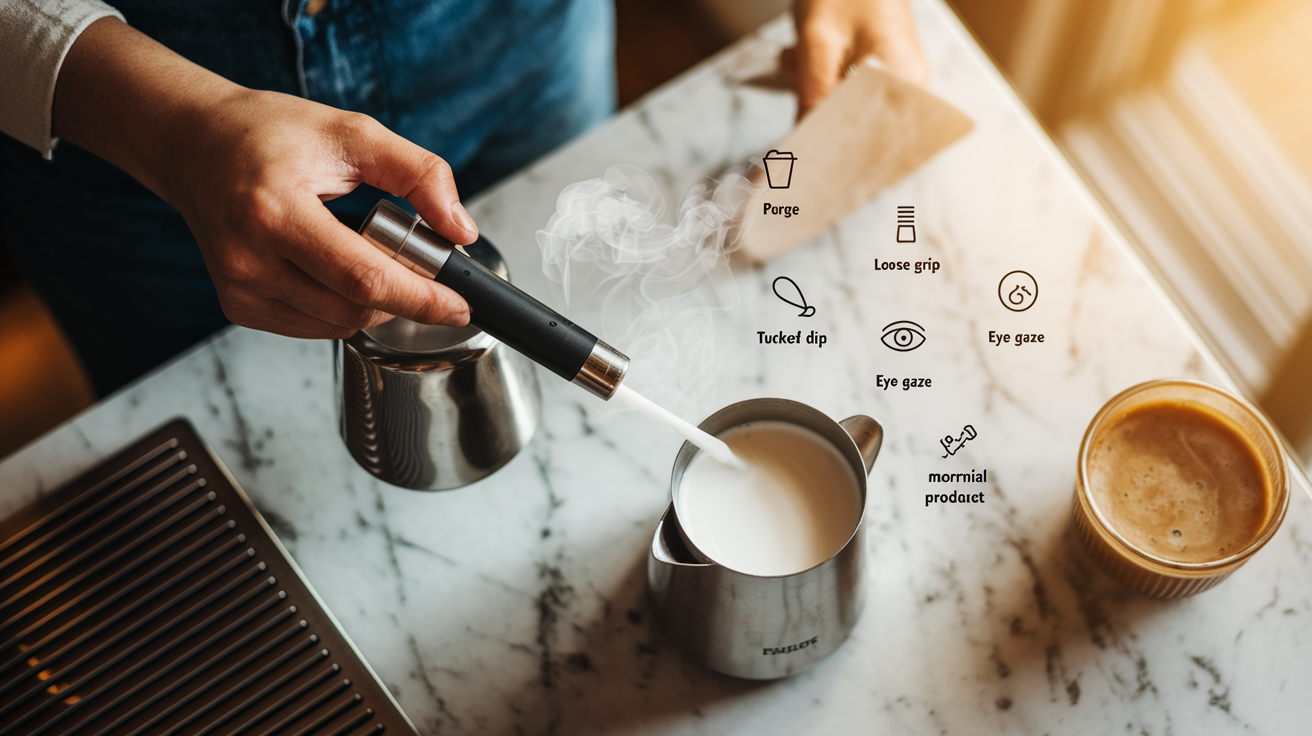
Start by purging the steam wand for 1–2 seconds. Clears moisture, ensures consistent pressure from the jump. A clean, predictable steam flow means you don’t fight sputtering or uneven pressure, which makes you grip harder or adjust mid-steam. Once you’ve purged, place the tip near the pitcher edge, angled slightly off center, about 1 inch below the surface.
Hold the pitcher with a loose grip. Thumb resting on the handle, not wrapped tight. The lighter your grip, the easier it is to make small angle corrections without locking your wrist into one strained spot. Inject air for the first 3–5 seconds while the milk’s still cool, then raise the wand slightly or lower the pitcher to stop the hissing and shift into heating. Throughout, your wrist should stay in line with your forearm and your elbow should stay tucked close to your body instead of flaring out.
Six micro-adjustments that drop wrist load during every steam:
- Tilt the pitcher to 15–30° before opening the valve.
- Position the tip close to the pitcher wall so you don’t rotate your wrist to find the vortex.
- Rest your thumb lightly on the handle, let your fingers guide instead of squeeze.
- Keep your elbow around 90° and close to your torso so your shoulder stays relaxed.
- Look down with your eyes instead of bending your neck, which stops upper-body tension from transferring into your grip.
- Adjust the wand angle at the machine base or swivel joint before each steam rather than compensating with wrist rotation during the pour.
Choosing Ergonomic Steam Wand Designs and Machines That Support Healthier Angles

Machines like the Enigma Super Traditional X Wide feature articulating steam wands that let you set the nozzle angle before you begin. Cuts the need for constant wrist adjustment during high-volume shifts. Adjustable wands help especially when multiple baristas of different heights share the same bar, because each person can dial in the angle that matches their natural forearm alignment. Older machines with fixed wands can sometimes be retrofitted with swivel adapters or longer wand arms that give you more reach and reduce shoulder abduction when positioning the pitcher.
Commercial workstation height plays a role too. If the machine sits too high or too low relative to your elbow, you’ll either hike your shoulder or bend your wrist to compensate. Ideally the steam wand should sit at a height where your forearm stays parallel to the floor when the pitcher is tilted and the wand is inserted. Same 90° elbow position you’d see in office ergonomics. When evaluating machines or planning a new bar layout, check whether the wand height and reach let you steam with your arms tucked and your wrist straight, as detailed in Steam Wand Tips: How to Froth Milk Like a Pro.
| Wand Feature | Ergonomic Benefit | Angle Effect |
|---|---|---|
| Swivel or ball-joint nozzle | Pre-positions steam direction, reduces mid-steam wrist rotation | Lets you hold pitcher at consistent 15–30° without compensating twists |
| Extended wand length (8–10 inches) | Increases reach, lowers shoulder abduction, keeps elbow tucked | Allows pitcher to stay closer to body, reducing extreme tilt angles |
| Height-adjustable steam arm or riser kit | Aligns wand height with user’s elbow, supports neutral forearm position | Minimizes up/down wrist bending when pitcher is tilted |
| No-burn cool-touch wand tip | Reduces hesitation and jerky movements near the tip, steadies grip | Smooth, confident positioning keeps wrist and pitcher angle stable |
Pitcher Selection, Tilt Degrees, and Handle Design for Reduced Wrist Strain
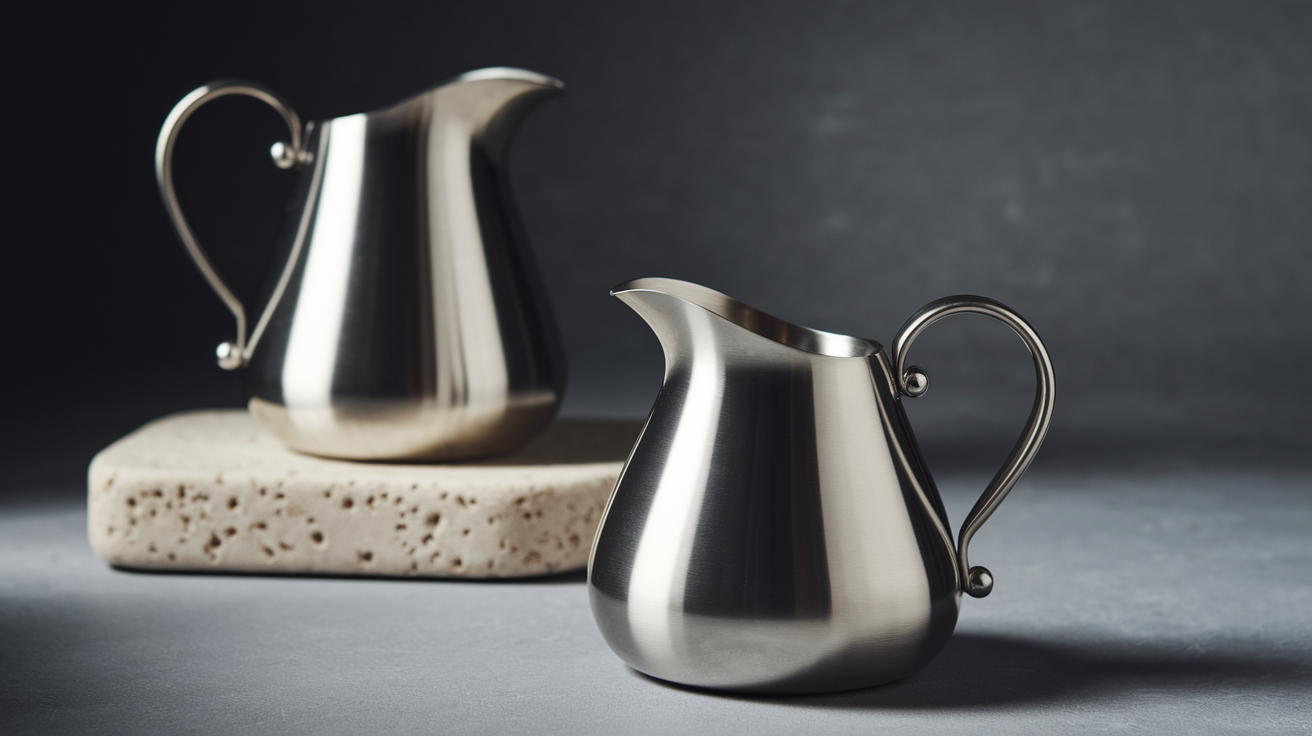
Pitcher size and weight directly affect how much force your wrist and forearm need to control the angle throughout a 30–60 second steam. A 20-ounce stainless pitcher filled halfway is easier to hold at 15–30° with a relaxed grip than a 32-ounce pitcher filled to the top. The bigger one adds both static load and dynamic resistance when you adjust tilt mid-steam. Lighter materials like thin-gauge stainless or even titanium-coated pitchers reduce fatigue, especially during back-to-back drinks.
Handle design matters. A rounded, ergonomic handle that fits your hand naturally spreads pressure across your palm and fingers. A thin or sharp-edged handle forces you to grip harder to keep control, locking your wrist into one tense position.
The pitcher’s spout and lip also influence how you angle the wand. A well-designed spout with a defined pour channel lets you tilt less aggressively when pouring latte art, which means you can keep a more neutral wrist angle during both steaming and pouring. Positioning the wand near the pitcher edge to create a stable vortex works best when the pitcher’s interior curve is smooth and predictable. Small angle shifts produce consistent results without needing extreme wrist rotation to find the sweet spot.
Frothing guides consistently recommend 15–30° as the starting tilt because it balances vortex formation with wrist comfort. Anything below 10° makes it hard to get the wand close to the edge without submerging the tip too deep. Tilts above 45° start loading your wrist into uncomfortable extension, especially when you’re holding the pitcher for more than a few seconds.
Three ergonomic pitcher features that support healthier wand angles:
- Rounded, contoured handle that spreads grip pressure across your palm instead of concentrating it at your fingertips.
- Lightweight construction (thin stainless, aluminum, or coated materials) to reduce static forearm load during extended sessions.
- Smooth interior curve and defined spout that let you get microfoam and pour art within the 15–30° comfort range without forcing extreme tilts.
Steaming Posture Foundations: Neutral Wrist, Elbow Height, and Standing Position

Your wrist angle during steaming is shaped by your full-body posture. Starts with how you stand and where your elbows sit relative to the machine.
If your forearm is parallel to the floor and your elbow is close to 90°, like the neutral position in desk ergonomics, your wrist naturally falls into alignment when you tilt the pitcher. That only works if the machine height matches your body. Stand with your feet shoulder-width apart, knees slightly soft rather than locked, weight distributed evenly so you’re not leaning forward or twisting to one side to reach the wand.
Anti-fatigue mats and supportive footwear reduce lower-back and leg pain that pile up during long shifts. When your back and legs feel better, you’re less likely to compensate with tense shoulders or a tight grip.
Keep your head level and look down with your eyes instead of bending your neck to watch the milk. Neck flexion adds tension across your shoulders and upper back, which often translates into a tighter grip and a less flexible wrist. If you’re craning your neck to see the pitcher, the machine is probably too low, or you’re holding the pitcher too far from your body, forcing your shoulder into abduction and pulling your wrist out of neutral.
Preventing Repetitive Strain: Wrist Mobility, Strength, and Pre-Shift Routines
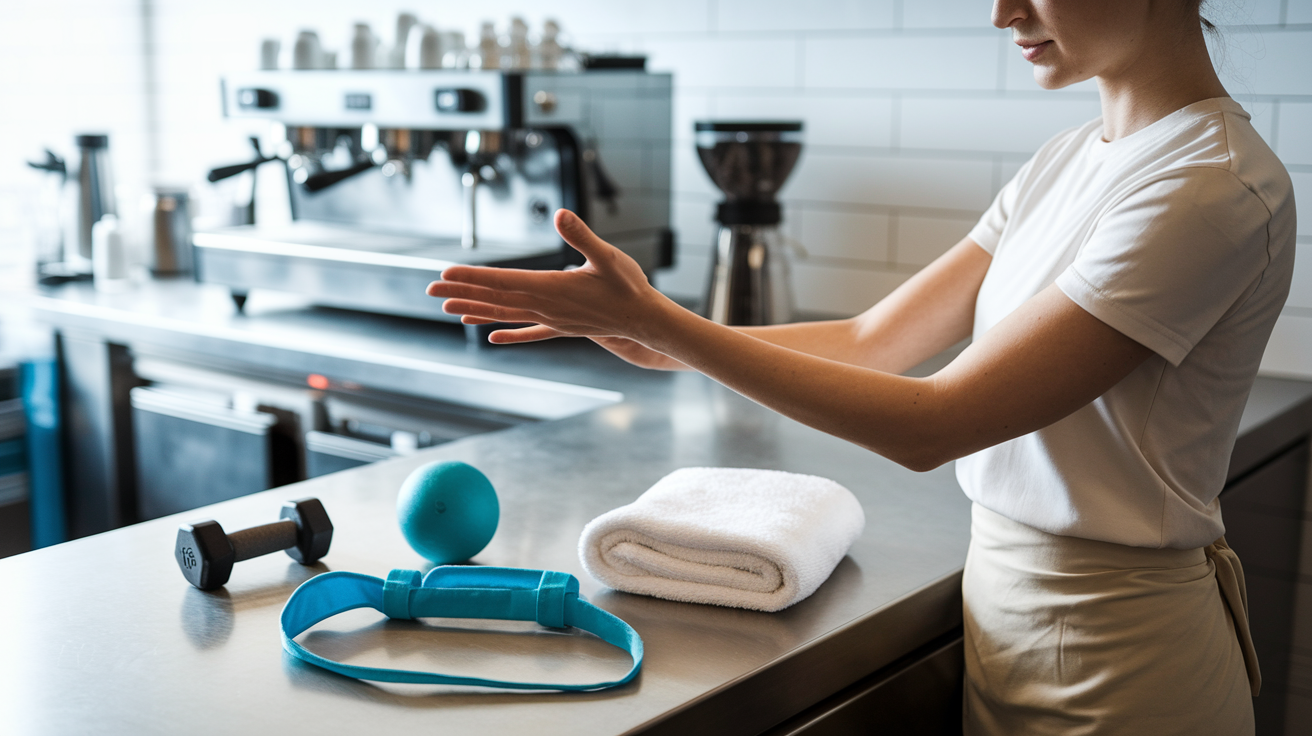
Stretching your wrists and forearms for 15–30 seconds before your shift primes the tendons and improves range of motion. Makes it easier to hold neutral angles under load. Extend one arm in front of you with your palm facing up, then gently pull back on your fingers with your other hand until you feel a mild stretch along the underside of your forearm. Hold for 15–30 seconds, switch hands, repeat a few times. A second stretch places your palms together in front of your chest like a prayer position, then slowly lowers your hands while keeping the palms pressed together. Stretches the top of your wrists and forearms.
Strengthening your wrists with simple resistance exercises helps them handle the small, repetitive loads of pitcher control without fatiguing as quickly. Wrist curls, reverse wrist curls, and grip-trainer squeezes build endurance in the flexors and extensors that stabilize your wrist during steaming. Staying active outside of work, as recommended in barista-injury prevention guidance, balances the repetitive motions of espresso work with varied movement patterns that reduce overuse risk. Cross-training with activities that use different muscle groups gives your wrists and forearms time to recover while keeping your overall fitness and resilience up. More details on stretch durations and strengthening protocols can be found in How Proper Desk Setup Reduces Wrist Pain.
Five quick exercises to build wrist resilience before and after shifts:
- Wrist flexion stretch: extend your arm palm-up, pull fingers back gently, hold 15–30 seconds per hand, repeat three times.
- Wrist extension stretch: extend your arm palm-down, press fingers down gently, hold 15–30 seconds per hand, repeat three times.
- Wrist curls with a light weight or resistance band: rest your forearm on a table, curl your wrist up and down slowly, 10–15 reps per set.
- Reverse wrist curls: same setup, palm facing down, lift the back of your hand toward the ceiling, 10–15 reps per set.
- Grip-trainer squeezes: use a stress ball or grip trainer, squeeze and release steadily for 20–30 reps to build endurance in your hand and forearm.
Troubleshooting Common Wrist-Strain Sources in Steaming Technique

Most wrist pain during steaming traces back to a few recurring mistakes. Holding the wand too deep, which forces you to tilt the pitcher past 45° and bend your wrist into extension. Over-airing the milk, which means you’re holding an awkward angle longer than necessary. Or gripping the pitcher handle too tightly because you’re compensating for an unstable vortex.
When the wand is positioned correctly (about 1 inch below the surface, close to the pitcher edge, angled slightly off-center), you can maintain a 15–30° tilt and a loose grip. Your wrist stays neutral throughout the steam.
Neck flexion and excessive shoulder movement also contribute to wrist strain indirectly. When you bend your neck to watch the milk or lift your shoulder to reach the wand, your upper body compensates by tightening your grip and locking your wrist into one position. Adjusting the wand angle at the machine before you start steaming, rather than fighting it mid-pour, eliminates most of the compensatory wrist rotation. Even when you’re focused on latte-art precision, you can keep microfoam quality high and wrist load low by setting up the ergonomic fundamentals first and making only small, controlled angle shifts during the pour. As noted in the Barista Injury Avoidance Guide, preventing repetitive strain means addressing the root biomechanical causes rather than pushing through discomfort.
Four common ergonomic errors that increase wrist load during steaming:
- Inserting the wand too deep or too shallow, forcing extreme pitcher tilts to maintain the vortex and adding rotational stress to the wrist.
- Using a “death grip” on the pitcher handle instead of a loose, adaptive hold, which locks the wrist into one fatigued position.
- Positioning the machine too high or too low, causing shoulder abduction or wrist flexion to compensate for poor workstation height.
- Craning your neck down to watch the milk instead of looking with your eyes, which tightens your shoulders and transfers tension into your grip and wrist.
Final Words
Tilt the pitcher 15–30° and sink the tip about 1 inch. Keep your wrist neutral, elbows tucked, and aim for a steady vortex. Small angle shifts fix most frantic wrists.
We covered 15–45° ranges, why neutral wrists cut median‑nerve load, micro‑adjustments, posture, pitcher and machine choices, pre‑shift stretches, and common fixes.
Start by trying a 15–30° pitcher tilt today and check your wrist at 10 seconds. One simple change proves the concept: ergonomic steam wand angles to reduce wrist strain during steaming. You’ll feel the difference and keep steaming longer.
FAQ
Q: What are some ergonomic tips for wrist pain?
A: The ergonomic tips for wrist pain are to keep your wrist neutral, set your elbow near 90°, use a light relaxed grip, take microbreaks every 20–30 minutes, and add stretching and strengthening.
Q: What elbow angle allows workers to maintain neutral wrist posture?
A: The elbow angle that allows workers to maintain neutral wrist posture is approximately 90 degrees, with the forearm roughly parallel to the work surface to prevent wrist flexion or extension.
Q: How to get rid of mommy wrist and how to fix wrist pain from curling?
A: To get rid of mommy wrist and fix wrist pain from curling, rest or reduce the offending motion, use a thumb‑spica splint or wrist wrap, ice and simple anti‑inflammatories, then seek physical therapy if pain persists.