

Ever wonder why a few pre-infusion seconds turn a 22-second shot into a 35-second slog?
Pre-infusion wets the puck, forces out gas, and raises hydraulic resistance so water moves slower once full pressure hits.
Thesis: pre-infusion length reliably increases total extraction time and slows the full-pressure phase, typically adding about 1 to 1.5 seconds to total time for each extra pre-infusion second.
So treat pre-infusion as a tuning knob: change it, then adjust grind or dose one step at a time to reach your target extraction window.
Understanding How Pre‑Infusion Duration Changes Total Espresso Extraction Time
Pre-infusion wets the coffee puck with low-pressure water before full brewing pressure kicks in. Water fills the tiny air pockets between grounds, pushes out CO2, and starts dissolving surface solubles. This saturation makes the puck denser and harder for water to move through. No more dry channels or easy gaps. The longer you pre-infuse, the more saturated everything gets, and the slower that initial flow becomes once you ramp up to full pressure.
Here’s what happens in real shots. Skip pre-infusion entirely and you might finish in 22 seconds because water finds the path of least resistance and races through dry spots. Add 3 seconds of pre-infusion and total time usually stretches to 25–27 seconds. Push it to 5 seconds and you’re often looking at 28–32 seconds. Go for 10 seconds and the shot can run 33–38 seconds, depending on your grind and machine. Those pre-infusion seconds add directly to the clock, but the extra saturation also slows the full-pressure phase by a few more seconds because the puck puts up more uniform resistance.
Channeling matters here. When water spreads evenly during pre-infusion, it kills those weak spots where flow would normally sprint through. Instead of a few fast streams, you get broad contact across the whole puck. More resistance, slower drawdown under full pressure.
What’s actually changing extraction time during pre-infusion:
Saturation: Water fills the spaces between grounds and raises the density of the wetted puck, which means higher hydraulic resistance.
Flow resistance: A fully saturated puck forces water through smaller channels, slowing the rate at which liquid exits the portafilter.
Flow initiation delay: Pre-infusion holds the puck under gentle pressure before extraction really starts, adding those seconds straight to total shot time.
Improved puck cohesion: Even wetting helps particles stick together and prevents collapse or channeling, keeping flow slower and more stable throughout the shot.
Influence of Grind Size and Dose on Pre‑Infusion Behavior
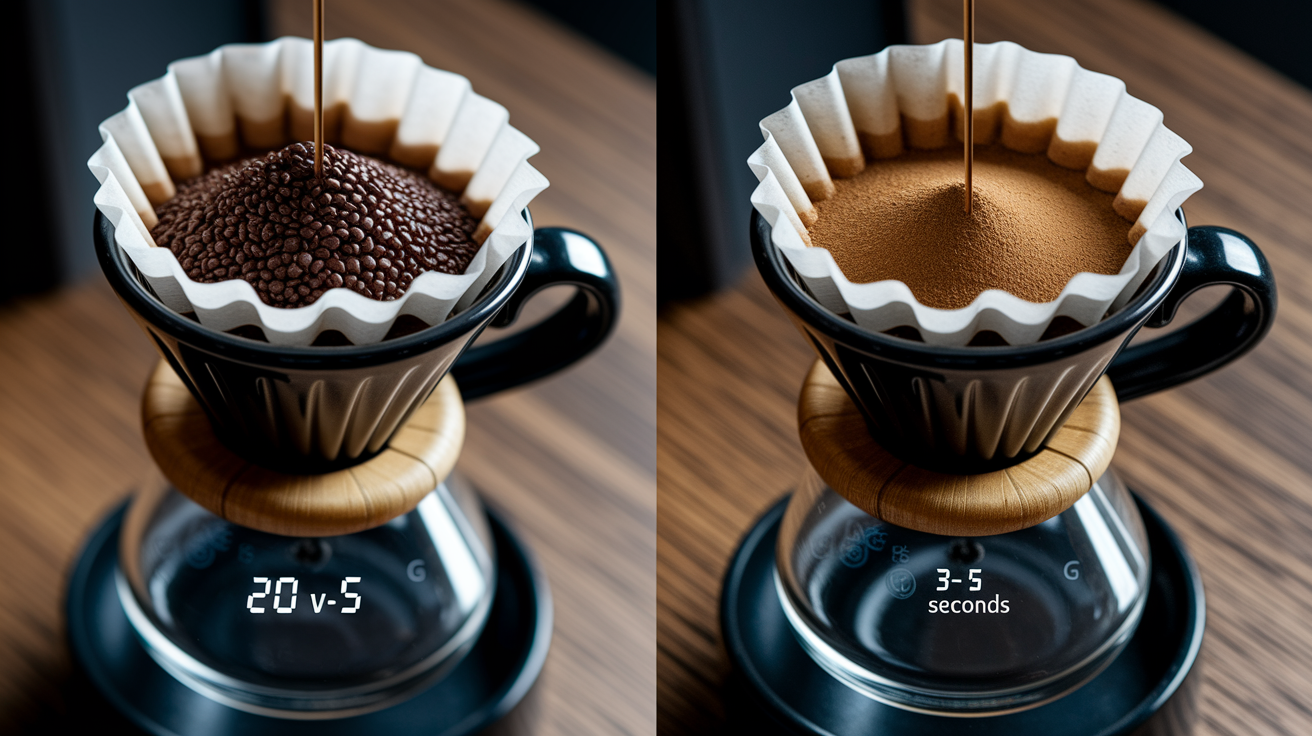
Grind size controls how fast water gets into the puck during pre-infusion. Fine grinds pack tight and trap water in smaller gaps, so even a short pre-infusion saturates deeply and delays the start of full-pressure flow. You might see first drips pushed back several extra seconds. Coarse grinds leave bigger voids that fill fast and drain easy, so pre-infusion doesn’t impact total time as much. Run 5 seconds of pre-infusion on a coarse grind and you might add only 3–4 seconds to the shot. Same 5 seconds on a fine grind can add 6–8 seconds because the saturated puck fights flow harder.
Dose changes puck depth and the volume of coffee that needs wetting. A 20 g dose creates a thicker bed than a 16 g dose, so water takes longer to reach the bottom and saturate evenly. Taller pucks build more resistance once wet, stretching extraction time under the same pressure. Increase dose while keeping pre-infusion the same and you might under-saturate the lower layers, leaving dry pockets that channel. Fix it by adding 1–2 seconds of pre-infusion for each extra gram of dose, or adjust your grind slightly coarser to keep total shot time in range.
When you’re tweaking grind or dose alongside pre-infusion, look at:
Particle size and packing density: Finer grinds need shorter pre-infusion or a coarser adjustment to prevent stalling. Coarser grinds can handle longer pre-infusion without over-slowing.
Puck depth and saturation coverage: Deeper doses need longer pre-infusion to wet all layers evenly. Shallow doses saturate faster.
Target shot time window: If you’re aiming for 25–30 seconds total and your pre-infusion is 5 seconds, the full-pressure phase should finish around 20–25 seconds. Adjust grind first, then tweak pre-infusion by 1–2 seconds if needed.
Pressure Profiles and Their Interaction With Pre‑Infusion

Machines deliver pre-infusion at different pressures, and that pressure level changes how fast the puck saturates and when full extraction begins. Low-pressure pre-infusion at 1–2 bar wets the grounds gently, giving CO2 time to escape and particles time to swell without compressing the puck hard. This gentle soak lengthens the early phase and often adds more seconds to total extraction because flow starts slowly and ramps up gradually. Machines with electronic pressure profiling let you hold 1.5 bar for 6–8 seconds, then step up to 3 bar, then ramp to 8–9 bar. Controlled, extended saturation.
Higher pre-infusion pressures at 4 bar or above push water through faster and compress the puck more during the soak phase. This can shorten the saturation window and bring on full flow sooner, but it risks channeling if the puck isn’t perfectly prepped. Total extraction time increases less with high-pressure pre-infusion compared with low-pressure, but the trade-off is reduced evenness and potential for sour or sharp notes if water bypasses sections of the puck.
Comparing Low vs Standard Pre‑Infusion Pressure
Low-pressure pre-infusion at 1–2 bar lets the puck absorb water slowly. Particles swell, trapped gas releases, and channels don’t get forced open. Total saturation might take 8–10 seconds, and once you ramp to brewing pressure the puck is uniformly wet and offers steady resistance. Extraction time extends because flow starts gently and builds gradually. You’ll often see smoother, sweeter shots with better body because extraction is more even across all grounds.
Standard or high pre-infusion pressure at 3–4 bar or above compresses the puck faster and can force water through weak spots before full saturation happens. Saturation finishes in 3–5 seconds, and full pressure arrives sooner, shortening total extraction time. The puck is denser and more compacted, which can increase resistance. But uneven wetting sometimes leads to early channeling. Shots pulled this way can taste sharp or thin if the puck wasn’t distributed perfectly, and timing becomes less predictable shot to shot.
Practical Experiments to Test Pre‑Infusion Duration

Running controlled tests isolates pre-infusion as the single variable and shows you exactly how it changes extraction time and flavor. Pick one coffee, one grind setting, one dose, and one target yield, then pull multiple shots varying only the pre-infusion length. Record total extraction time from the moment you start pre-infusion to the moment you stop the shot. Note when first drips appear and when steady flow begins.
Set baseline variables: Use 18 g dose, grind setting 3.5 (or whatever you normally use), brew temperature 200°F, and target 36 g yield (1:2 ratio).
Pull a zero pre-infusion shot: Start full pressure immediately. Record total extraction time (often 20–24 seconds) and note any channeling, uneven flow, or visual cues like spraying from a bottomless portafilter.
Pull a 3-second pre-infusion shot: Hold at 1–2 bar for 3 seconds, then ramp to full pressure. Record total time (typically 24–28 seconds) and compare flow evenness and taste.
Pull a 6-second pre-infusion shot: Extend pre-infusion to 6 seconds at the same low pressure. Record total time (often 28–32 seconds) and watch for slower, thicker flow and reduced channeling.
Pull a 10-second pre-infusion shot: Push pre-infusion to 10 seconds. Record total time (commonly 33–38 seconds) and check if the shot tastes over-extracted or flat.
Compare results side by side: Line up your notes on total time, visual flow, and taste. Look for the pre-infusion length that gives you even extraction, balanced flavor, and a total time within your target window (usually 25–32 seconds for most medium roasts).
Data Comparisons of Different Pre‑Infusion Durations
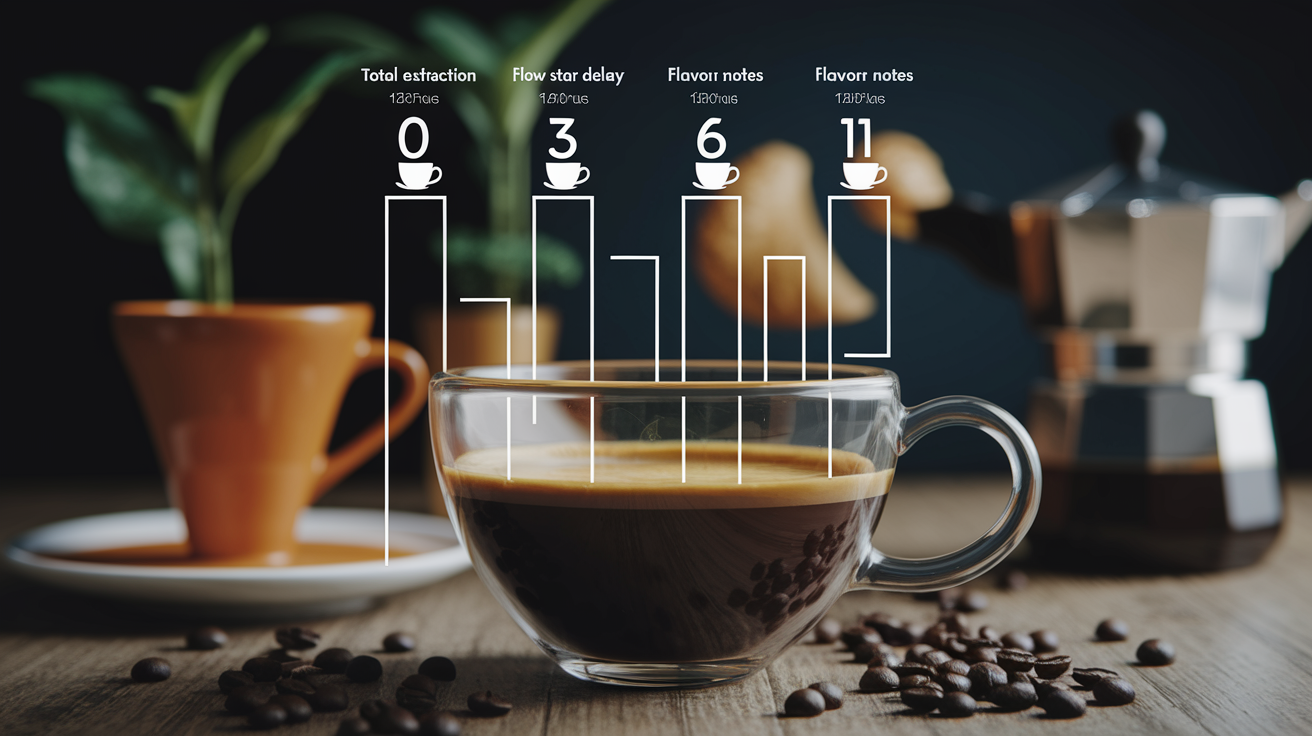
Comparing timing data across different pre-infusion settings shows clear patterns in how saturation affects total extraction. The table below summarizes typical results from controlled tests using the same dose, grind, and yield. Each row represents an average of three to five shots pulled under identical conditions except for pre-infusion duration.
| Pre‑Infusion Time | Total Extraction Time | Flow Start Delay | Observed Notes |
|---|---|---|---|
| 0 seconds | 22–24 seconds | Immediate | Fast, uneven flow; visible channeling; sour or sharp taste |
| 3 seconds | 25–28 seconds | ~2 seconds | Moderate flow; slight improvement in evenness; balanced acidity |
| 6 seconds | 29–32 seconds | ~4 seconds | Slow, thick flow; minimal channeling; fuller body, sweeter finish |
| 10 seconds | 34–38 seconds | ~6 seconds | Very slow flow; risk of over-extraction; flat or bitter if grind not adjusted |
The data shows that each additional second of pre-infusion typically adds 1–1.5 seconds to total extraction time, with the effect compounding as saturation deepens. Flow start delay measures the time between hitting the brew button and seeing first drips. Longer pre-infusion pushes this back because water spends more time soaking into the puck before it’s saturated enough to drip.
These numbers are machine-dependent and change with grind size, dose, and basket geometry. But the pattern holds across most setups. Zero pre-infusion gives the fastest shots but the least control. Short pre-infusion at 3 seconds improves evenness without much time penalty. Medium pre-infusion at 6 seconds delivers the best balance for many medium-roast coffees. Long pre-infusion at 10 seconds works well for light roasts or channeling-prone baskets, but only if you coarsen the grind or lower the dose to keep total time from running too long.
Troubleshooting Slow or Fast Shots Caused by Pre‑Infusion
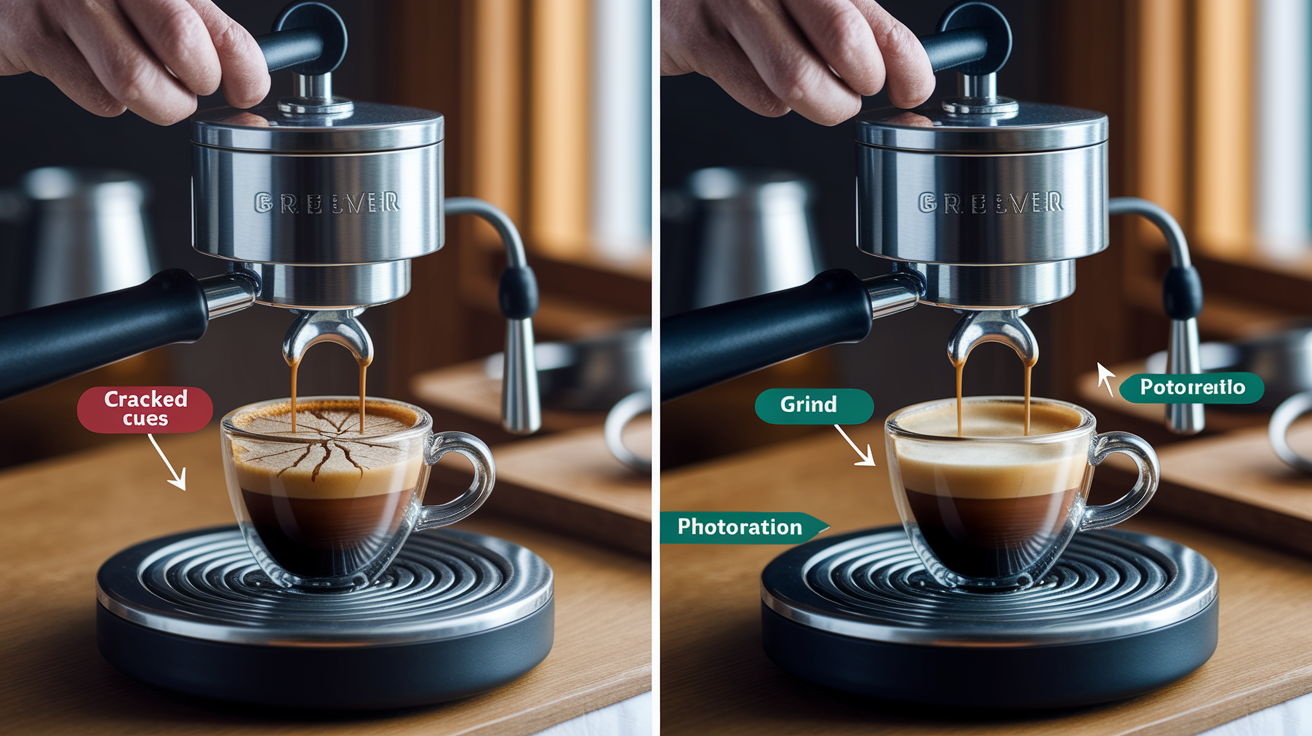
When pre-infusion duration pushes total extraction time outside your target window, the fix usually starts with grind size. You added 5 seconds of pre-infusion and your shot now runs 38 seconds instead of 28? Coarsen the grind by one or two notches to speed up flow during the full-pressure phase. The pre-infusion seconds stay the same, but the post-ramp extraction shortens and brings total time back in range. Test one notch at a time and check both the clock and the cup. Sometimes a 2-second timing shift changes flavor more than you’d expect.
Too-short pre-infusion shows up as fast, uneven shots with channeling and sour or thin taste. You might hit your target yield in 20 seconds, but the puck looks cracked or has dry spots, and the espresso tastes sharp. Lengthen pre-infusion by 2–3 seconds and watch for slower, thicker flow and more balanced acidity. If that makes the shot too slow, fine the grind slightly to maintain extraction without losing the saturation benefits of the longer pre-infusion.
Dose and tamp pressure also interact with pre-infusion timing. A light tamp with long pre-infusion can let the puck stay loose and flow too fast once pressure ramps up. A very firm tamp with long pre-infusion can create a brick that stalls completely. Aim for consistent, moderate tamp pressure around 30 pounds and adjust pre-infusion length to compensate for dose changes. Add 1 second per extra gram of coffee.
Common symptoms and causes related to incorrect pre-infusion duration:
Shot finishes in under 20 seconds with sour taste: Pre-infusion too short or missing entirely. Puck channels before saturation. Increase pre-infusion to 4–6 seconds and check distribution.
Shot drags past 35 seconds and tastes flat or bitter: Pre-infusion too long for the grind size. Puck over-saturated and flow choked. Reduce pre-infusion by 2–3 seconds or coarsen grind by one notch.
Flow starts fast then stalls halfway through: Uneven saturation, often from inconsistent pre-infusion pressure or poor puck prep. Use steady low pressure (1–2 bar) during pre-infusion and improve distribution with WDT before tamping.
Final Words
Pull a test shot with a 5-second pre-infusion and watch the flow. This guide showed why that usually adds 3 to 5 seconds: wetting fills pores and raises resistance, so shots start slower but more even.
We ran concrete timing examples for 3, 5, and 10 seconds, covered grind, dose, and pressure interactions, and gave step-by-step experiments plus comparison data to measure changes.
Use the simple tests here to measure the effect of pre-infusion duration on espresso extraction time and change one variable at a time. You’ll get steadier flow, cleaner pucks, and tastier shots to enjoy.
FAQ
Q: Does pre-infusion count towards extraction time?
A: Pre-infusion does count toward total extraction time. Wetting the puck raises resistance and typically adds a few seconds—about 3–5 seconds for a 5‑second pre‑infusion—so include it when timing shots.
Q: How long should espresso preinfusion take? Is 10 second pre-infusion too long?
A: Espresso pre-infusion should usually be 3–5 seconds. A 10‑second pre‑infusion is often long; use it only to fix channeling or with coarse grinds, and expect several extra seconds added to the shot.
Q: What is the 30 second rule for espresso?
A: The 30‑second rule for espresso says a full shot should finish around 25–30 seconds from pump start; if much longer it may be overextracted, if much shorter it may be underextracted.