


Think taste is the first sign of channeling?
Most people do, but by then you’ve wasted beans and time.
Watch flow rate instead.
A smooth ramp and steady plateau mean water is moving evenly; spikes, dips, or bouncing tell you water found a shortcut.
In this post you’ll learn what those patterns mean, how to read grams-per-second in real time, and one clear change to try on the next shot so you stop guessing and pull more consistent espresso.
Understanding Channeling Through Flow Rate Behavior
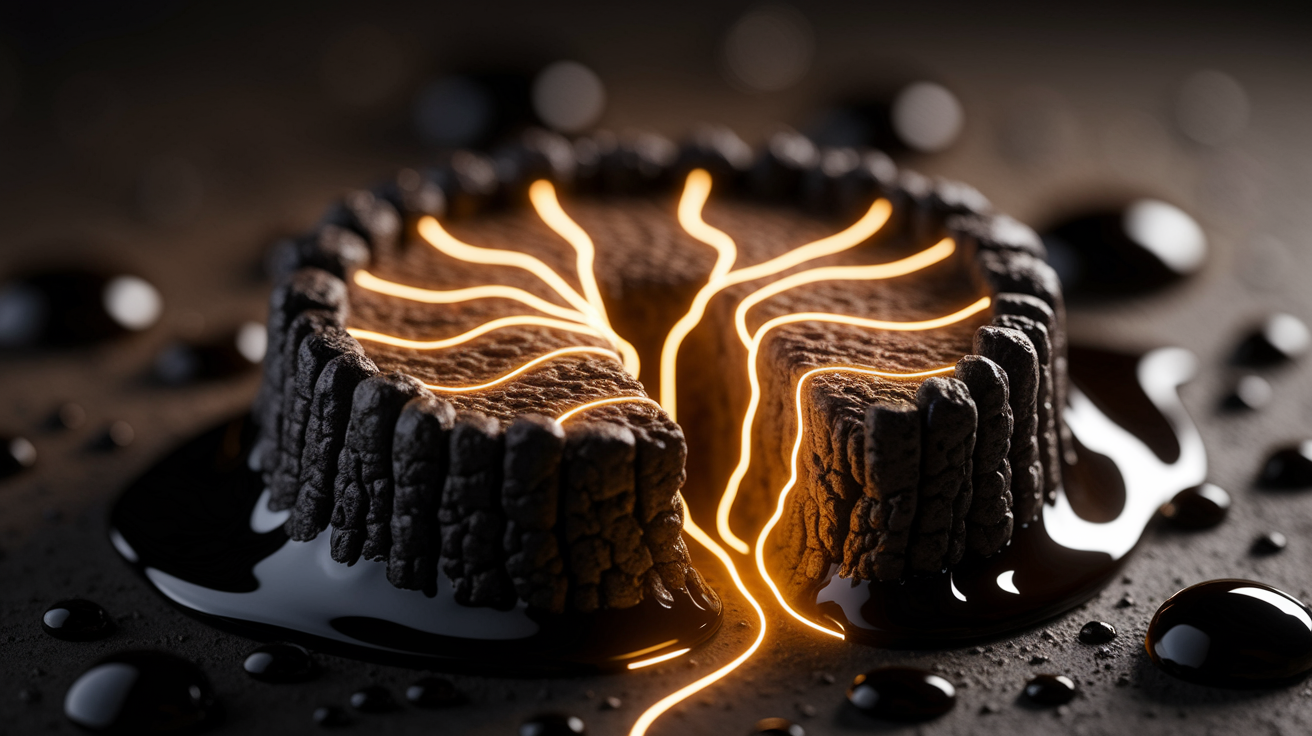
Channeling is when water carves shortcuts through your coffee puck instead of moving evenly across the whole bed. It finds cracks or weak spots and rushes through them, leaving most of your coffee barely touched. You end up with some grounds that are over-extracted and others that aren’t extracted at all. The shot tastes sour, thin, or harsh no matter what you do with dose or grind. It’s a mess, and it makes consistency impossible.
Flow rate tells you how fast espresso leaves the portafilter, usually in grams per second. When your puck is prepped right, flow builds smoothly in the first few seconds as water saturates the coffee, then holds steady through the middle of the shot before easing off at the end. Sudden jumps or weird dips during that steady phase mean water found a crack and started bypassing the rest of the puck. You can catch channeling in real time just by watching flow rate, often before you taste anything off or see blonde gushers with a bottomless portafilter.
Flow rate symptoms that point to channeling:
- Sharp spike around 10 seconds when flow should be stable
- Flow jumps from 1.0 g/s to 2.0+ g/s mid-shot without you changing anything
- Erratic bouncing between fast and slow instead of holding steady
- Very fast initial flow (1.8+ g/s in the first five seconds) suggesting immediate bypass
- Mid-shot dip followed by recovery, showing the puck collapsed and re-compacted
Catching these early means you can fix puck prep, grind, or distribution on the next shot instead of wasting beans trying to guess what went wrong. Flow rate feedback shortens the troubleshooting loop.
Normal vs. Abnormal Flow Patterns in Espresso Extraction

A healthy shot starts with a gradual ramp during the first 5 to 10 seconds as water saturates the puck. Flow climbs from near zero to around 1.0 to 1.2 g/s, then holds steady through the middle. That stable plateau is where balanced extraction happens. Near the end, flow tapers gently as the puck starts to lose structure or pressure drops a bit. The curve looks smooth and predictable. No sudden jumps. That tells you water is moving evenly.
Abnormal curves show abrupt changes that break the smooth profile. A sharp spike mid-shot means water found a weak spot and started pouring through it. Sudden dips suggest the puck collapsed or fines clogged part of the basket, choking flow before it recovers. Chaotic bouncing up and down indicates multiple paths opening and closing as the puck falls apart under pressure. All of these deviations point to uneven extraction.
| Flow Pattern | Description | Likely Cause |
|---|---|---|
| Smooth ramp, stable plateau, gentle taper | Gradual rise to ~1.0–1.2 g/s, holds steady, ends with slow decline | Even puck prep, consistent grind, good distribution and tamp |
| Sudden mid-shot spike | Flow jumps from 1.0 g/s to 1.8+ g/s around 10–15 seconds | Channel opened (crack, void, uneven tamp), water bypassing coffee |
| Progressive slowdown | Flow starts normal then steadily drops below 0.9 g/s and chokes | Fines migration clogging basket holes, grind too fine, or basket clog |
| Erratic oscillations | Flow bounces between 0.8 g/s and 1.5 g/s unpredictably | Multiple weak spots opening/closing, puck degrading under pressure |
Causes of Channeling and Their Flow Rate Signatures

Uneven coffee distribution is the most common culprit. When grounds pile higher on one side or leave a hollow near the center, tamping locks in those density differences. Water hits the thin zones first and carves paths through them, producing a sudden flow spike within the first 10 seconds. Often jumps from 0.8 g/s to 1.6 g/s or higher. If you see an early spike before the puck has time to degrade naturally, distribution is usually the problem.
Grinder clumping creates localized weak spots even when the surface looks level. Clumps act like rocks in sand. Water flows around them instead of through them, and the voids between clumps become express lanes. Grinders with dull or misaligned burrs shatter beans and create excessive fines, which migrate downward under pressure and clog basket holes. That produces a different signature: flow starts normal but progressively slows, sometimes choking the shot entirely as fines pack into the filter. The curve shows a steady decline rather than a spike, and the shot may drag past 40 seconds with bitter, over-extracted flavor.
Inconsistent tamping pressure or an angled tamp fractures the puck along the tilted plane. Pressure and heat exploit that fracture during extraction, widening it into a channel. The flow rate signature often shows up mid-shot, a sudden jump around 12 to 18 seconds as the weak plane fails and water rushes through. Edge fractures from uneven basket filling or gaps between coffee and the basket wall produce side-bypass channels, visible with a bottomless portafilter as fast streams shooting from the edge while the center drips slowly. The flow curve may spike or show erratic oscillation as edge flow competes with center resistance.
Grinding too coarse creates an overall fast flow from the start, 1.8+ g/s within five seconds. But that’s uniform speed, not channeling, unless combined with distribution errors that turn speed into localized gushing.
Practical Diagnostic Methods for Identifying Channeling

Combining visual observation with flow rate data increases diagnostic accuracy and reduces guesswork. A bottomless portafilter shows you where water exits and whether streams are balanced, but flow curves tell you when and how fast problems develop. You can catch issues that look acceptable visually but still produce uneven extraction and poor flavor.
Diagnostic procedure:
-
Log complete flow curves for every shot. Use a scale with real-time g/s readout and capture the entire extraction from first drip to cutoff. Note dose, grind setting, and any puck prep changes.
-
Pull three consecutive shots with identical settings. Compare the curves. Repeatable spikes or dips in the same time window confirm a technique problem. Random variation suggests grinder inconsistency or stale beans.
-
Cross-check flow spikes against bottomless portafilter video. Sync the time stamp of a flow jump (e.g., spike at 11 seconds) with video footage to see if a visual gush or side spray appears at that exact moment.
-
Run a slow-ramp pressure test if your machine supports profiling. Start at 2 bar and ramp to 9 bar over 15 seconds while watching flow. Channels often open earlier and more obviously under slow ramp because you see the exact pressure where puck structure fails.
-
Inspect the spent puck immediately after extraction. Look for one large crater, multiple small holes, or a lopsided collapse. These match specific flow signatures and confirm the cause (single spike = one crater; oscillations = multiple small holes).
-
Isolate one variable per test cycle. Change only grind, only distribution method, or only tamp pressure, then compare new flow curves to baseline. This pinpoints which factor drives your channeling problem and prevents over-correction.
Fixes and Adjustments to Restore Stable Flow

Improving puck preparation directly addresses the structural weaknesses that cause channeling. A WDT tool breaks up clumps and evenly spreads grounds across the basket, eliminating density pockets that create fast paths. A leveling or distribution tool smooths the surface before tamping, removing mounds and filling voids so tamping pressure compresses uniformly. Firm, level tamping applies consistent downward force without tilting, locking the prepared bed into place and preventing fractures. Each of these steps strengthens puck integrity, and you’ll see the result in smoother flow curves with fewer spikes and a stable mid-extraction plateau.
Confirming improvements means comparing before-and-after flow data, not just relying on taste. Pull a baseline shot and save the curve, then make one adjustment (better WDT, for example) and pull another shot with everything else identical. If the new curve loses the 10-second spike and holds a steady 1.1 g/s plateau instead of jumping to 1.7 g/s, the fix worked. Repeat the test shot to verify repeatability. If flow stays stable across two or three pulls, the technique change solved the problem. If spikes return, the issue is upstream: grinder, stale beans, or an undiagnosed machine fault.
Specific adjustments to flatten unstable flow curves:
- Refine WDT technique: Use a thin needle tool and stir the entire depth of the basket in a slow spiral, not just the top layer, to break every clump.
- Adjust tamping pressure: If puck is too soft (under 15 kg), increase firmness to resist early puck collapse. If over-tamped and cracking, ease off slightly and focus on level contact.
- Modify dose by ±1 gram: Underdosing leaves headspace that lets the puck shift. Overdosing compresses grounds against the shower screen and creates uneven density. Find the dose where the puck just kisses the screen after tamping.
- Change grind degree in small increments: If flow is too fast overall (1.8+ g/s from the start), tighten grind by one or two clicks and retest. If choking below 0.9 g/s, open grind slightly.
- Correct basket fill pattern: Dose into the center and let grounds settle naturally, or use a dosing funnel to prevent side gaps and edge channels, then distribute before any settling creates density differences.
Final Words
In the shot you saw how sudden spikes, early surges, and unstable curves point to channeling. You also saw what a healthy flow ramp looks like and which puck prep mistakes cause those signatures.
You learned simple diagnostics. Watch a bottomless pour, log flow curves, and compare shots. Then use focused fixes such as better distribution, small grind moves, and consistent tamping.
Next step. Start logging a few shots and practice interpreting flow rate changes during a shot to spot channeling. Do that, and your shots will settle into steadier, repeatable pours.
FAQ
Q: What is channeling and why does it disrupt extraction?
A: Channeling is when water finds weak paths through the puck, causing uneven extraction. It over-extracts some areas and under-extracts others, producing bitter/sour notes, wasted coffee, and unstable flow.
Q: How does flow rate reveal channeling?
A: Flow rate reveals channeling because sudden early spikes or chaotic curve behavior show water bypassing resistance. A smooth, predictable ramp signals even extraction; spikes usually point to channels forming.
Q: What are the key flow-rate symptoms that indicate channeling?
A: The key symptoms indicating channeling are early surges, sudden dips, jagged or unstable curves, a thin fast stream from a bottomless, and inconsistent cumulative yield over time.
Q: What does a normal flow curve look like compared to an abnormal one?
A: A normal flow curve shows a gradual, steady ramp as the puck wets and extracts. An abnormal curve jumps, oscillates, or spikes abruptly, which usually signals puck structural failure or channeling.
Q: What common causes create channeling and how do they appear in flow data?
A: Common causes—poor distribution, clumps, uneven tamp, grind too fine or coarse, and edge fractures—show as early spikes, late choking, sudden dips, or unstable oscillations on the flow trace.
Q: How can I diagnose channeling using a bottomless portafilter and flow data?
A: Diagnose channeling by matching bottomless visuals (spritzing, single streams) to logged flow spikes. Correlating sight and flow data confirms channeling more reliably than either method alone.
Q: What step-by-step tests should I run to confirm channeling?
A: To confirm channeling, record multiple shots, observe bottomless streams, log flow curves, change one variable at a time, try a slow-ramp pull, then inspect the puck after each shot.
Q: What is the first adjustment I should try to fix channeling?
A: The first adjustment to try is improving distribution (WDT or distribution tool) before changing grind. It often evens puck resistance and stops early surges with minimal waste.
Q: Which adjustments reliably restore stable flow?
A: Reliable fixes are refining WDT, leveling the basket, consistent tamp pressure, adjusting grind size, and correcting dose or basket fill patterns to remove density pockets.
Q: How do I confirm a fix using flow curves?
A: Confirm a fix by comparing flow curves: look for a smoother ramp, fewer spikes, consistent yield timing, and repeatable bottomless visuals across several consecutive shots.