


Think a quick wipe is enough to keep your distribution tools in top shape? Not even close.
Five minutes a day prevents oils, metal dust, and moisture from turning into sticky film that ruins contact and puck geometry.
In this guide you’ll get a simple, repeatable routine: daily wipes, a weekly soak, monthly geometry checks, and quarterly parts swaps.
Follow these steps and you’ll pull more consistent shots, cut waste, and extend tool life.
Start with a five-minute counter check and you’ll notice the difference in a week.
Daily Cleaning Routine for Distribution Tools

Five minutes a day keeps coffee oils, metal dust, and moisture from hardening into film that messes with clean contact and throws off your puck geometry. When oils sit overnight, they turn into sticky residue a quick wipe won’t touch. Clean at the counter every shift and your tools stay neutral. Extraction stays repeatable.
Grab a damp microfiber cloth and a few drops of food-safe dish detergent. Wipe down tamper bases, leveler wings, and portafilter baskets. Rinse the cloth, wipe again to clear the soap, then dry everything with a clean section. Empty your knock box and rinse it under hot water. Wipe drip trays and pour spouts. Check handles and threads for cracks, looseness, rough edges. Look at tamper bases for dings or burrs. See a burr? File it smooth with fine sandpaper or swap the part. Finish by checking portafilter lugs for wear and basket rims for bent edges.
Visual checks catch small problems before they snowball. White crust on the tamper base means oils have dried and need degreasing. A sticky leveler paddle signals residue building in the bearing. Brown streaks inside a portafilter spout mean oil accumulation that’ll taint flavor. If the knock box smells sour, scrub it with detergent and rinse.
Daily task checklist:
- Wipe tamper base, handle, and shaft with microfiber cloth and mild detergent
- Wipe distribution tool paddles, shafts, and contact points
- Rinse portafilters and baskets under hot water after final shot
- Empty knock box and rinse with hot water
- Wipe drip trays and pour spouts
- Inspect threads, handles, and contact surfaces for cracks or burrs
- Dry all metal parts completely to prevent corrosion
Weekly Deep-Cleaning Procedures for Distribution Tools
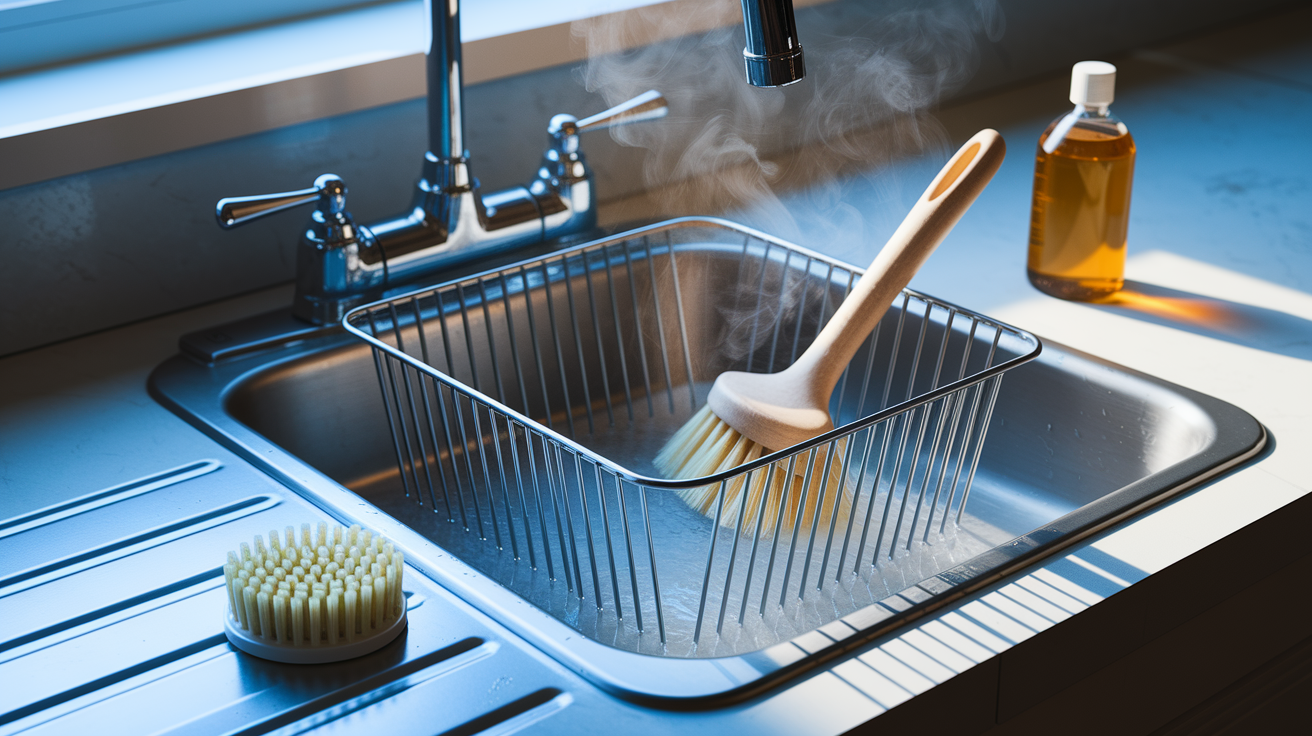
Weekly deep-cleaning gets rid of the oils and micro-particles that slip past daily wipes and settle into threads, basket perforations, and portafilter channels. Coffee oils form a waxy layer over time. That layer insulates heat, changes flow, and eventually flakes into your puck. A weekly soak breaks down polymerized fats without scraping metal or wrecking finishes.
Don’t use household bleach, oven cleaners, or chlorine-based products on stainless steel or aluminum. Bleach pits stainless, leaves stains, and drops chlorine residue that taints coffee. Stick to alkaline espresso cleaners made for metal contact parts or use warm water and a mild, fragrance-free dish detergent.
Weekly deep-clean procedure:
- Take apart portafilters by removing baskets and any IMS precision screens.
- Fill a basin or sink with warm water and add the recommended dose of commercial espresso cleaner. Follow tub instructions, usually 1 tablespoon per liter.
- Drop in baskets, portafilter bodies, and distributor paddles. Soak for 10 to 15 minutes.
- Scrub basket perforations with a nylon-bristle brush, working in circles to knock loose trapped particles.
- Scrub portafilter spouts inside and out. Use a small detail brush for tight channels.
- Rinse all parts under hot running water until no soap or cleaner smell remains.
- Check gaskets and o-rings for fraying, cracking, or loss of springiness. Replace any worn seals.
- Dry all parts with a clean microfiber towel.
- Put everything back together and store in a clean, dry drawer or rack.
Monthly Preventive Maintenance for Distribution Tools
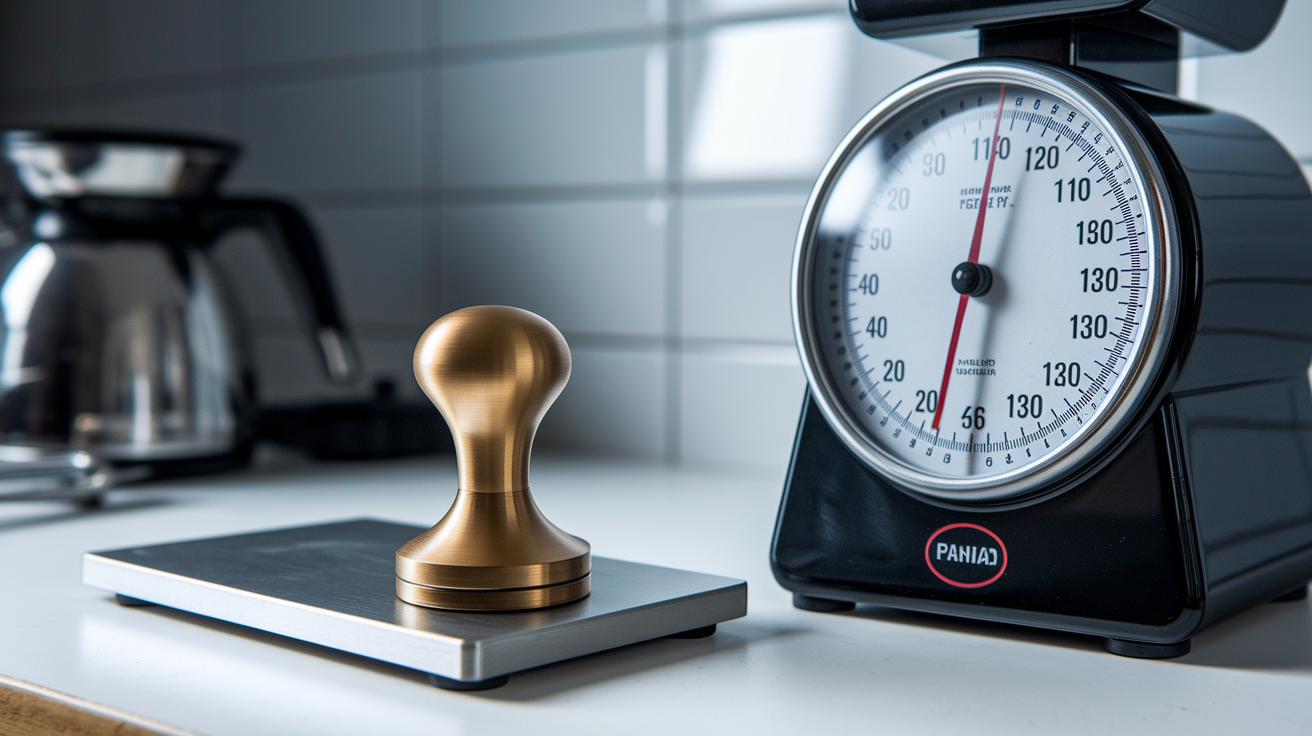
Monthly maintenance confirms your tools still deliver the geometry and force you dialed in when shots were pulling well. Tampers wear at the edge, levelers drift out of level, and distributor needles bend. Small changes add up. A tamper that’s 0.2 mm off creates uneven compression. A leveler that’s no longer flat leaves one side of the puck denser. Monthly checks catch drift before it ruins a week of dialing.
Check tamper flatness by setting the base on a known-flat surface under good light. Look for gaps or rocking. If the base doesn’t sit flush, it’s out of true and needs resurfacing or replacement. Test leveler geometry the same way. For spring-loaded or calibrated tampers, use a calibration puck or small kitchen scale to verify force. Press onto the scale and confirm the reading matches your target, typically 15 to 30 pounds. If the reading drifts more than 2 pounds, recalibrate or service the tool. Check all metal surfaces for pitting, rough spots, or corrosion. Use a fingernail to feel for burrs along tamper edges and leveler paddles. Remove light corrosion with a soft abrasive pad and food-safe oil, then wipe clean. Apply a thin film of food-grade silicone lubricant to any moving parts. Leveler shafts, spring housings, or distributor pivot points. Wipe away excess.
Replace any tool that shows cracks in the handle, stripped threads, deep pitting on contact surfaces, or geometry that can’t be corrected. A $60 tamper that’s out of flat wastes more in bad shots than it costs to replace.
Quarterly and Annual Maintenance Cycle for Distribution Tools

Quarterly maintenance targets consumable parts and recalibration intervals tied to shot volume. High-volume commercial environments compress 100 to 200 pucks per day. After 10,000 compressions, spring tension drifts, gaskets compress permanently, and calibration shifts. Even home setups benefit from a quarterly check to replace worn gaskets, verify tool geometry, and clean areas you don’t reach weekly.
Annual maintenance is about professional service, reviewing your process, and planning inventory. Schedule group-head disassembly and descaling if your distribution tools interface with machine components. Review your cleaning and calibration procedures with staff. Update training logs. Count your spare-parts stock and order replacements for gaskets, baskets, and any tool nearing end-of-life. Use the annual review to figure out whether workflow changes, new tools, or additional training will cut waste or improve consistency in the coming year.
| Task | Frequency | Required Tools/Cleaners |
|---|---|---|
| Replace portafilter gaskets and distributor o-rings | Quarterly (or at visible wear) | Spare gasket kit ($5–20), small flathead screwdriver |
| Recalibrate tamping force | Quarterly or every 10,000 compressions | Calibration puck or scale ($40–150) |
| Deep inspect for corrosion, misalignment, cracks | Quarterly | Bright work light, fine abrasive pad, silicone lubricant |
| Professional service and SOP review | Annual | Service technician contact, updated training materials |
Choosing the Right Cleaning Agents and Tools for Distribution Tool Care

Safe, effective cleaning comes down to chemical compatibility and material selection. Stainless steel, aluminum, food-grade plastics, and wood handles each react differently to solvents, pH extremes, and abrasives. Use only food-safe, low-toxicity products on any surface that contacts coffee. Skip anything with fragrance, dyes, or residues that leave flavor behind.
Microfiber cloths beat cotton because the split fibers lift oils instead of spreading them. A 12-pack of microfiber towels costs $10 to $20 and lasts months with regular washing. Nylon brushes flex into perforations and threads without scratching metal. Small detail brushes cost $5 to $15 and handle portafilter spouts and distributor shafts. Mild dish detergent in the $4 to $10 range works for daily wipes. For disinfecting exterior handles and grips, 70% isopropyl alcohol ($6 to $12 per 16-ounce bottle) evaporates cleanly and kills surface bacteria. Commercial espresso cleaners (alkaline powders in 1 to 2-pound tubs) run $12 to $30 and handle weekly soaks. Food-grade silicone lubricant, available in aerosol or tube form for $8 to $25, prevents stiff pivots and extends moving-part life.
Stock levels depend on volume. Commercial operations with 5 to 10 barista stations should keep three to five spare tampers, levelers, and gasket sets on hand. Home users need one spare gasket per year and a backup basket. Buy concentrated cleaners to reduce per-use cost and packaging waste.
Recommended cleaning supplies and approximate costs:
- Microfiber cloths, 12-pack: $10–20
- Nylon detail brushes: $5–15 each
- Food-safe mild dish detergent, 1 liter: $4–10
- 70% isopropyl alcohol, 16 oz: $6–12
- Commercial espresso cleaner, 1–2 lb tub: $12–30
- Food-grade silicone lubricant, aerosol or tube: $8–25
- Spare gaskets and seals: $5–20 per part
- Calibration puck or force gauge: $40–150 (commercial recommended)
Troubleshooting Common Distribution Tool Buildup and Residue Issues
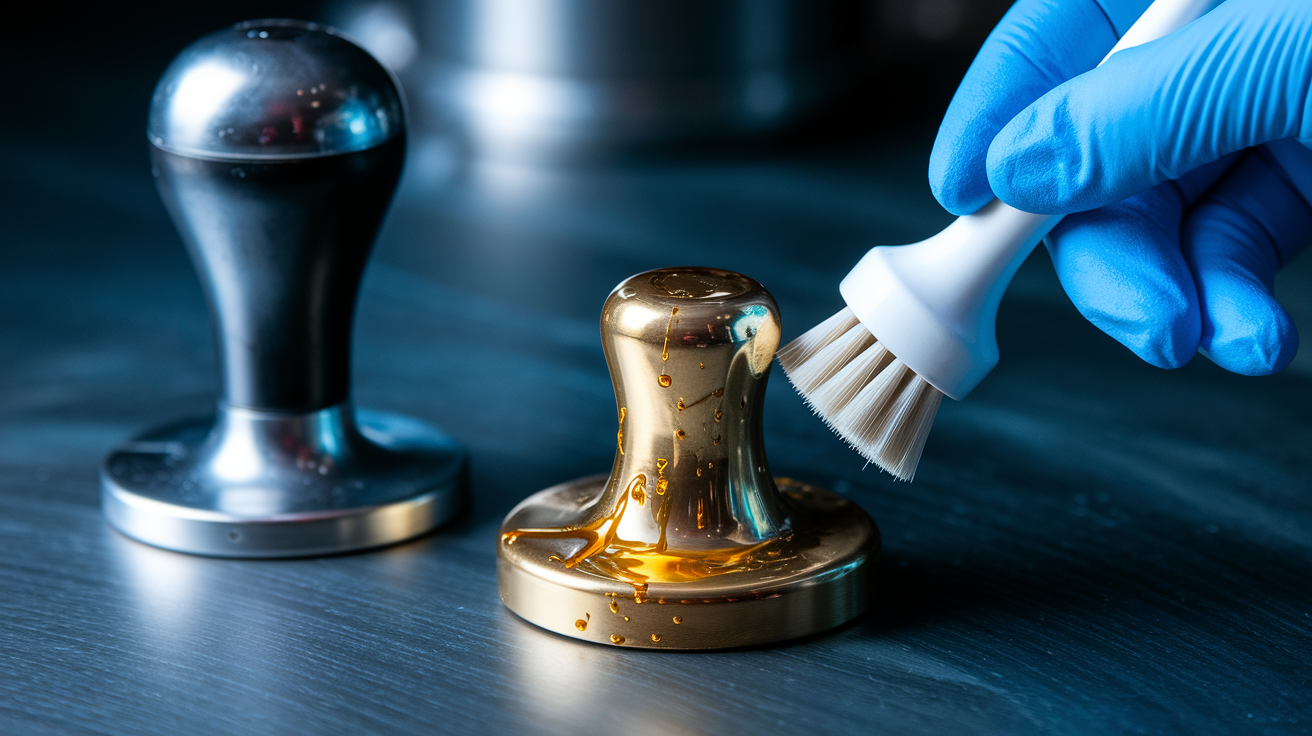
Residue forms when coffee oils, metal particles, and water minerals combine under heat and pressure. The result is a sticky, discolored film that changes tool contact, traps old coffee flavors, and speeds up corrosion. Most buildup issues trace back to skipped cleaning steps, not rinsing enough, or using the wrong cleaning agent. Spot the symptom, then apply the targeted fix.
When residue sticks around despite following daily and weekly routines, switch to stronger cleaning agents or check for mechanical wear. Persistent corrosion, deep pitting, or buildup that won’t dissolve after a 15-minute soak tells you the part has reached end-of-life or that water quality is damaging metal surfaces. If your local water is very hard or high in minerals, install a softener or filtration system and clean more often.
Common buildup scenarios and corrective actions:
- Oily film on tamper base: Wipe with warm water and mild detergent, then follow with 70% isopropyl alcohol on a clean cloth. If the film stays, use a food-safe degreaser and soak for 5 minutes.
- Coffee oils in portafilter spout channels: Backflush the machine daily with a blind basket and commercial cleaner. Soak portafilters weekly and scrub channels with a small nylon brush.
- White mineral crust on metal surfaces: Descale with a 1:1 mix of white vinegar and water, soak for 10 minutes, scrub, rinse thoroughly, and dry.
- Sticky or stiff leveler paddle: Take it apart, clean all parts with warm soapy water, dry completely, then apply a thin film of food-grade silicone lubricant to pivot points and shafts.
- Persistent corrosion or pitting on stainless steel: Pull the part from service immediately. Try light abrasive cleaning with a soft pad. If corrosion remains, replace the part and check water quality.
- Foul smell from knock box or drip tray: Scrub with hot water and detergent, rinse, then disinfect with diluted bleach solution (1 tablespoon per gallon), rinse again, and air-dry.
Avoiding Mistakes in Distribution Tool Cleaning and Maintenance
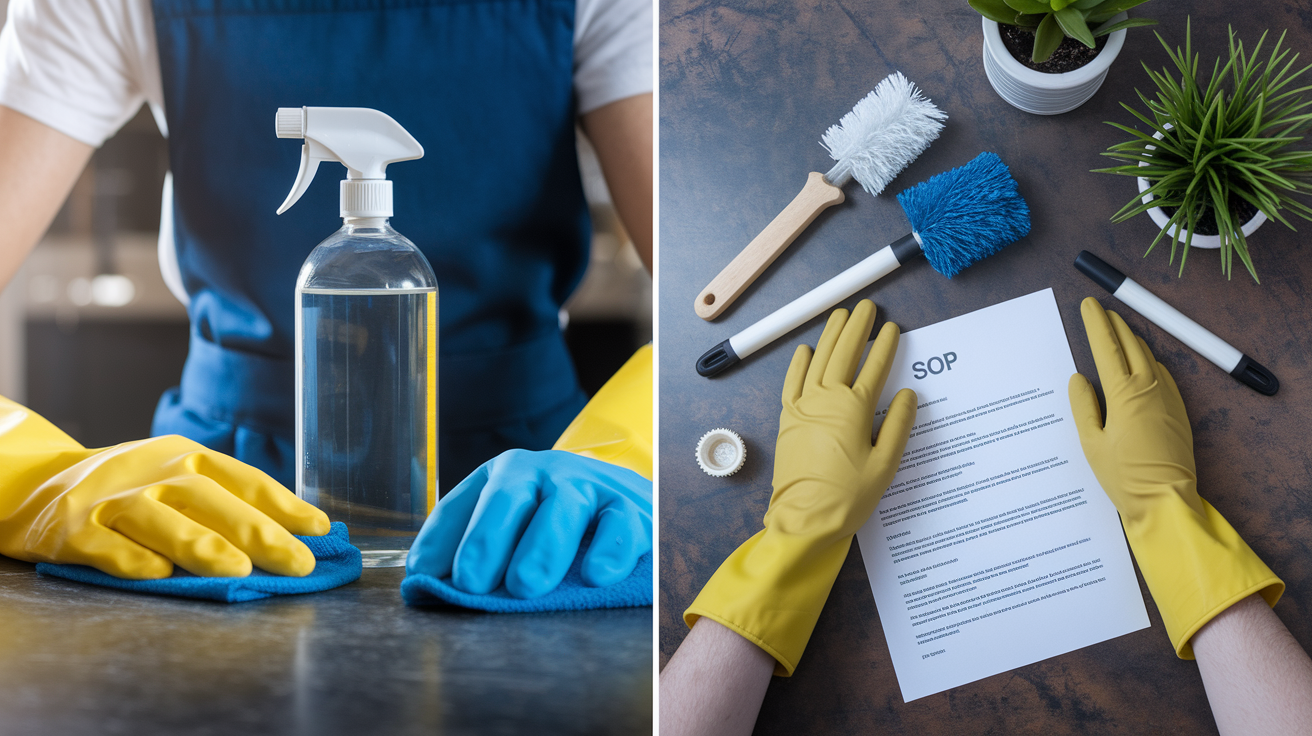
Mistakes in cleaning and maintenance create safety risks, contaminate coffee, and speed up tool failure. Using the wrong chemical can pit stainless steel, leave toxic residues, or strip protective coatings. Skipping documentation means you lose track of when parts were last serviced, which leads to unexpected breakdowns. Cutting corners saves a few minutes but costs hours in troubleshooting and replacement expense.
Performance mistakes are just as costly. Over-lubricating moving parts attracts coffee dust and forms a sticky paste. Using non-food-grade oils introduces contamination risk. Ignoring small wear signs (like a slightly bent distributor needle or a gasket that feels less springy) lets problems grow until the tool fails mid-service. If you don’t follow manufacturer maintenance intervals, you void warranties and lose the manufacturer’s service support.
Common mistakes to avoid:
- Using household bleach, oven cleaners, or harsh solvents on metal parts (pits and stains stainless steel)
- Skipping manufacturer-recommended maintenance intervals or ignoring wear indicators
- Applying non-food-grade lubricants or oils to parts that contact coffee
- Over-lubricating pivot points and shafts, which attracts dust and forms sticky buildup
- Failing to document cleaning dates, part replacements, and calibration results
- Not wearing nitrile gloves and eye protection when handling concentrated cleaners
- Mixing cleaning chemicals or using products without reading the label instructions
Documentation, SOPs, and CMMS Integration for Distribution Tool Care

Structured documentation turns ad hoc cleaning into a repeatable system that stops tool failure, cuts downtime, and protects warranty coverage. When you log every cleaning session, part replacement, and calibration check, you build a maintenance history that shows patterns. You can see when a tamper drifts out of calibration, when gaskets typically fail, and which tools need replacement before they break mid-shift.
Use a Computerized Maintenance Management System (CMMS) or simple digital checklist to schedule monthly and quarterly tasks automatically. Tag each tool with an asset ID and record service dates. Set reminders for gasket replacement every 90 days, calibration checks every three months, and annual professional service. Track spare-parts inventory in the same system so you know when to reorder before you run out. If you don’t have a CMMS, a shared spreadsheet or mobile checklist app works. The key is consistency. Log every task as it happens.
Standard Operating Procedures (SOPs) improve training consistency and cut errors. Build your SOP around a simple table or checklist that includes task name, frequency, responsible person, required tools, and a pass/fail field. Add photo examples showing acceptable tool condition versus signs of wear (like a tamper base with visible scratches or a gasket with cracks). Print the SOP and laminate it for counter reference. Update it annually or whenever you change tools, cleaning agents, or frequencies. When new staff join, walk them through the SOP hands-on and have them complete a practice session. Record their completion date in your training log.
Key SOP elements for distribution tool care:
- Task name and brief description (for example, “Weekly portafilter soak and scrub”)
- Frequency (daily, weekly, monthly, quarterly, annual)
- Responsible staff role or name
- Required cleaning agents, tools, and PPE
- Step-by-step procedure with times and measurements (for example, “soak 10 to 15 minutes”)
- Pass/fail criteria with photo examples of acceptable vs. unacceptable condition
Final Words
in the action: you now have a straight path — quick daily wipes and checks, a weekly soak and scrub, monthly calibration and lubrication, and quarterly/annual parts and service. We covered choosing safe cleaners, fixing oily buildup, and logging tasks so shots stay steady.
Pick one change today: start the simple daily checklist and watch for visual signs. A small cleaning and maintenance routine for distribution tools lowers waste and keeps extra good shots coming.
FAQ
Q: What are the 7 clean as you go tools?
A: The 7 clean-as-you-go tools are microfiber cloth, small nylon brush, knock box, portafilter mat, spray bottle with mild detergent or 70% isopropyl, dosing brush, and a spare towel.
Q: What is the 20 10 rule for cleaning?
A: The 20 10 rule for cleaning means doing a quick 20‑second tidy every 10 minutes of service to prevent buildup and keep tools ready without interrupting your workflow.
Q: What are the 10 ways of maintaining tools and equipment?
A: The 10 ways of maintaining tools and equipment are daily cleaning, weekly deep-soak, monthly calibration, regular lubrication, gasket checks, correct cleaners, dry storage, routine inspections, spare-part stock, and documented SOPs with staff training.
Q: What is the 3:30 rule for cleaning?
A: The 3:30 rule for cleaning means perform a quick 3‑minute spot clean every 30 minutes, plus a deeper 30‑minute task once per shift to prevent buildup and keep service steady.