
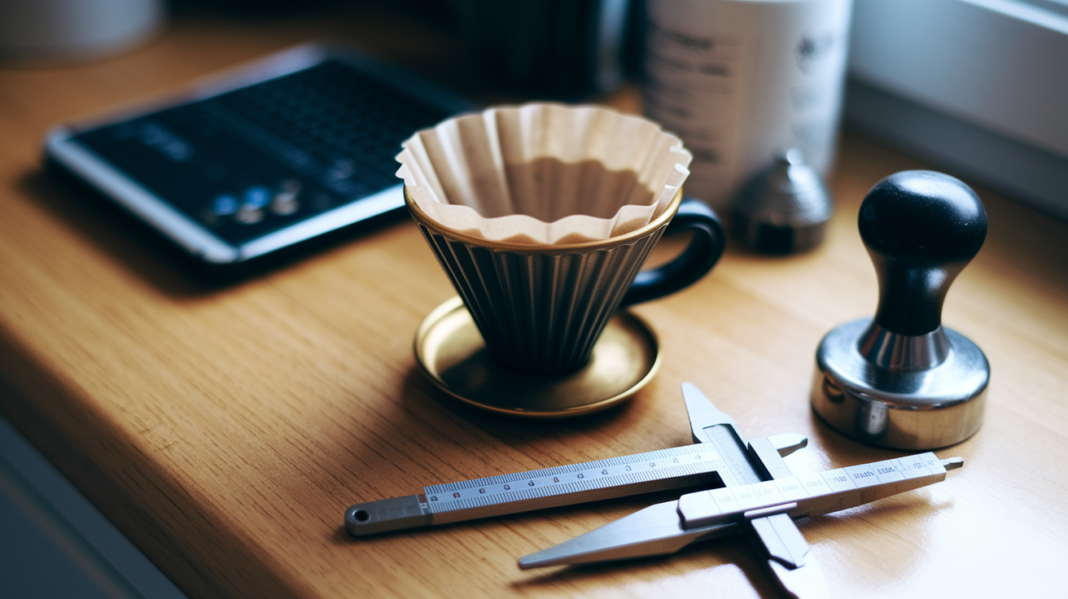

Think a 58 mm tamper fits any 58 mm portafilter? Think again.
The only number that matters is the basket’s inner diameter where the coffee sits.
Measure that with a digital caliper, subtract 0.1–0.3 mm, and pick a tamper to that size.
Do this and you stop edge gaps that let water sprint past the puck, cut channeling, and get shots that taste balanced every time.
This post shows how to measure, choose the right family, and test the fit so you stop guessing.
Determining the Correct Tamper Size Through Precise Portafilter Measurement

Measure the basket inner diameter with a digital caliper and subtract 0.1–0.3 mm to find your tamper size. That’s it. Everything else you do builds on that one measurement. The internal diameter is where coffee sits and where your tamper has to compress the puck evenly. The outer portafilter body? Tells you nothing about what’s happening inside the basket. If your basket measures 58.4 mm internally, a 58.0 or 58.2 mm tamper gives you a tight working fit. Off by even 0.1 mm and you’re risking edge gaps that let water sprint past compressed coffee.
Digital calipers give you 0.01 mm resolution, which is what you need to make confident sizing decisions. A ruler or tape measure? You’re looking at ±0.5–1.0 mm uncertainty, enough to leave you guessing between two tamper sizes. Plenty of “58 mm” baskets actually measure 58.3–58.5 mm internally, so assuming the labeled size often lands you with an undersized tamper and frustrating channeling. Measure first. If your basket has an inward ridge near the top, measure the diameter below that ridge at the depth where coffee sits. The ridge doesn’t contact the tamper, so including it in your measurement will recommend a tamper that’s too large.
Take three measurements at 0°, 60°, and 120° around the basket rim and average them. Baskets can become slightly oval with wear or may have been manufactured with small irregularities. Three readings catch these variations and give you a reliable target. Record your measurements to 0.1 mm and pick the tamper that sits 0.1–0.3 mm below your average reading.
Step by step measurement method:
- Remove the basket from the portafilter and clean the rim so no coffee debris skews the reading.
- Insert the caliper jaws into the basket and measure the inner diameter at the top rim, recording the measurement to 0.1 mm.
- Rotate the caliper approximately 60° and take a second measurement, then rotate another 60° for a third reading.
- If an inward ridge exists, place the caliper jaws just below the ridge and repeat the three measurements at that depth.
- Calculate the average of your three measurements and subtract 0.1–0.3 mm to determine the ideal tamper diameter for your basket.
Understanding Standard Espresso Tamper Sizes and Their Portafilter Matches

Three size families dominate home and commercial espresso: 51 mm, 54 mm, and 58 mm. These aren’t exact basket diameters. They’re market categories. A “58 mm” portafilter typically holds a basket that measures 58.3–58.5 mm internally, and precision tampers sized at 58.3 or 58.5 mm fit those baskets better than a standard 58.0 mm model. Same deal with “54 mm” machines, which often use baskets measuring around 53.7 mm, best paired with 53.3 mm tampers. The labels describe the portafilter group or filter holder, not the basket’s internal working diameter.
Understanding these families helps you start in the right neighborhood before you measure. A 51 mm tamper won’t fit a Breville Barista Express, and a 58 mm tamper will rattle inside a DeLonghi Dedica basket. Once you know which family your machine belongs to, measuring confirms the exact size you need and prevents expensive guesswork.
Common machine families and recommended tamper sizes:
- 51 mm family: DeLonghi Dedica, Stilosa, and similar entry machines. Baskets measure around 51.2–51.4 mm internally. Use 51.0 mm or sometimes 49.5 mm tampers depending on basket variation.
- 54 mm family (Breville/Sage small group): Barista Express, Barista Pro, Bambino Plus, Duo-Temp Pro. Baskets measure around 53.7 mm. Use 53.3 mm tampers for tight fit.
- 58 mm family (Breville/Sage large group): Dual Boiler, Oracle, Oracle Touch. Baskets measure around 58.7 mm. Use 58.0, 58.35, or 58.5 mm tampers depending on exact basket.
- 58 mm E61 and commercial standard: Gaggia Classic Pro, Rocket Espresso, ECM/Profitec, La Marzocco. Baskets typically measure 58.3–58.5 mm. Precision 58.3 or 58.5 mm tampers recommended.
- 52–53 mm niche models: Francis-Francis X1 (older models). Measure to confirm, often need 52 or 53 mm.
- Precision basket users (IMS, VST): These baskets hold tighter manufacturing tolerances and benefit most from tampers matched within 0.1 mm of measured internal diameter.
Machine by Machine Tamper Size Compatibility Overview
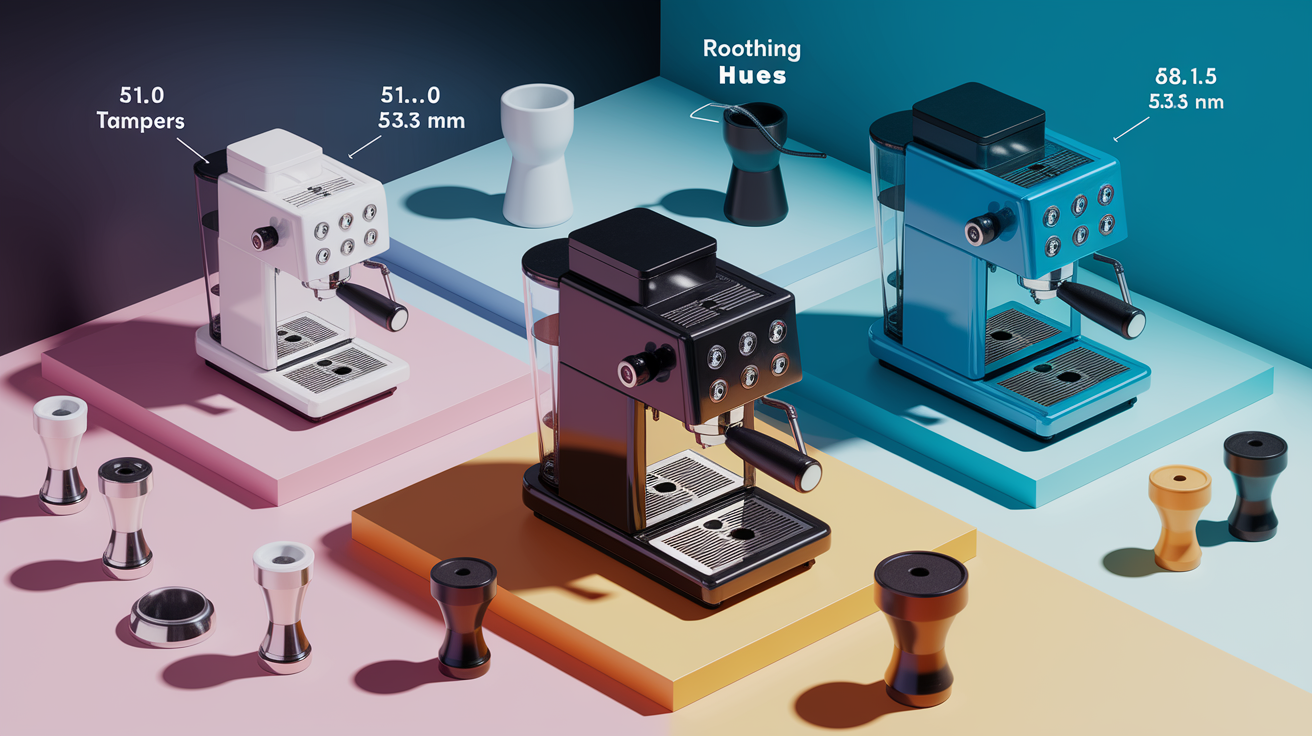
Manufacturer model names and group designations rarely tell you the actual basket size. A “58 mm portafilter” can hold a basket measuring anywhere from 58.0 to 58.7 mm internally, and those differences matter when you’re trying to avoid channeling. Some baskets include inward ridges that reduce the effective diameter where coffee sits, requiring you to measure below the ridge and choose a smaller tamper than the top rim suggests. Measure your specific basket rather than trusting generic compatibility charts alone.
The table below provides typical measurements and recommended tampers for popular machines, but treat these as starting points. Basket manufacturers vary, and even the same model line may ship with slightly different baskets depending on production year or region. Measure your basket with a caliper to confirm before ordering.
| Brand / Model | Typical Basket Inner Diameter | Recommended Tamper Size |
|---|---|---|
| DeLonghi Dedica, Stilosa | 51.2–51.4 mm | 51.0 mm or 49.5 mm |
| Breville/Sage Barista Express, Pro, Bambino Plus | ~53.7 mm | 53.3 mm |
| Breville/Sage Dual Boiler, Oracle, Oracle Touch | ~58.7 mm | 58.0, 58.35, or 58.5 mm |
| Gaggia Classic Pro | 58.3–58.5 mm | 58.3 or 58.5 mm precision |
| E61 group machines (Rocket, ECM, Profitec) | 58.3–58.5 mm | 58.3 or 58.5 mm precision |
| La Marzocco (commercial) | 58.3–58.5 mm | 58.3 or 58.5 mm precision |
| Francis-Francis X1 (older models) | 52–53 mm | 52 or 53 mm (measure to confirm) |
| Nuova Simonelli, VBM, Faema (commercial 58 mm) | 58.3–58.5 mm | 58.3 or 58.5 mm precision |
Advanced Measurement Scenarios for Non-Standard or Worn Baskets
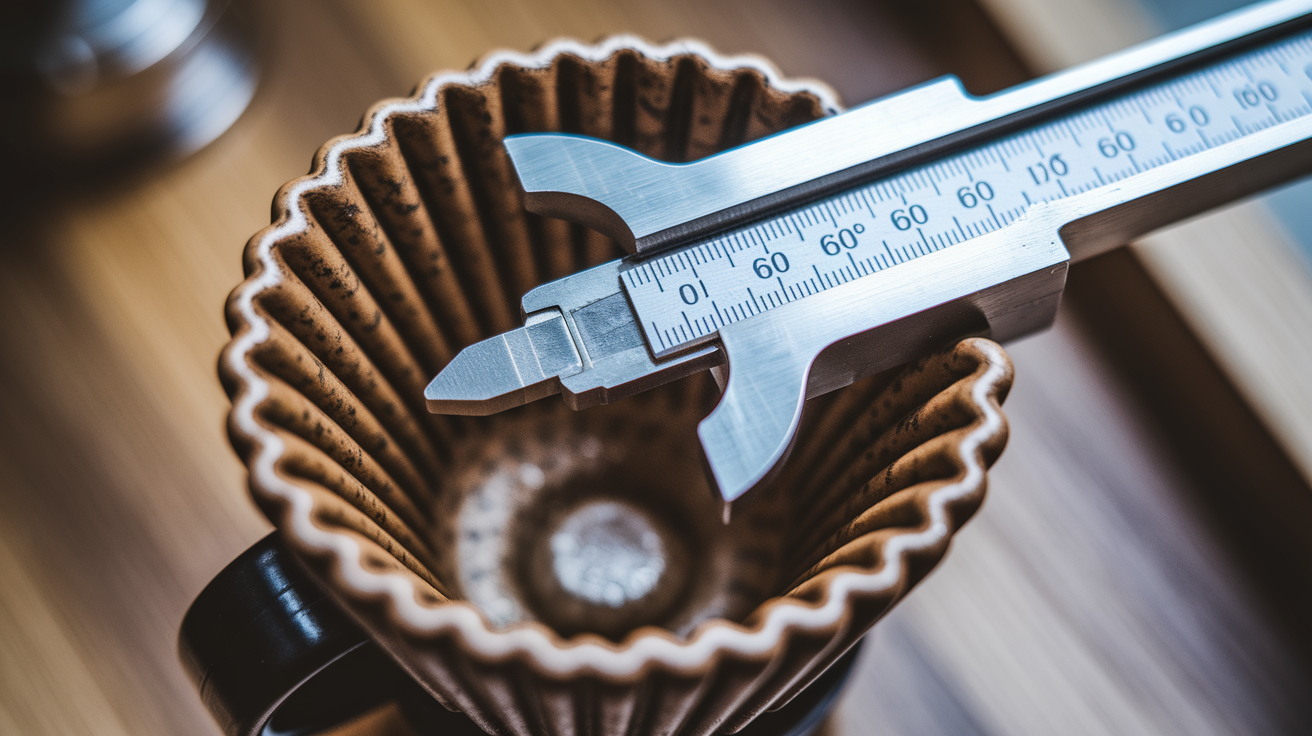
Baskets wear, warp, and develop irregular geometry over time. High brew pressure and repeated heating cycles can cause baskets to ovalize. One diameter becomes slightly longer than the perpendicular measurement. Digital calipers catch these deformations because you’re taking multiple readings at different angles. If your three measurements vary by more than 0.3 mm, your basket is no longer round and you’ll need to decide whether to size the tamper to the smallest reading (tightest fit) or replace the basket.
Tapered baskets narrow slightly as they deepen. Some designs place the widest point at the rim and taper inward toward the base, while others reverse that profile. Measure at the depth where the tamper will actually compress the coffee, usually just below any ridge or approximately 5–10 mm down from the rim. If the basket tapers significantly, a tamper sized for the top rim may bind partway down or leave gaps at the compression depth. Check for smooth tamper travel by inserting your sized tamper slowly. It should seat flat without catching or rocking.
Ridged baskets complicate measurement because the ridge reduces the working diameter below the top rim. Measure the internal diameter below the ridge, where the coffee bed sits and the tamper makes contact. If the ridge sits 3 mm down and reduces the diameter by 0.5 mm, your tamper must match the smaller measurement or it won’t seat properly. Worn baskets may also develop burrs or dents at the rim that interfere with caliper placement. File or sand these smooth before measuring, or take your readings slightly below the damaged area.
Advanced measurement considerations:
- If measurements at different angles vary by more than 0.3 mm, the basket is ovalized. Size to the smallest dimension or replace the basket for consistent results.
- Tapered baskets require measurement at the tamping depth, not the top rim. Insert the caliper jaws 5–10 mm down to find the working diameter.
- Ridged baskets must be measured below the ridge. Subtract an additional 0.1–0.2 mm from that measurement when selecting a tamper to ensure it doesn’t catch on the ridge during seating.
- Baskets with visible dents, corrosion, or rim damage should be replaced. Deformation creates unpredictable clearance and prevents reliable tamping.
Why Exact Tamper Fit Matters for Extraction Quality
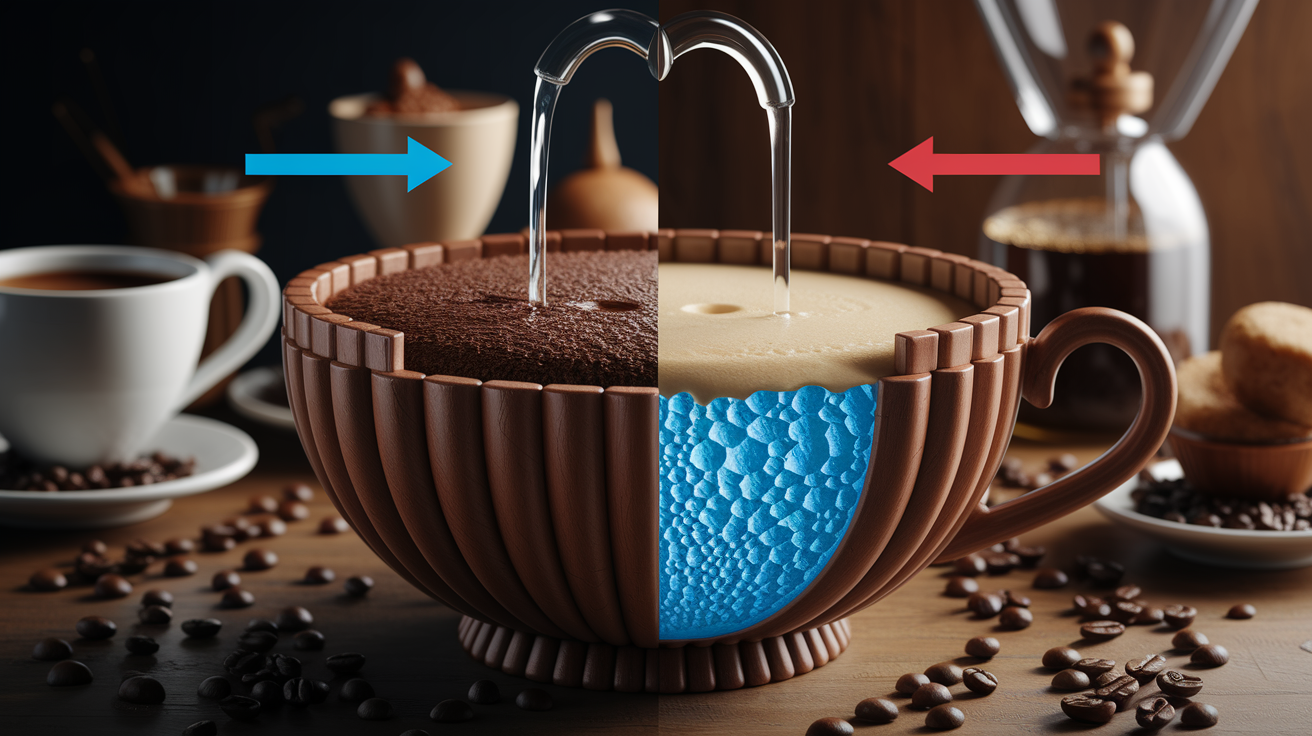
Water finds the path of least resistance. If your tamper leaves even a 0.1 mm gap around the puck edge, water under 9 bar pressure will rush through that low density ring instead of flowing evenly through the compressed coffee. Edge channeling produces sour, thin espresso because water spends less contact time extracting soluble material. The center of your puck may be perfectly compressed, but the edges become a fast lane that dilutes and unbalances the shot. Even gaps you can’t see with the naked eye matter once pressure hits the puck.
Oversized tampers create their own problems. A tamper that’s too wide scrapes the basket rim, prevents flat seating, or binds partway down and rocks when you apply pressure. Scraping leaves metal particles in your coffee and damages the basket’s interior finish. Binding forces you to tamp at an angle, compressing one side more than the other and guaranteeing uneven flow. If your tamper requires force to insert or remove, it’s too large. Period.
Visual signs of poor fit appear during the shot and after you knock out the puck. Spritzing from a bottomless portafilter (fine streams or mist erupting from the basket edges) signals edge channeling caused by insufficient compression. Uneven flow, where espresso pours faster on one side, points to angled tamping or a tamper that doesn’t cover the full diameter. After knocking out the puck, look at the edges: a properly fitted tamper leaves a clean, even compression ring. An undersized tamper leaves a loose, crumbly ring or visible gaps where the basket wall curves away from uncompressed coffee.
Choosing Between Precision, Standard, and Adjustable Tampers
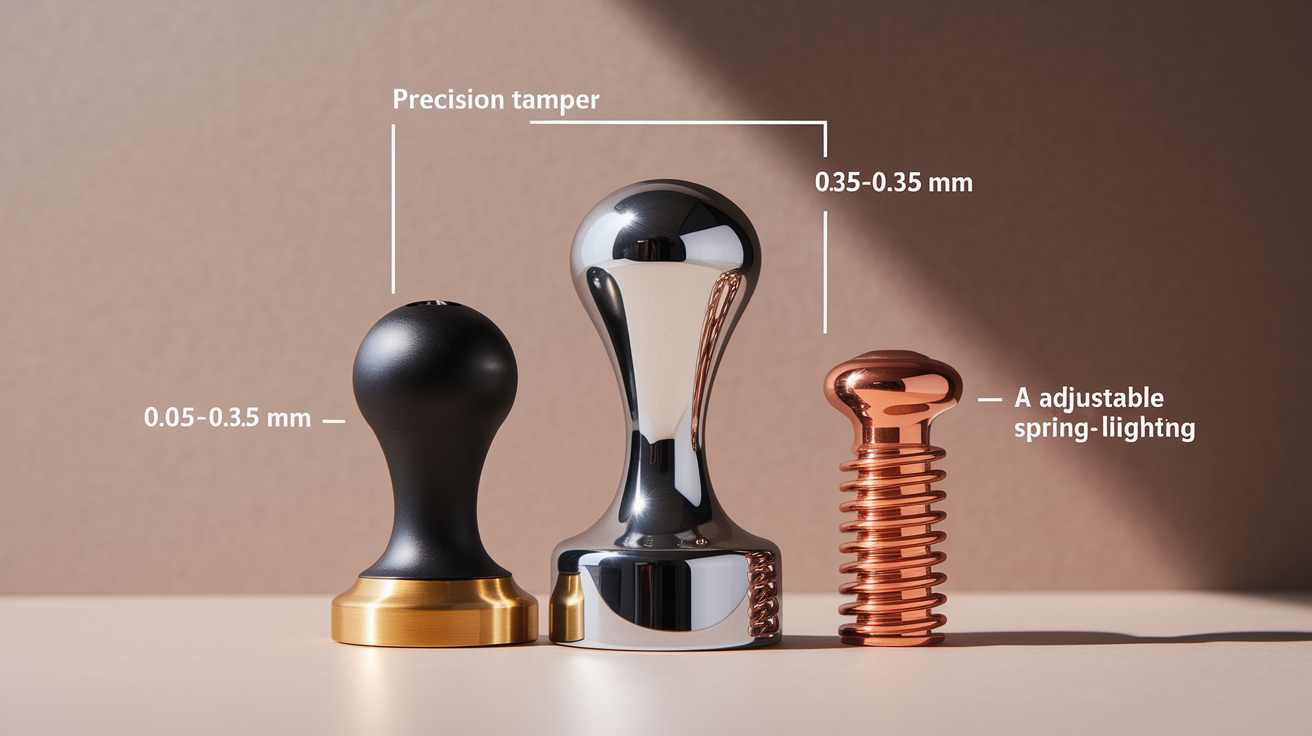
Precision tampers are machined to match your basket within 0.05–0.1 mm. They cost more, but they eliminate the guesswork and edge gaps that cause channeling. If you’ve measured your basket at 58.4 mm and you buy a precision 58.3 mm tamper, you know the clearance is 0.1 mm all the way around. Tight enough to compress edges fully, loose enough to seat and release smoothly. Standard mass produced tampers carry 0.5–1.0 mm manufacturing tolerance, which means a “58 mm” tamper might measure anywhere from 57.5 to 58.5 mm. That uncertainty makes it hard to predict fit without testing.
Adjustable or spring loaded tampers maintain consistent pressure by design. Push until the spring compresses or the calibrated mechanism clicks, and you’ve applied the target force. They’re helpful for reducing shot to shot pressure variation, but they don’t fix diameter mismatch. A self leveling tamper keeps the base flat relative to the basket, which prevents angled compression, but if the diameter is wrong you’ll still get edge channeling. These tools improve technique consistency after you’ve solved the fit problem. They’re not a substitute for correct sizing.
Precision, standard, and adjustable tamper trade offs:
- Precision tampers deliver repeatable clearance within 0.1 mm. Best for users chasing consistency or using high end precision baskets like IMS or VST.
- Standard tampers cost less and work adequately if you verify the actual diameter with a caliper before buying. Expect ±0.5 mm variation between samples.
- Spring loaded or calibrated tampers standardize pressure application and reduce user error, but only after diameter fit is correct. They won’t compensate for a tamper that’s too small.
- Self leveling tampers prevent angled compression and help beginners maintain flat tamps. Still require correct diameter to avoid edge gaps.
- Stepped or interchangeable base tampers let you swap bases for multiple basket sizes. Practical if you own more than one machine or frequently switch between basket types.
Tamper Base Shape and Its Interaction With Basket Size
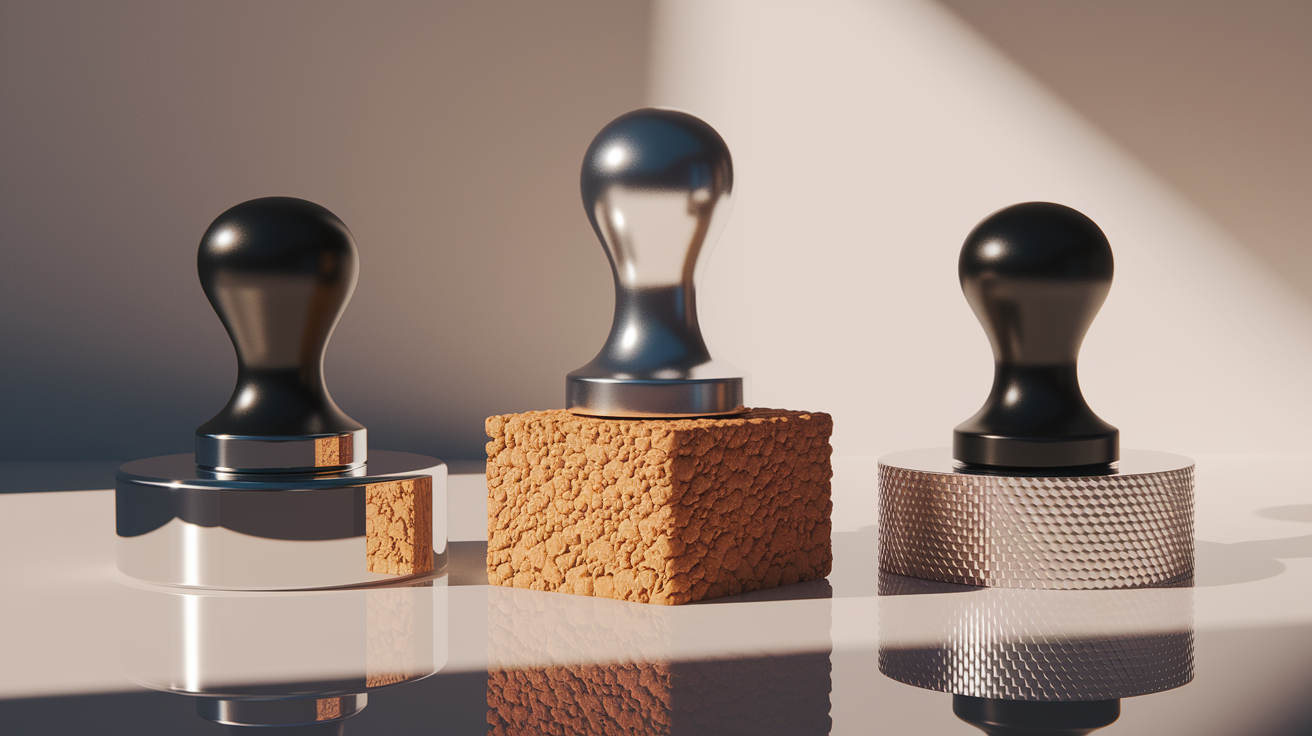
Flat bases compress the entire puck surface evenly and predictably. They’re the default choice because they produce consistent results across different coffees, doses, and baskets. A flat base makes full contact with the coffee bed when seated properly, leaving no center gap or uneven edge compression. Most baristas and home users should start here. If you’re troubleshooting channeling, a flat base tamper eliminates base shape as a variable.
Convex bases curve slightly downward at the center, creating higher pressure in the middle of the puck and theoretically reducing edge channeling by encouraging water to flow inward. This design was more common decades ago when basket manufacturing and tamping tools were less precise. Modern precision baskets and proper fit make convex bases less necessary. Some users still prefer them for specific workflows or based on taste preference, but the performance difference is subtle when you’ve already matched tamper diameter correctly.
Ripple or textured bases feature small grooves or patterns that reduce micro slippage between the tamper and coffee during compression. They improve tactile feedback and may help with consistency if you’re tamping by feel rather than using a calibrated tool. The texture effect on extraction is minimal compared to diameter fit and distribution quality. If you already have good puck prep, a ripple base won’t transform your espresso, but it can make the tamp motion feel more secure and repeatable.
When to choose each base style:
- Choose a flat base for predictable, even compression and the widest compatibility with all basket types and prep methods.
- Choose a convex base only if you have a specific workflow reason or taste preference. Modern precision fit makes this shape less relevant.
- Choose a ripple or textured base if you tamp manually and want improved grip and tactile feedback during compression.
Basket Geometry and Its Influence on Tamper Selection

Basket depth doesn’t change the tamper diameter you need, but it does affect how far down the tamper travels and whether it seats flat. Shallow baskets require careful leveling because there’s less vertical room for error. Deep baskets give you more clearance but can hide poor distribution under a seemingly smooth surface. Measure diameter at the depth where the tamper compresses the coffee, not at the basket’s deepest point. If your basket tapers, the effective diameter may change as the tamper descends.
Ridged baskets include an inward lip or step partway down the wall. This ridge reduces the working diameter below the top rim, sometimes by 0.3–0.7 mm. Measure below the ridge using calipers inserted to the correct depth. If you size your tamper to the top rim measurement, it’ll bind on the ridge and prevent full seating. Ridgeless straight walled baskets simplify measurement. One reading at the rim is usually sufficient. Precision baskets from IMS, VST, and similar manufacturers hold tighter tolerances (±0.1 mm) and benefit most from tampers matched within 0.1–0.2 mm of the measured diameter.
Double baskets typically use the same internal diameter as single baskets from the same machine, but they’re deeper and hold more coffee. The tamper size stays the same, only the dose and depth change. If you’re switching between single and double baskets on the same portafilter, one tamper usually fits both as long as the basket rim diameters match. Measure both baskets if you notice fit differences. Some manufacturers use slightly different diameters for single and double versions.
Basket geometry tips:
- Measure ridged baskets below the ridge at the depth where coffee sits. Subtract 0.1–0.2 mm from that measurement when selecting a tamper to prevent binding.
- Tapered baskets require measurement at tamping depth, typically 5–10 mm below the rim. Check for smooth tamper travel by inserting it slowly and confirming it seats flat.
- Precision baskets demand tampers within 0.1–0.2 mm of measured diameter. Standard ±0.5 mm tolerance tampers waste the basket’s tight manufacturing specs.
- Double and single baskets from the same portafilter usually share the same rim diameter. Verify with a caliper if you notice any fit variation when switching baskets.
Integrating Distribution Tools and Tamping Technique With Tamper Size
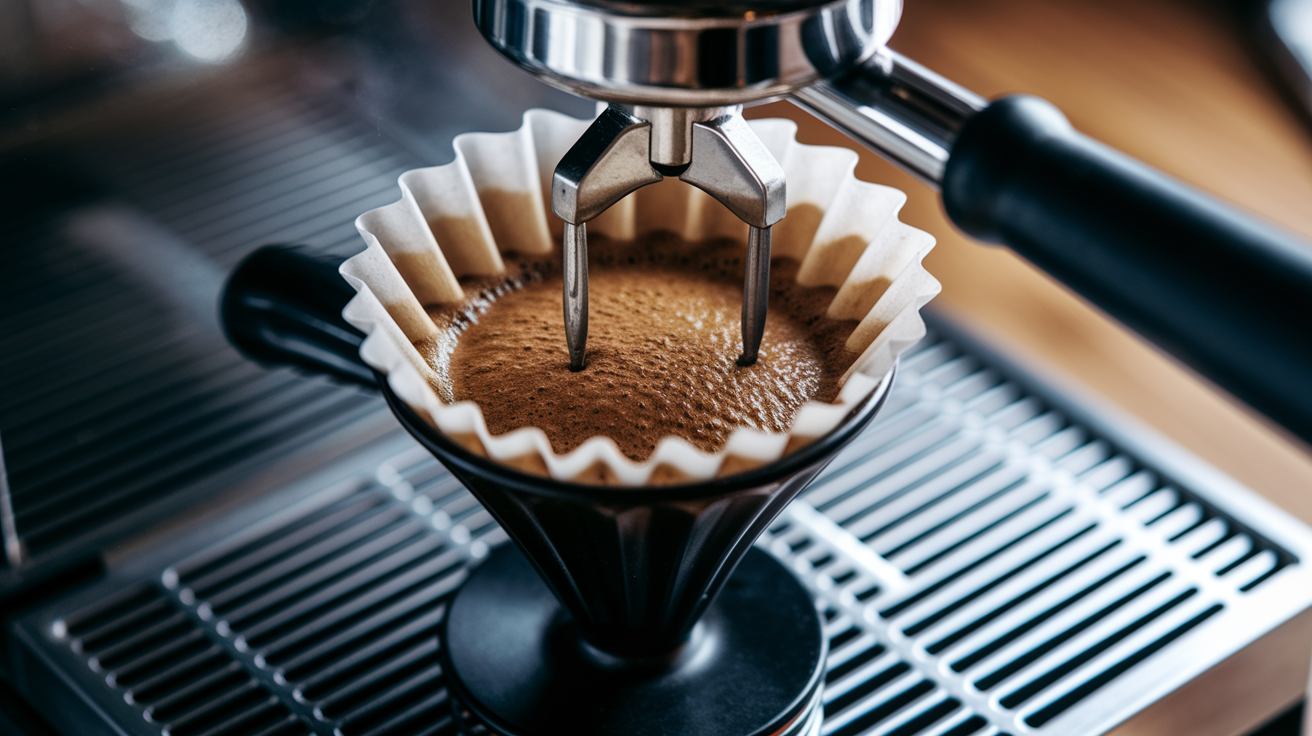
WDT needles and distribution tools break up clumps and level the coffee bed before you tamp. They create an even starting density so the tamper can compress uniformly. Good distribution helps, but it can’t fix a tamper that’s 0.5 mm too small. Water will still find the edge gaps and channel around the perimeter. Think of distribution and tamper fit as separate variables. Nail distribution first, then ensure your tamper diameter leaves no escape routes at the edges.
Tamp once with steady, even pressure. How much force you apply matters less than diameter fit and consistency. Whether you press at 15 kg or 20 kg, an undersized tamper still leaves edge gaps. Once the coffee is compressed, adding more pressure doesn’t close those gaps. It just compresses the center further. A properly fitted tamper lets you use moderate, repeatable force and get even results shot after shot. Self leveling tampers or calibrated models help maintain consistent pressure and angle, but they’re most effective after you’ve confirmed correct diameter.
Distribution and tamping best practices:
- Use WDT or a distribution tool to break clumps and level the bed before tamping. This reduces density variation that causes channeling independent of tamper fit.
- Tamp once with consistent pressure. Adding extra force or multiple tamps doesn’t compensate for wrong diameter or poor distribution.
- Check that your tamper seats flat and releases smoothly. Binding, rocking, or visible gaps during insertion signal incorrect sizing.
- Combine a properly fitted tamper with repeatable pressure and good distribution for shot to shot consistency. No single tool solves all variables.
Troubleshooting Wrong Tamper Size: Symptoms, Fixes, and Next Steps

Undersized tampers leave visible or near visible gaps between the puck edge and the basket wall. During extraction, water rushes through these low density zones, creating fast path channeling that shows up as spritzing, uneven flow timing, or one side pouring before the other. After you knock out the puck, the edges look loose or crumbly, and you may see a ring of coffee stuck to the basket wall. If your shots taste sour, thin, or inconsistent despite good beans and correct grind, measure your tamper diameter and compare it to your basket’s internal measurement.
Oversized tampers bind during insertion, scrape the basket rim, or prevent the tamper from seating flat. You’ll feel resistance when pressing down, and the tamper may tilt or rock instead of sitting level. Scraping leaves metal shavings in your coffee and damages the basket’s coating. If you’re forcing the tamper in or out, it’s too large. Some baskets with inward ridges appear to accept a tamper at the rim but bind partway down. Measure below the ridge to catch this issue before buying.
| Issue | Likely Cause | Fix |
|---|---|---|
| Spritzing or mist from basket edges during extraction | Undersized tamper leaving edge gaps; water channeling around perimeter | Measure basket ID with caliper; buy tamper 0.1–0.3 mm smaller than measured value |
| Loose, crumbly puck edges after knockout | Tamper too small; edges not compressed | Confirm tamper diameter vs basket ID; replace with larger tamper if gap exceeds 0.3 mm |
| Tamper binds, rocks, or scrapes during insertion | Oversized tamper or ridged basket measured at wrong depth | Measure below any ridge; choose tamper 0.1–0.3 mm smaller than that measurement |
| Uneven flow or one side pours faster | Angled tamp from binding tamper, or diameter mismatch causing uneven compression | Check tamper diameter and seating; consider self leveling tamper after confirming correct size |
| Inconsistent shots with same grind and dose | Tamper fit varies shot to shot due to basket ovalization or tamper tolerance | Verify basket roundness with three angle caliper measurements; replace basket if variance exceeds 0.3 mm |
Final Words
Measure the basket’s internal diameter with digital calipers, take three readings at different angles, average them, and choose a tamper 0.1–0.3 mm smaller.
Skip rulers. Measure below any inward ridge or taper. Remember internal diameter, not the outside body, matters for sealing and preventing edge channeling.
Follow the step-by-step checks and pairing tips in this guide so you know how to choose espresso tamper size for your portafilter. Pull a test shot, tweak one thing, and enjoy steadier, cleaner shots.
FAQ
Q: How do I know what size espresso tamper I need?
A: The tamper size you need is the basket’s internal diameter minus 0.1–0.3 mm. Measure inside edge-to-edge with digital calipers at three angles, average the results, and avoid measuring over ridges.
Q: What is the 2:1 rule for espresso?
A: The 2:1 rule for espresso means the brew yield should be about twice the dry dose. For example, 18 g dose → 36 g yield in ~25–30 seconds; adjust grind to hit the time and taste.
Q: Will a 51mm tamper fit a 51mm portafilter?
A: A 51 mm tamper will fit a 51 mm portafilter only if the basket’s actual internal diameter measures ~51.0 mm. Always measure the basket ID and choose a tamper 0.1–0.3 mm smaller.
Q: Is 9 bar or 15 bar better for espresso?
A: A 9 bar brew pressure is the practical target for extraction; 15 bar usually reflects pump peak and offers no extraction advantage. Choose a machine that holds a steady ~9 bar during brewing.