


Think the grinder is always to blame for messy bottomless shots? Your tamper is probably the real culprit.
Bottomless portafilters show every tiny gap the second water hits the puck.
Matching tamper size, shape, and weight to your basket stops side-spray, early blonding, and single fast jets.
This post walks you through measuring the basket, choosing a tamper about 0.3 to 0.5 mm smaller, picking flat versus convex, and testing fit.
One clear next step: grab digital calipers and measure your basket’s inner diameter before you buy anything.
Essential Tips for Matching a Tamper to a Bottomless Portafilter

Bottomless portafilters don’t hide anything. Pull the spout off and every gap between tamper and basket becomes obvious the second water hits the puck. A loose-fitting tamper leaves a ring of untamped coffee right along the basket wall, and water finds that path instantly. You’ll see side-spraying or early blonding, sometimes before you even reach 20 seconds.
Tamper diameter controls how much puck surface actually gets compressed. A 58mm basket needs something between 58.3mm and 58.5mm to leave just the thinnest gap at the edge. Go smaller than 58mm and you’re leaving a visible ring of loose grounds that channels every single time. Go larger than 58.6mm and it won’t fit without scraping or jamming. You want maximum coverage without metal-on-metal contact, which damages the basket coating or creates an uneven surface over time.
Correct tamping technique stops being optional once you switch to bottomless. You’ll see immediately if you rocked the tamper, pushed harder on one side, or skipped proper distribution. Shots that looked fine from a spouted portafilter suddenly show spraying, uneven streams, or one-sided gushing. The bottomless doesn’t create new problems. It just makes the old ones impossible to miss.
Most important matching guidelines:
- Measure your basket’s inner diameter with calipers before buying any tamper
- Choose a tamper 0.3mm to 0.5mm smaller than the basket’s inner diameter
- Verify the tamper base is perfectly flat and concentric with the handle
- Test fit by inserting the tamper into an empty, dry basket and checking for even gaps
- Replace any tamper that scrapes, tilts, or leaves more than a 1mm gap around the edge
Measuring Basket Diameter for Proper Tamper Fit

Most baskets stamped “58mm” actually measure between 58.0mm and 58.4mm at the inner wall. Some sit closer to 57.8mm depending on the manufacturer. Measuring with digital calipers gives you the real number, not the marketing size. Place the caliper jaws inside the basket rim, spanning the widest point across the bottom where coffee sits. Measure twice in perpendicular directions because some baskets aren’t perfectly round after manufacturing or years of use.
Rim-to-wall clearance matters more than you’d think. A tamper that leaves a 2mm gap all the way around creates a channel highway right at the puck edge. Water finds that loose ring first and rushes through it, bypassing most of the coffee. Bottomless portafilters turn that mistake into visible side-spray within five seconds of starting the shot. You want just enough clearance so the tamper doesn’t scrape or bind, but tight enough that the untamped ring is nearly invisible.
| Inner Basket Diameter | Recommended Tamper Diameter | Fit Tolerance (mm) |
|---|---|---|
| 58.0mm – 58.2mm | 57.5mm – 57.8mm | 0.2 – 0.4 |
| 58.3mm – 58.5mm | 58.0mm – 58.3mm | 0.2 – 0.3 |
| 53.0mm – 53.3mm | 52.5mm – 53.0mm | 0.3 – 0.5 |
Flat vs Convex Tampers When Using Bottomless Portafilters
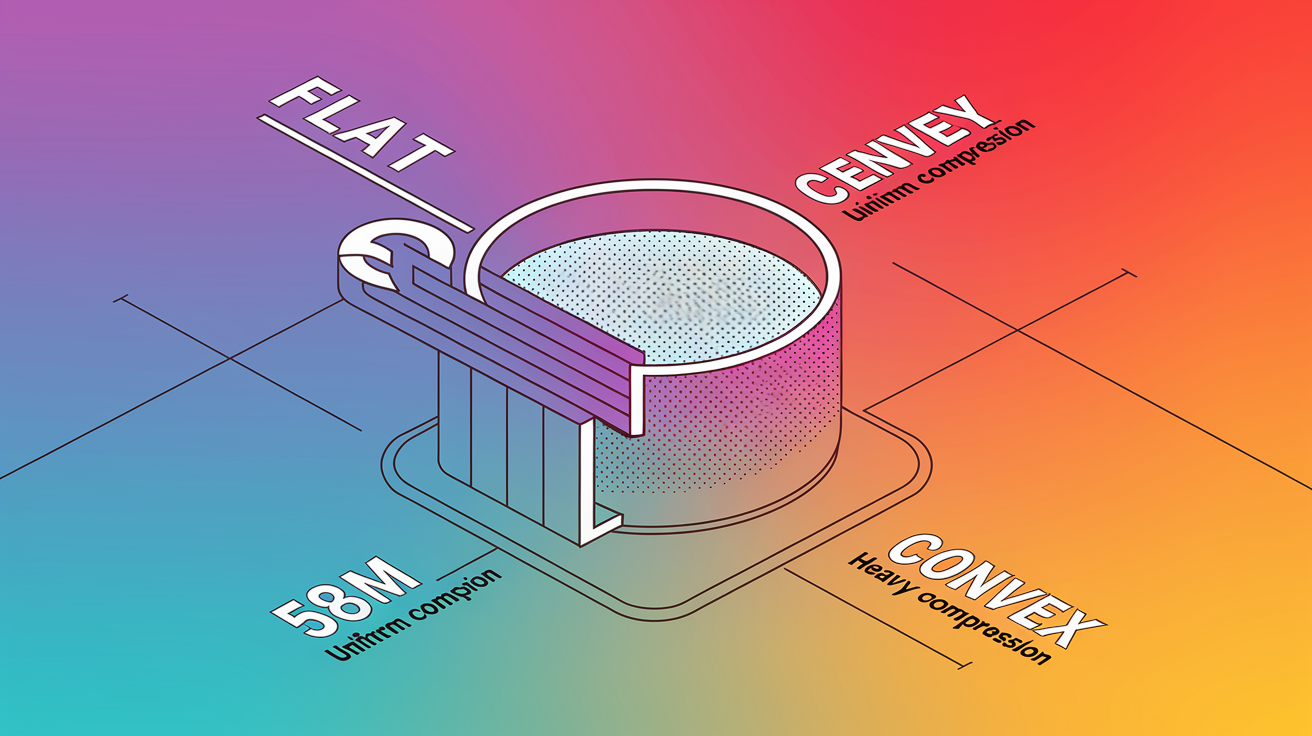
Flat tampers compress the entire puck surface evenly, creating uniform resistance across the full diameter. The edges and center get identical pressure, assuming you tamp straight down without rocking. This produces the most predictable flow pattern through a bottomless portafilter. When the shot starts, you’ll see espresso emerging evenly from multiple points across the basket, then merging into one smooth stream as pressure builds. Any unevenness you see comes from distribution problems or grind inconsistencies, not from the tamper shape.
Convex tampers press harder in the center and lighter near the edges, creating a slight dome in the compressed puck. The idea is that this compensates for water’s natural tendency to flow faster at the puck edges where the basket wall creates a boundary. In practice, convex tampers make edge channeling more visible with bottomless portafilters because the outer ring is less compressed. If your distribution and grind are already tight, a convex base can balance flow. If your prep has any weak spots, convex tamping makes them worse. You’ll see early spraying from the sides before the center even starts flowing.
Choose flat tampers when you’re still dialing technique or working with single-origin beans that change weekly. The consistent compression gives you one less variable to manage. Convex bases work better once your workflow is locked in and you’re trying to control minor edge-flow issues on a stable setup. For most home baristas using bottomless portafilters as diagnostic tools, flat is the simpler starting point.
Tamping Technique Adjustments for Bottomless Portafilter Accuracy
Distribution comes before tamping, and bottomless portafilters punish every shortcut. Clumps, voids, or uneven mounds in the dry grounds turn into visible channels the moment water touches them. Move the portafilter gently while dosing to spread grounds across the basket floor, or use a WDT tool to break up clumps and level the bed. You want a flat, even surface with no gaps near the basket wall and no piles in the center.
Tamp pressure consistency matters more than absolute force. Pushing with 30 pounds one shot and 15 pounds the next creates different puck densities, which change flow rate and extraction time. Find a pressure that compresses the puck firmly without maxing out your wrist strength, then repeat it every time. The bottomless will show you immediately if you rocked the tamper or pressed unevenly. One side of the puck will break early, sending a jet of under-extracted coffee spraying sideways.
Angle control separates clean shots from messy counters. Keep the tamper handle vertical and press straight down into the basket. If you tilt even slightly, one edge compresses more than the other. Water finds the looser side first. With a bottomless portafilter, that shows up as a single stream erupting from one spot while the rest of the puck stays dry. It looks dramatic and tastes sour because half the coffee never touched water.
Optimal puck-prep workflow:
- Dose into a clean, dry basket, spreading grounds evenly as you go
- Use a WDT tool or gentle taps to eliminate clumps and level the bed
- Place the tamper flat on the coffee surface, checking that it’s level before pressing
- Apply firm, even pressure straight down until the puck stops compressing
- Lift the tamper straight up without twisting or tilting
- Wipe any loose grounds from the basket rim before locking in
Diagnosing Extraction Issues Using Bottomless Visual Feedback

Channeling shows up as thin, fast jets shooting from one or more spots on the basket bottom, often spraying at angles instead of dropping straight down. This happens when water finds a weak spot in the puck. A gap at the edge, a clump that didn’t break up, or a section that didn’t get tamped. The jet usually appears within the first five seconds, sometimes before crema even starts forming. If you see it, stop the shot, dump the puck, check your prep, and try again with better distribution or a closer tamper fit.
Proper extraction looks like dark, thick streams emerging from multiple points across the basket, then merging into one column that flows smoothly downward. The color starts deep reddish-brown, transitions to caramel, and lightens gradually as the shot progresses. You shouldn’t see any side-spray, sputtering, or uneven flow. The dry puck after extraction should drop out cleanly with an evenly impressed tamper mark across the entire surface and no craters, cracks, or soft spots.
Observable flaws and what each indicates:
- Side-spraying within five seconds: tamper too small or uneven tamp left a loose ring at the basket edge
- Single fast jet from one spot: channeling caused by clump in the grounds or uneven distribution
- Blonding before 20 seconds: under-dosed puck or grind too coarse for the dose and tamp
- Slow drip with no streams forming: over-compressed puck from excessive tamp pressure or grind too fine
- Cracked or cratered puck after extraction: inconsistent tamping pressure or uneven distribution before tamping
Material, Weight, and Handle Considerations for the Ideal Tamper Match
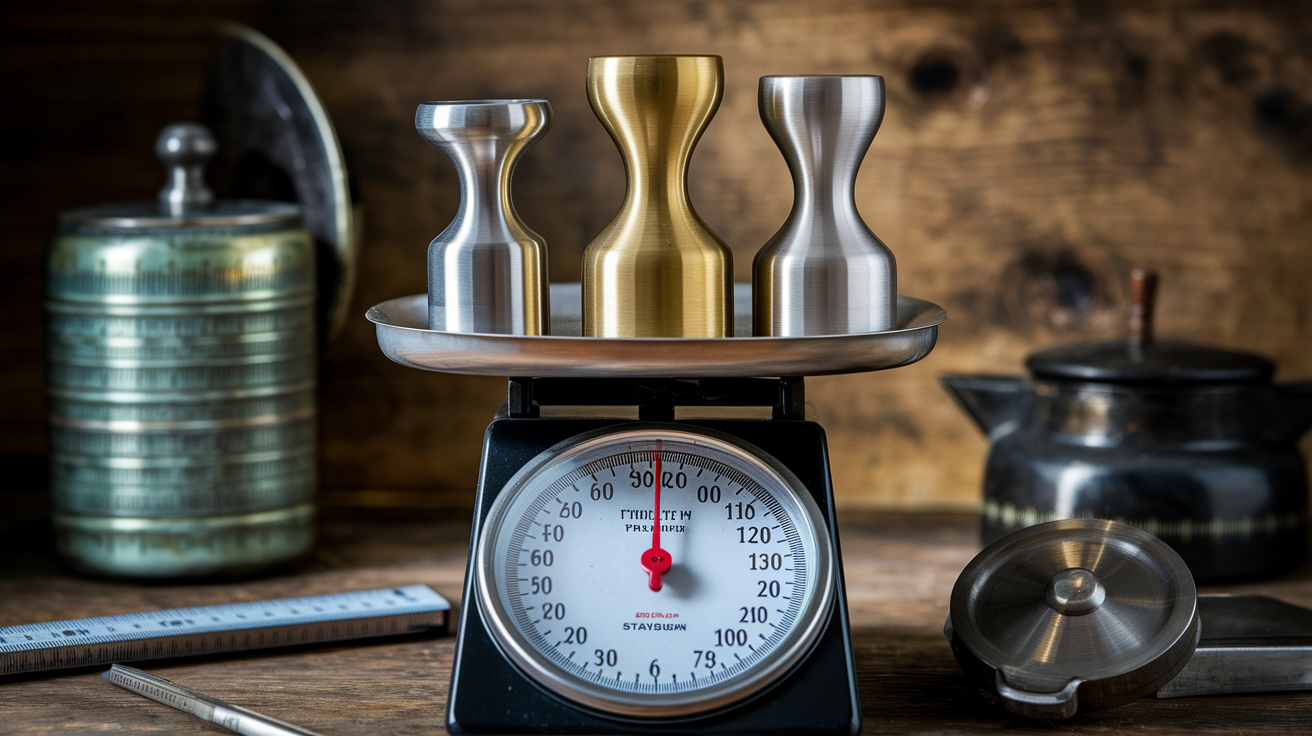
Stainless steel bases stay flat, resist corrosion, and provide enough weight to help with consistent pressure. A 58mm stainless tamper usually weighs between 400 and 600 grams, heavy enough that you don’t have to push as hard to compress the puck. Brass tampers weigh slightly more and develop a patina over time, but they perform nearly identically to stainless in daily use. Aluminum tampers are lighter, which means you need more active pressure to compress the puck fully. That makes consistency harder to maintain shot after shot.
Weight affects how much force you need to apply and how stable the tamper feels during the press. Heavier tampers let gravity do more of the work, reducing the chance you’ll tilt or rock while pressing. Lighter tampers require more deliberate control, which can lead to angle errors that show up immediately in bottomless shots. For most people, a tamper between 450g and 550g provides the best balance of control and ease.
Handle ergonomics directly influence alignment. A handle that fits your hand comfortably and sits naturally vertical makes it easier to tamp straight down without compensating. Handles that are too small, too large, or oddly shaped force you to grip awkwardly, which tilts the base and creates uneven compression. Test the handle grip before buying, and check that the base sits flat when you hold it naturally. The base finish should be smooth and polished to reduce sticking to the puck, but not so slick that coffee oils make it slide around.
Workflow Tips for Matching Tampers to Bottomless Portafilter Routines
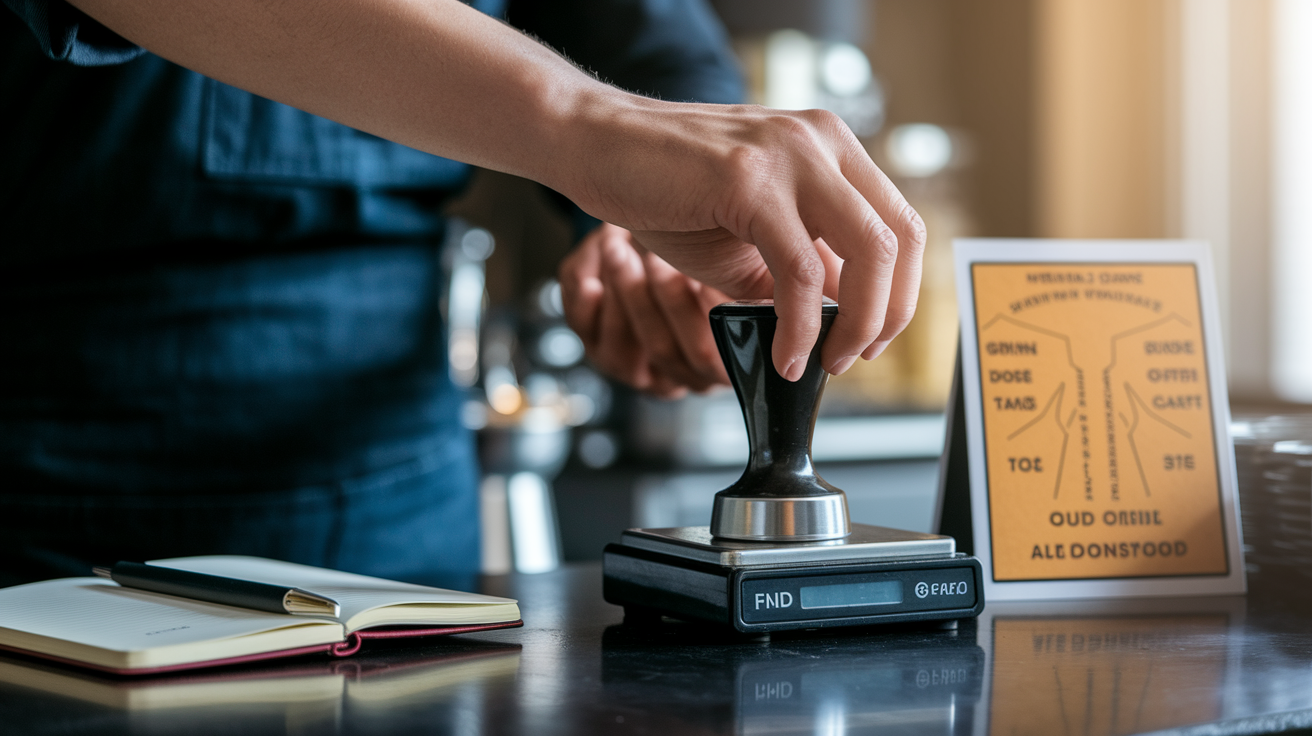
Grind size, dose, and tamp all work together as one system. If you change your dose by even one gram, the same grind setting and tamp pressure produce a different extraction because the puck depth and density shifted. Bottomless portafilters show this immediately through flow rate and visual evenness. Start by dialing grind and dose with a scale and timer, then tamp consistently and observe the shot. Adjust one variable at a time, pull another shot, and watch how the flow changes.
Common mistakes show up faster with bottomless portafilters. Overdosing creates a thick puck that chokes the shot or cracks under pressure, sending water through the break. Underdosing leaves a thin puck that channels around the edges. Uneven distribution creates fast paths through loose sections. Rocking the tamper compresses one side more than the other, breaking the puck open on the looser side. Each mistake produces a distinct visual pattern: side-spray, single-point jetting, early blonding, or uneven crema formation. Learn to recognize the pattern, trace it back to the prep step, and fix that step before pulling the next shot.
| Routine Step | Primary Goal | Common Mistake | What Bottomless Shows |
|---|---|---|---|
| Dosing | Consistent weight spread evenly | Clumping or mounding in center | Fast jet from clumped section |
| Distribution | Level bed with no gaps | Skipping WDT or tapping too hard | Multiple uneven streams or side-spray |
| Tamping | Even, straight compression | Rocking or tilting tamper | One-sided jet and early blonding |
| Locking In | Clean rim, secure seal | Loose grounds left on rim | Leaking or uneven pressure at edges |
| Shot Observation | Identify flow issues in real time | Ignoring early spray or uneven streams | Continued channeling and sour taste |
Final Words
Spritzing, sputtering, or a slow honey-thick stream—those are the signals you use right at the machine to spot fit and tamp issues.
You learned how to measure the basket, pick the right tamper diameter and base, steady your pressure, and tighten your workflow. The visual feedback from a bottomless portafilter makes small fixes obvious.
Change one thing at a time and watch the flow. matching tamper to bottomless portafilter tips will save shots and get you steady, tasty results.
FAQ
Q: What are the disadvantages of bottomless portafilter?
A: The disadvantages of a bottomless portafilter are that it exposes extraction flaws (spritzing, channeling), makes shots messier, and requires much more precise grind, dose, and tamp—improve puck prep first.
Q: Should tamper be smaller than portafilter?
A: A tamper should not be smaller than the portafilter; an undersized tamper leaves rim gaps that cause channeling. Measure the basket inner diameter and choose a tamper within about 0.2–0.5 mm of that.
Q: Do you get more crema with bottomless portafilter?
A: A bottomless portafilter does not produce more crema; it simply shows crema and flow clearly. Crema depends on fresh beans, roast, dose, pressure, and extraction quality—focus on those to increase crema.
Q: Is it harder to use a bottomless portafilter?
A: A bottomless portafilter is harder at first because it reveals small prep mistakes, but it’s a useful diagnostic tool—practice even dosing, distribution, and consistent tamping, adjusting one variable at a time.