
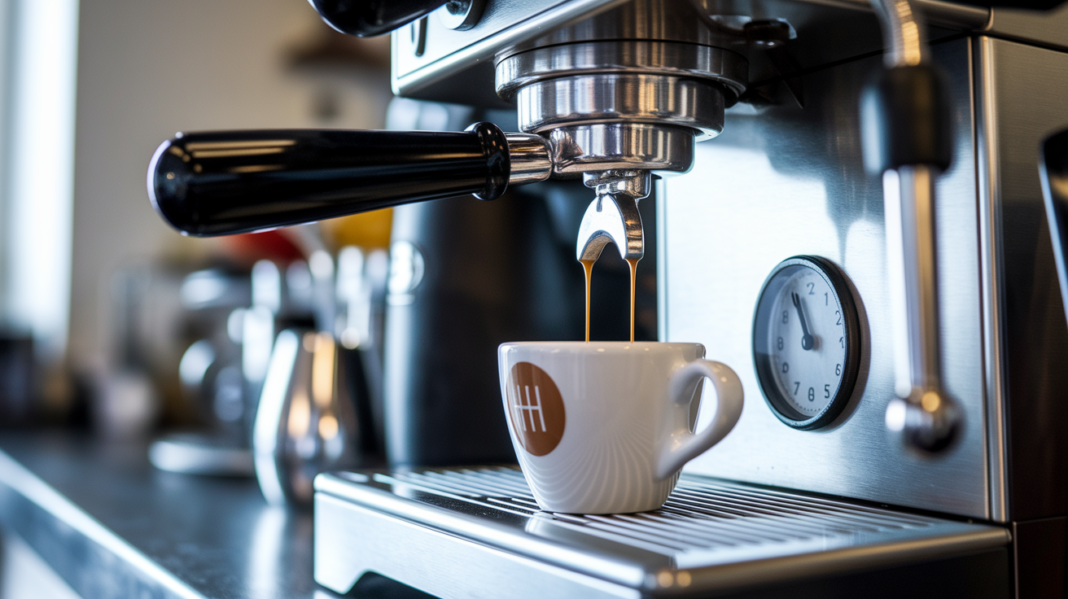

What if your morning espresso tastes different every day even when you didn’t change anything?
Most home baristas blame grind or beans, but inconsistent pre-infusion timing is often the hidden cause.
This post walks you through simple checks and one-step fixes for levers, E61s, and pump machines.
You’ll learn how to measure pre-infusion with a stopwatch, stabilize puck prep, and lock in a repeatable soak so shots stop swinging sour or bitter.
Start with a blank shot and a timer. Small changes, big consistency.
Understanding Pre-Infusion and Its Impact on Espresso Consistency

Pre-infusion is when water first touches your puck at low pressure, usually 1 to 3 bars, before the full 8 to 9 bars kicks in. That gentle soak saturates the grounds evenly, stops dry patches from turning into fast channels, and lets trapped CO2 escape without causing chaos. When your pre-infusion timing stays the same shot to shot, flow becomes predictable, flavors balance out, and you’re not chasing sour or bitter weirdness every morning.
Most home machines give you somewhere between 2 and 10 seconds of pre-infusion depending on how they’re built. Manual levers let you control every moment. Programmable dual boilers lock in a preset window. Entry-level pump machines might not give you any adjustments at all. Whatever design you’re working with, stable timing cuts down the randomness that drives home baristas crazy, especially when you’re dialing in lighter roasts that need even saturation.
If your shots taste different every time but you didn’t touch the grind, inconsistent pre-infusion is probably the hidden problem. Water might be hitting the puck at different speeds. Seals might be worn. Your distribution routine might be all over the place. Locking down pre-infusion timing gives you a repeatable baseline, so when you adjust grind, dose, or ratio, you actually get the changes you’re expecting.
Four quick steps to stabilize pre-infusion on any machine:
- Use a stopwatch or timer app to measure how long water flows before the first drip appears at the basket.
- Check that your portafilter basket sits flush and the grouphead gasket forms a tight seal. Wobbly baskets let pressure leak unevenly.
- Distribute grounds with a WDT tool and tamp the same way every time so water hits the same puck density.
- Run a blank shot (no coffee) each morning to flush the grouphead and confirm stable operating temperature.
Adjusting Pre-Infusion on Common Home Espresso Machine Types
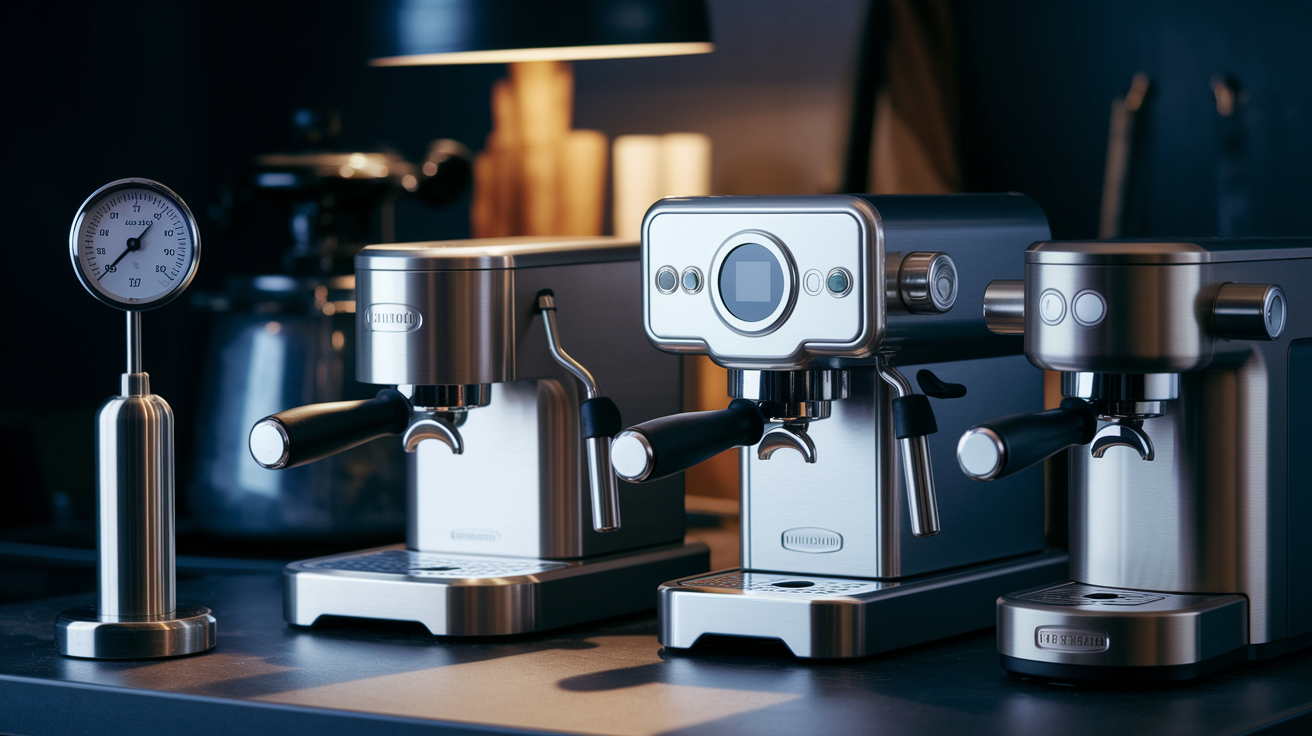
Different machines give you different ways to control pre-infusion. Some let you program every second, others lock you into a fixed window, and a few ask you to manually hold pressure in a sweet spot. Knowing which category your machine falls into tells you what you can adjust and what you’ll need to work around.
Lever Machines
Manual lever machines (Flair 58, La Pavoni, Cafelat Robot) put pre-infusion completely in your hands. You apply gentle pressure until water appears at the basket, hold that low force to saturate the puck, then ramp up to full extraction pressure. Most home baristas aim for 1 to 2 bars during the pre-infusion window, watching the gauge and a stopwatch.
A typical sequence: press softly until you see the first drops at the basket bottom, hold that pressure for 8 to 12 seconds on a light roast or 4 to 6 seconds on a medium, then ramp smoothly to 6 to 8 bars for main extraction. Because you’re controlling force in real time, you can adjust mid-shot if flow looks uneven. Trade-off is every shot needs attention. There’s no “set it and walk away.”
E61 Grouphead Machines
Traditional E61 machines (Rocket, ECM, Profitec, Lelit Mara X) use a mechanical lever and cam system. When you lift the lever halfway, a top valve opens and water from the boiler or line pressure fills the brewing chamber at reduced flow before the pump micro-switch engages. Pre-infusion lasts as long as you hold the lever at that halfway detent, usually 3 to 6 seconds before you push it all the way up.
Plumbed E61 machines rely on line pressure (around 2 bars) for the initial fill, which creates gentler, more consistent pre-infusion than reservoir-fed models. If you want exact timing, count seconds aloud or use a timer while holding the lever halfway. Installing a flow-control device (needle valve or paddle) gives finer pressure adjustments, letting you simulate multi-stage ramps, but stock E61 machines offer only on/off control at the lever.
Programmable Pump-Driven Machines
Dual-boiler and high-end single-boiler machines (Lelit Elizabeth, Rancilio Silvia Pro X, Breville Dual Boiler, Profitec MOVE) often include electronic pre-infusion settings you can reach through a menu or app. You program a duration (usually 1 to 20 seconds) and the machine either pulses the pump at low power or opens the solenoid valve while keeping the pump off, delivering controlled flow before full pressure.
Lelit Elizabeth lets you set separate pre-infusion times for single and double shots. Rancilio Silvia Pro X offers “Variable Soft Infusion” with a 2 to 6 second window. Gaggia Classic GT provides three roast-specific presets plus manual active and soak durations up to 20 and 15 seconds. Once programmed, these machines repeat the same timing every pull, removing human variability. If you want to experiment, start with 6 to 8 seconds for light roasts, 4 to 6 seconds for medium, and 2 to 3 seconds for dark. Adjust by taste.
Entry-Level Machines With Fixed Pre-Infusion
Budget single-boiler machines (standard Gaggia Classic, entry Breville models, basic Delonghi pumps) typically run a fixed pre-infusion routine you can’t adjust. The machine might pulse the pump for 2 to 3 seconds or simply ramp pressure slowly due to vibratory-pump characteristics. You’ll see water wet the puck, then pressure climbs to full extraction without any user input.
Because timing’s locked, your only tuning options are grind size, dose, and puck prep. Grinding slightly coarser or using better distribution can compensate for a shorter pre-infusion if you’re getting channeling. These machines stay consistent within their design limits, so once you dial in a recipe that works, shots stay repeatable as long as your prep routine stays the same.
Recommended Pre-Infusion Time Ranges for Home Espresso

Most home setups benefit from 3 to 10 seconds of pre-infusion depending on roast level and how much CO2 is still trapped in the beans. Lighter roasts are denser and release gas more slowly, so they need longer gentle wetting to prevent dry pockets and channeling. Darker roasts are more porous and degas faster, so a short pre-infusion (or none at all) avoids over-extraction and bitter flavors.
If your machine lets you set timing, use these ranges as a starting point and adjust by 2 to 3 seconds based on taste. If the shot tastes sour or sharp, increase pre-infusion time to improve extraction. If it tastes bitter or harsh, reduce pre-infusion or check that you’re not over-extracting with too fine a grind.
| Roast Level | Suggested Time Range | Notes |
|---|---|---|
| Light | 8–12 seconds | Dense structure; longer soak prevents channeling and lifts sweetness |
| Light-Medium | 6–8 seconds | Balanced density; moderate pre-infusion evens extraction without over-wetting |
| Medium to Medium-Dark | 4–6 seconds | More porous; shorter window avoids muddiness |
| Dark | 2–3 seconds | Very porous and low CO2; minimal pre-infusion prevents bitter over-extraction |
Fixing Inconsistent Pre-Infusion: Diagnosing Variability
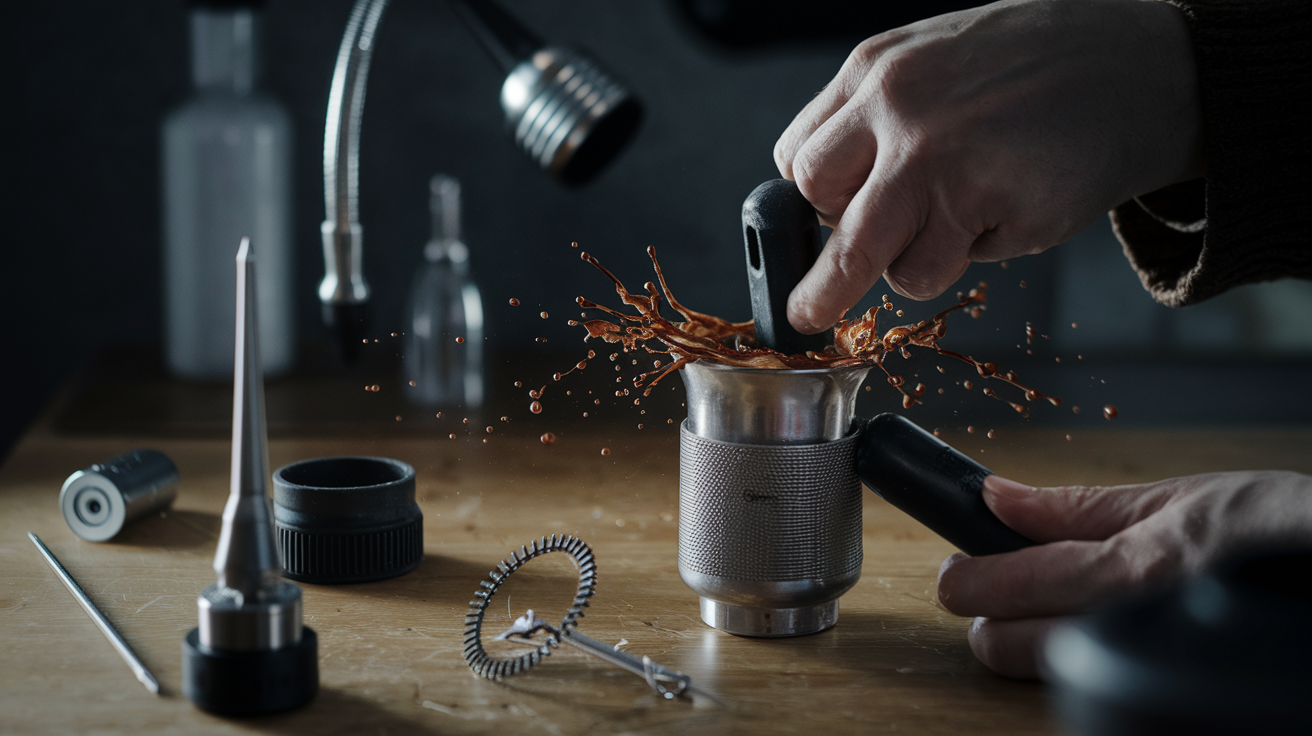
When pre-infusion timing wanders from shot to shot, the usual suspects are inconsistent puck prep, worn machine components, or water-flow fluctuations you can’t see. Before blaming your machine’s electronics, check the basics. Are you dosing the same weight every time? Distributing with the same care? Tamping with similar pressure? A puck that’s fluffy one shot and dense the next will absorb water at different rates, making pre-infusion appear inconsistent even when the machine’s timing stays locked.
Machine-side issues show up as random pressure spikes, pre-infusion that starts fast then slows (or vice versa), or visible spurts and pauses during the wetting phase. Vibratory pumps can deliver uneven flow when voltage fluctuates or internal components wear. Clogged shower screens create uneven spray patterns that wet one side of the puck faster than the other. Dirty three-way valves or leaking gaskets let pressure escape unpredictably, shortening the effective pre-infusion window.
If you’ve ruled out puck prep and maintenance, the next step is isolating whether the problem lives in the grouphead, the pump, or the plumbing. Swap to a different basket or portafilter and run a test shot. If timing stabilizes, your original basket had buildup or damage. Run a blank shot (no portafilter) and watch the flow from the grouphead. Steady, even spray means the shower screen and dispersion are fine. If flow pulses or sprays sideways, descale the grouphead and replace the screen.
Six specific causes of timing variability and how to check each:
- Inconsistent grind distribution: clumps create fast channels. Use WDT (Weiss Distribution Technique) to break up all clumps before tamping.
- Uneven tamp pressure: rocking or angled tamps leave one side denser. Practice level, straight-down pressure or use a calibrated tamper.
- Worn grouphead gasket: lets water bypass the puck edge. Inspect the gasket for cracks or flatness and replace if compressed.
- Clogged or scaled shower screen: disrupts spray pattern. Backflush weekly and soak the screen in cafiza or citric acid monthly.
- Dirty three-way solenoid valve: sticks open or closed intermittently. Backflush with detergent and run several blank shots to clear debris.
- Low or fluctuating reservoir water level: starves vibratory pumps and causes pressure drops. Keep the tank above the minimum line and refill before each session.
Machine-Specific Behaviors That Influence Pre-Infusion Duration
Vibratory-pump machines ramp pressure in pulses, so pre-infusion on these units often feels less smooth than on rotary-pump machines that deliver steady, linear pressure climbs. A Gaggia Classic or Breville Barista Express will wet the puck in short bursts as the pump cycles on and off, creating a natural low-pressure phase before full flow kicks in. Rotary-pump machines (usually found in prosumer and commercial models) supply continuous pressure from the start, so pre-infusion has to be designed in via solenoid control, flow restrictors, or manual paddles.
Some machines use a solenoid-valve trick. The valve opens to let a small amount of water into the grouphead while the pump stays off, using only residual boiler pressure (around 1 to 2 bars) to wet the puck. This “passive” pre-infusion is very gentle but limited by how much water the boiler can push before running dry. Rancilio Silvia Pro X and Lelit Elizabeth both use variations of this method. Once the solenoid closes and the pump fires, pressure jumps quickly to full extraction. If your machine has this design, the passive phase usually adds 10 to 20 grams of water in 2 to 6 seconds, and you’ll notice a pause before the pump hum starts.
Flow-control devices (manual paddles or needle valves installed in the brew path) let you throttle flow during any part of the shot, stretching or shortening pre-infusion as you open or close the valve. With flow control, you can hold the paddle partially open for 8 to 10 seconds at 2 to 3 bars, then gradually open to 9 bars for main extraction. This gives the most flexibility but takes practice to apply consistent hand movements shot to shot. If your timing drifts when using flow control, mount a timer in your sight line and rehearse your paddle sequence until muscle memory takes over.
Maintenance Practices That Maintain Stable Pre-Infusion Performance
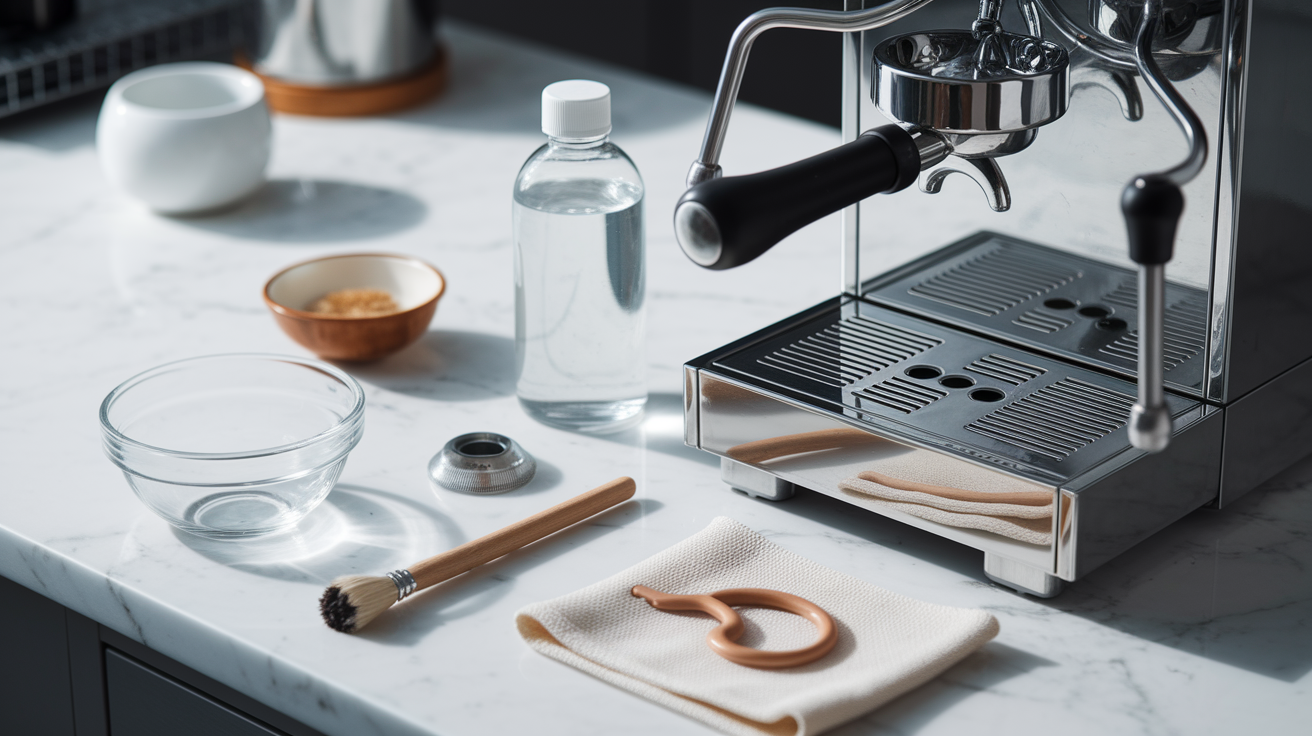
Scale buildup inside valves, lines, and the grouphead chokes water flow and slows the pressure ramp, making pre-infusion longer and weaker than programmed. A grouphead that used to deliver 6 seconds of gentle wetting might stretch to 10 seconds as mineral deposits narrow the passages. Descaling restores factory flow rates and brings pre-infusion timing back in line. Use citric acid or a manufacturer-approved descaler every 2 to 3 months if you have moderately hard water, monthly if your water’s very hard.
Dirty shower screens and dispersion plates disrupt even spray, causing water to favor one side of the puck during pre-infusion. When the puck wets unevenly, some areas channel early and others stay dry, making timing inconsistent even when the machine’s solenoid or pump behaves perfectly. Backflushing with detergent once a week clears coffee oils from the screen and three-way valve. Once a month, remove the screen and soak it in a cafiza solution, then scrub with a small brush to clear any stuck grounds.
Five maintenance actions that directly preserve consistent pre-infusion:
- Backflush the grouphead weekly with espresso machine detergent (blank portafilter, blind basket, 10 to 15 second cycles) to remove oils from the three-way valve and prevent sticky solenoid behavior.
- Descale the boiler and group every 2 to 3 months using citric acid or the recommended descaler. Follow the machine manual’s procedure to flush all internal lines and restore unrestricted flow.
- Inspect and replace the grouphead gasket annually or sooner if you see leaks, uneven seating, or flattened rubber. A worn gasket lets pressure escape sideways and shortens effective pre-infusion.
- Remove and clean the shower screen and dispersion plate monthly. Soak in hot cafiza solution, scrub with a small brush, rinse thoroughly, and reinstall to ensure even spray geometry.
- Check water reservoir level and cleanliness before each session. Low water starves vibratory pumps and causes pressure fluctuations. Rinse the tank weekly to prevent biofilm buildup that can clog intake filters.
Final Words
Pull a test shot using a short, steady pre‑infusion and watch the first 10 seconds.
We covered what pre‑infusion does, how different machines let you change timing, suggested 3–6 seconds for light roasts and 6–10 seconds for darks, how to diagnose uneven wetting or pressure issues, and simple maintenance steps that keep timing stable.
Next: change only one thing—time, grind, or dose—measure seconds and grams, then taste. Focus on setting consistent pre-infusion time on consumer espresso machines and you’ll get fewer bad shots and more repeatable cups.
FAQ
Q: What is the ideal pre-infusion time for espresso?
A: The ideal pre-infusion time for espresso is 3–6 seconds for light roasts and 6–10 seconds for darker roasts; adjust based on machine pressure and how the puck wets and flows.
Q: What is the 15-15-15 coffee rule?
A: The 15-15-15 coffee rule is a loose shorthand some brewers use for timing or dosing; it’s not a universal espresso standard, so confirm the exact meaning in the recipe or method first.
Q: Can you pre-infuse espresso too long?
A: You can pre-infuse espresso too long; excessive pre-infusion can cause over-extraction, bitter or muddled flavors, and a soggy puck. Shorten pre-infusion if shots taste harsh or slow.
Q: What is the 80 20 rule for coffee?
A: The 80 20 rule for coffee applies Pareto: about 80% of cup quality comes from a few essentials—fresh beans, correct grind and dose, good water, and clean equipment—so prioritize those.