

Think a basket is just a basket? Think again.
Precision baskets change how water moves through the puck, and that changes shot time and extraction speed.
They make flow resistance uniform so shots finish in a tighter time window and taste more consistent.
But they also force you to redial grind or dose, usually grinding finer when holes are smaller or the puck is thinner.
This post shows why precision holes matter, what to expect in seconds and grams, and the single next change to try first.
How Precision Baskets Alter Flow Resistance and Shot Timing Dynamics
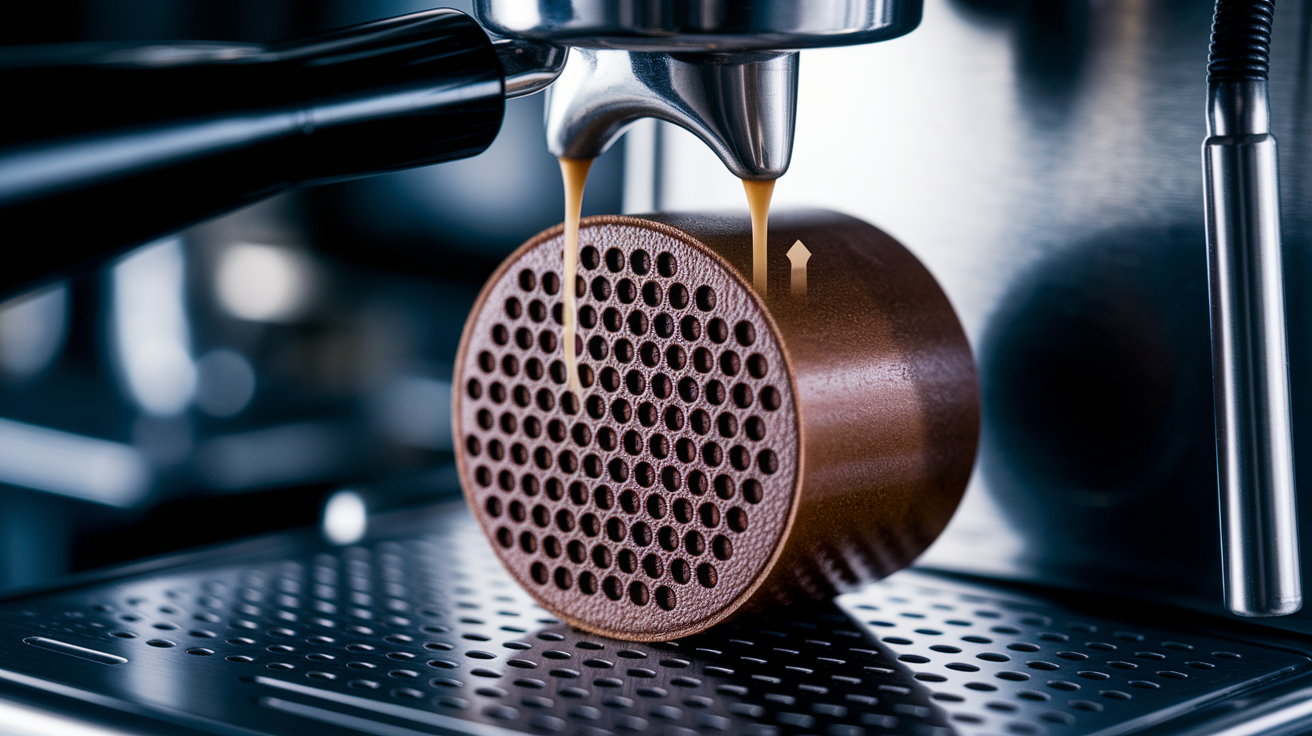
Precision baskets change shot timing by controlling how water moves through your coffee puck. Standard stamped baskets have holes that vary in size and placement, so water takes the path of least resistance and punches through weak spots while leaving other areas dry. Precision baskets fix this by making every hole the same diameter and spacing them in a consistent pattern. When resistance is uniform, shot time becomes predictable because water pressure acts evenly instead of finding shortcuts.
Switching baskets means you’ll need to adjust your grind. Tests using Rwandan Cyanika and Tanzanian Hasambo Peaberry on a Mahlkönig EK43 and Kees Van der Westen Mirage at 6.5 bar showed that IMS baskets needed grinding about 1 to 1.5 notches finer than VST baskets to hit the same brew ratio and shot time. The reason? IMS uses smaller hole diameters. Same thing when moving from an 18 g precision basket down to 15 g—you’ll grind about 1 notch finer to keep extraction time steady. These grind shifts compensate for the increased flow resistance from tighter hole patterns.
Better hydraulic behavior means less channeling and more stable timing. When a basket has uneven holes, high-pressure water finds the easiest route and creates fast channels, leaving dry pockets and causing erratic shot times that swing several seconds even when nothing else changes. Precision baskets force water to move through the entire puck bed at a more uniform rate. You’ll notice shots that finish within a narrower time window and taste more balanced, with sweetness and clarity that stamped baskets can’t match.
Five factors that cause shot time differences when switching to a precision basket:
- Hole diameter tolerance – Tighter control increases overall resistance and slows the shot unless you coarsen your grind.
- Hole pattern density and spacing – More holes or different spacing changes the total open area and how quickly water exits.
- Basket geometry (straight sides, flat bottom) – Maximizes puck depth and contact area, which can extend shot time compared to tapered or shallow baskets.
- Dose capacity and headspace – Smaller baskets create thinner puck beds, requiring finer grinds to maintain resistance and time.
- Manufacturing finish and coating – Smoother surfaces (like nano-quartz coatings on IMS) reduce friction and can slightly speed up flow if grind isn’t adjusted.
Precision Basket Geometry and Hole-Pattern Engineering
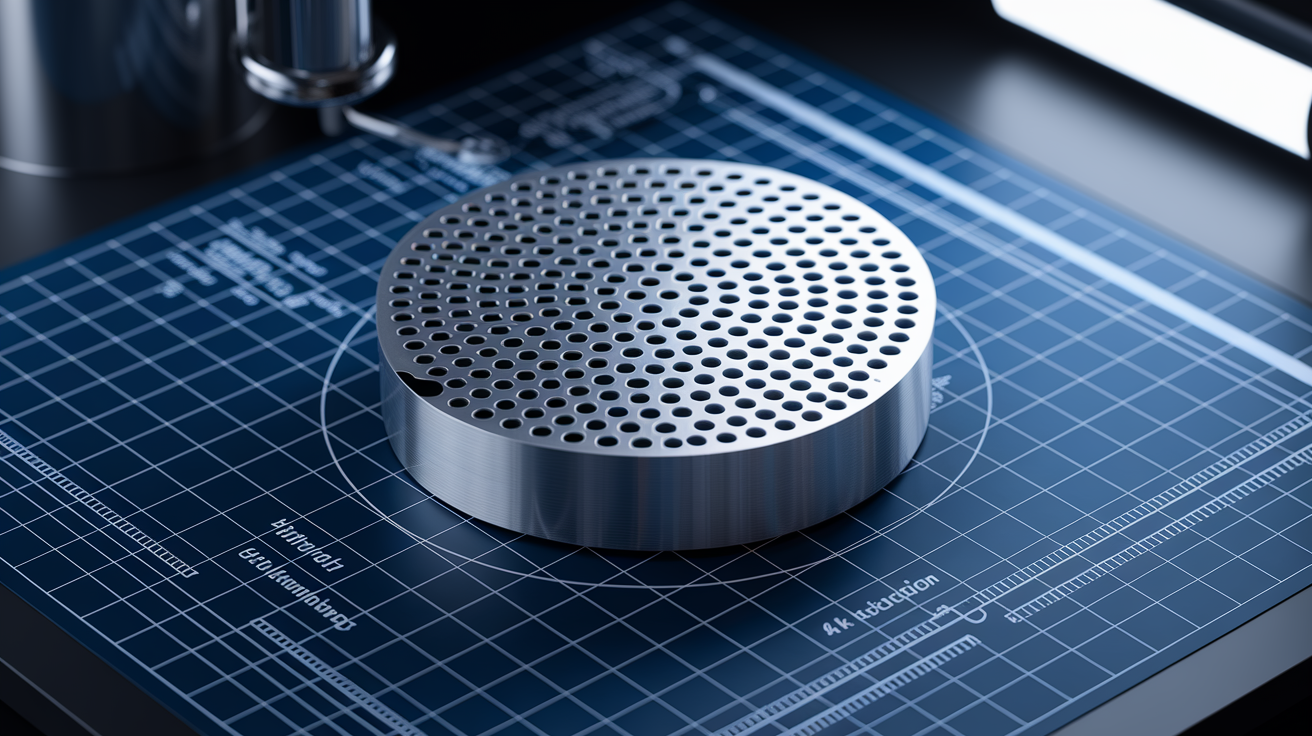
Precision basket engineering starts with micrometer-level control of hole diameter and placement. VST baskets include quality assurance graphs showing every hole meets a tight diameter spec. No randomness, no uneven flow. IMS Competition Filters use a finer mesh layer underneath the main perforations and apply a nano-quartz coating to the stainless steel surface, which reduces coffee residue buildup and keeps flow paths open over time. Some precision designs feature 1,160 water droplet-shaped holes plus 64 inner circular holes arranged to spread pressure evenly and prevent localized turbulence. The droplet shape smooths water entry and exit, reducing jets that punch through soft puck zones.
Physical tolerances translate directly into repeatable extraction. When every hole is within a few microns of the target diameter, the total open area stays constant unit to unit, and flow resistance becomes a predictable variable you can dial around. Standard stamped baskets often show hole diameter variation of 10 percent or more, which scrambles resistance and makes it nearly impossible to replicate a recipe across different portafilters. Precision geometry also includes straight vertical walls and a perfectly flat bottom, keeping the puck level and ensuring water hits the coffee bed at a consistent angle and depth across the entire surface.
| Feature | Impact on Flow/Extraction |
|---|---|
| Hole diameter uniformity (±micron tolerance) | Equalizes resistance across the puck, stabilizing shot time and reducing channeling hot spots |
| Hole pattern density and geometry (droplet shaped vs circular) | Controls total open area and flow velocity, optimized patterns prevent turbulent jets and promote even wetting |
| Surface finish and coatings (304 stainless, nano-quartz) | Reduces coffee oil adhesion and residue clogging, maintaining consistent flow over many pulls, corrosion resistance extends basket lifespan |
Extraction Yield Changes When Using Precision Baskets

Precision baskets don’t automatically increase extraction yield percentages, but they narrow the spread and reduce the number of underextracted or overextracted shots in a sequence. Standard baskets scatter yield results because channeling pulls high extraction from thin zones while leaving thick zones dry, averaging out to inconsistent results even when total dissolved solids (TDS) hovers near target. Precision baskets eliminate that scatter by distributing water evenly, so every gram of coffee contributes more equally to the final beverage. You get a tighter yield cluster around your target, typically in the 18 to 22 percent range for espresso, with less shot to shot drift.
Tests comparing VST and IMS baskets emphasized improved uniformity and sensory clarity rather than large numerical yield jumps, because the baskets were dialed to similar brew ratios and times. What changed was repeatability. When you measure TDS and calculate extraction yield using a refractometer, precision baskets let you hit the same number pull after pull. Stamped baskets produce wider swings that force constant redialing. This consistency also means you can make smaller, more deliberate adjustments to grind or dose and see the effect clearly in your next shot, instead of wondering whether the change came from your grinder setting or random basket behavior.
How to measure and evaluate extraction yield changes with a precision basket:
- Run a baseline series – Pull three to five shots with your current basket using the same dose, grind, and tamp, then measure TDS and calculate extraction yield for each. Record the average and the range (highest minus lowest).
- Switch to the precision basket – Keep dose and recipe constant, adjust grind to match your target shot time (usually 25 to 35 seconds for a double), then pull another three to five shots and measure TDS again.
- Calculate the new extraction yield range – Compare the spread of yields between the old and new basket. A tighter range (for example, 19.2 to 19.8 percent versus 17.5 to 21.0 percent) confirms improved uniformity.
- Track sensory consistency – Taste each shot blind and note whether sweetness, acidity, and body stay similar across pulls. Precision baskets should deliver less variation in flavor profile even when yield numbers are close.
Grind Size Adjustments Required for Precision Basket Performance
Switching to a precision basket almost always requires a grind adjustment because the basket’s resistance profile differs from what you dialed around before. Controlled tests showed that moving from an 18 g precision basket to a 15 g version required grinding approximately 1 notch finer to maintain the same shot time and brew ratio, because the smaller basket creates a thinner puck bed with less total resistance. Similarly, switching from VST to IMS baskets required grinding roughly 1 to 1.5 notches finer to achieve comparable flow and extraction time, a difference attributed to IMS using smaller hole diameters that slow water exit. These aren’t optional tweaks. They’re necessary recalibrations to keep your shot in the same extraction window.
Grinder limits become visible when precision baskets push fineness beyond your machine’s range. In tests using very light roasts in the smallest double IMS basket on a Mahlkönig EK43 with coffee burrs, the required grind fineness exceeded the grinder’s adjustment range, choking the shot before reaching target time. This problem is less common on conventional espresso grinders with smaller burr gaps and finer stepless adjustment, but it shows that precision baskets demand more from your grind uniformity and particle size distribution. If your grinder produces a wide particle spread, the precision basket will expose it by choking on fines or rushing through coarse gaps.
IMS “The Single” basket behaves differently than you’d expect. It’s designed to let you use the same grind setting as a double basket but pulled as a single sized dose, yet in practice it needs a slightly coarser adjustment than a double to maintain equivalent flow rate. Despite that, splitting a double shot using a spouted portafilter produced better tasting results in blind tests than pulling a true single through “The Single.” Basket geometry and dose interact in ways that aren’t always intuitive. Real world dialing beats theory.
Typical grind change scenarios when switching to precision baskets:
- From any standard basket to VST or IMS – Start by grinding 1 notch finer, pull a test shot, then adjust in quarter or half notch increments until shot time returns to your target range (usually 25 to 35 seconds).
- Between VST and IMS – If moving to IMS, grind 1 to 1.5 notches finer. If moving to VST, grind 1 to 1.5 notches coarser. Track your dose and time to confirm the baskets are behaving equivalently.
- Changing basket capacity (18 g to 15 g or vice versa) – Grind approximately 1 notch finer when downsizing, or 1 notch coarser when upsizing, then fine tune based on flow observation and taste.
How Precision Baskets Influence Channeling Risk and Puck Behavior
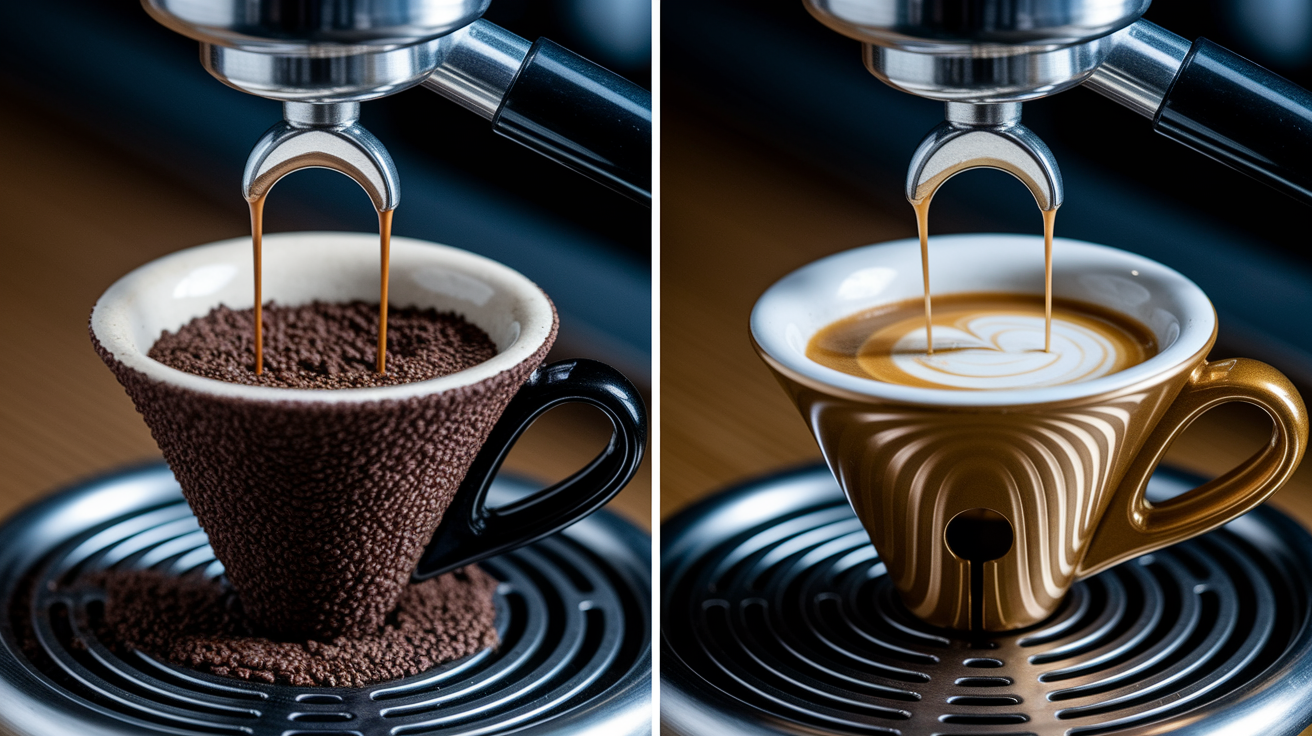
Channeling happens when water finds weak spots in the puck and rushes through, leaving dry clumps and delivering sour, thin espresso. Standard baskets amplify this problem because inconsistent hole sizes create zones of low resistance that invite breakthrough. Precision baskets minimize channeling by ensuring every exit hole offers the same resistance, so water has no preferred shortcuts and must work through the entire coffee bed. This doesn’t eliminate channeling entirely, because poor puck prep, clumpy grinds, or uneven tamping can still create fractures, but it removes the basket itself as a variable. When every hole is identical, any channeling you see points directly to your grind distribution or tamping technique instead of random basket defects.
VST baskets have a reputation for being less forgiving because their tighter tolerances expose technique flaws that a sloppy stamped basket might hide. If your distribution is uneven or your tamp is crooked, a VST basket will channel visibly and taste it in the cup. A standard basket might let you get away with mediocre prep by accident. The solution isn’t to avoid precision baskets but to improve your workflow. Distribution tools like Weiss Distribution Technique (WDT) needles, consistent tamping pressure, and fresh, evenly ground coffee turn precision baskets into an advantage by giving you predictable, repeatable results that respond cleanly to small recipe changes.
Using Bottomless Portafilters to See Channeling Changes
A bottomless portafilter makes channeling visible in real time. Standard spouted portafilters hide what’s happening underneath the puck, so you only taste the result. With a bottomless setup, you see the streams of espresso emerging from the basket. A well prepared puck with a precision basket produces an even, symmetrical flow that starts as individual droplets, merges into a smooth column, and shows no spurting or spraying. Channeling shows up as fast jets shooting sideways, early drips from one side while the other stays dry, or a thin, anemic stream that indicates most of the puck is bypassed.
Switching to a precision basket often transforms what you see under a bottomless portafilter. Shots that used to spray and sputter settle into clean, centered flow because the basket is no longer creating random exit points. If you still see uneven flow after switching baskets, you know the problem is in your prep, your grind consistency, or your tamp, and you can address it directly. This visual feedback loop makes precision baskets a diagnostic tool as much as a performance upgrade.
Shot Timing, Brew Ratio, and Sensory Shifts with Precision Baskets
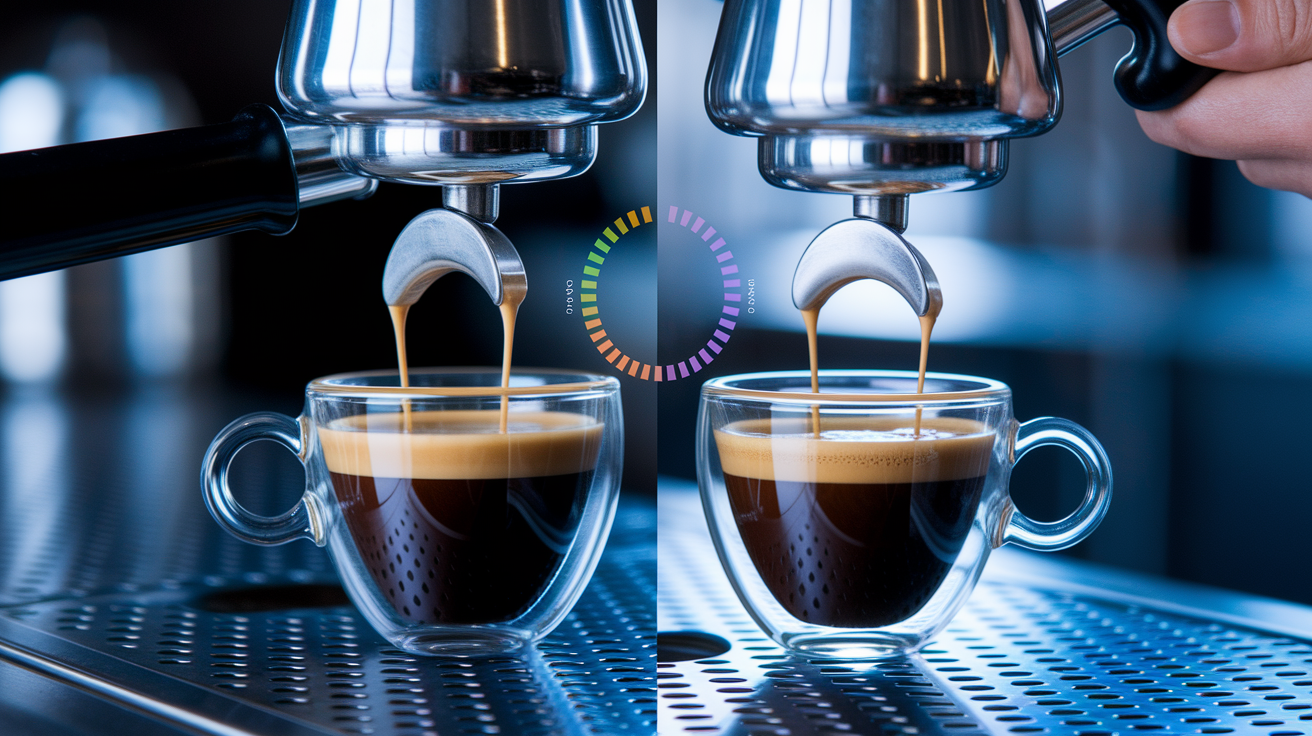
Precision baskets change shot timing by altering the resistance profile, but the direction and size of the change depend on how you adjust grind and dose to compensate. If you keep your grind setting the same after installing a precision basket, the shot will likely run faster or slower than before, depending on whether the new basket has larger total open area or tighter hole diameters. To maintain your target brew time (typically 25 to 35 seconds for a double shot yielding 36 to 40 grams of beverage), you’ll need to dial the grind finer or coarser until resistance matches your recipe. Once dialed, precision baskets hold that timing more consistently shot to shot, eliminating the random two to five second swings that stamped baskets introduce.
Brew ratio consistency improves because precision baskets deliver predictable flow at a given pressure, letting you control yield weight more reliably. If you program a volumetric stop or weigh your output, precision baskets make it easier to hit the same gram target pull after pull. This repeatability supports tighter recipe development. You can test small changes, like a 0.5 gram dose increase or a one notch grind adjustment, and see the sensory effect clearly without wondering whether random basket behavior caused the difference.
Sensory shifts are often subtle but noticeable in side by side blind tastings. Tests comparing IMS and VST baskets on the same light roast single origins (Rwandan Cyanika and Tanzanian Hasambo Peaberry) found that IMS filters showed a slight edge in sweetness and delicacy, though the differences were small and likely lost in milk based drinks. The larger sensory improvement comes from switching away from a low quality stamped basket to any precision option. That jump typically brings clearer acidity, more pronounced sweetness, reduced astringency, and a cleaner finish because extraction is more uniform and channeling is minimized. Bitterness drops when fewer coffee particles are overextracted, and sourness decreases when fewer zones stay underextracted.
Comparing VST, IMS, and Other Precision Basket Manufacturers
VST pioneered precision basket design by focusing on geometric consistency, hole diameter control, and strict quality assurance. Each VST basket ships with hole size distribution data, showing that the manufacturing process holds diameter tolerances within a few microns. VST baskets feature internal ridges that were originally designed to standardize the effective basket diameter, but these ridges limit compatibility with oversized tampers (58.3 mm, 58.5 mm, and larger). VST’s engineering gives predictable, repeatable extraction, and many specialty cafés and competition baristas have used VST as the reference standard for dialing espresso recipes.
IMS Competition Filters entered the market with a different manufacturing approach. IMS baskets use a finer mesh layer beneath the main perforations and apply a nano-quartz coating to the stainless steel surface, which reduces coffee oil buildup and makes cleaning easier. IMS baskets are ridgeless, so they accept oversized tampers without interference. In controlled tests, IMS baskets required grinding approximately 1 to 1.5 notches finer than VST to achieve the same shot time and brew ratio, suggesting smaller average hole diameters. Sensory results from blind tastings showed IMS delivering slightly greater sweetness and delicacy, though the differences were small. IMS is often recommended as the best value option because it performs nearly identically to VST in extraction quality, costs less, and offers tamper flexibility.
| Brand | Hole/Geometry Features | Impact on Shot Time/Extraction |
|---|---|---|
| VST | Strict hole diameter tolerances, QA graphs included, internal ridges, 304 stainless steel | Consistent resistance and timing, ridges limit oversized tamper use, requires ~1 notch coarser grind than IMS for equivalent flow |
| IMS | Finer mesh layer, nano-quartz coating, ridgeless design, smaller hole diameters (suspected) | Requires ~1 to 1.5 notches finer grind than VST, ridgeless design allows oversized tampers (58.3 to 58.55 mm), slightly sweeter sensory profile in blind tests |
| Pullman | Similar precision to VST/IMS, ridgeless, designed to pair with Pullman Bigstep tamper | Extraction performance comparable to VST and IMS, ridgeless design supports oversized tampers, grind adjustments needed but not systematically tested against VST/IMS |
Dialing In: Practical Workflow When Switching to Precision Baskets
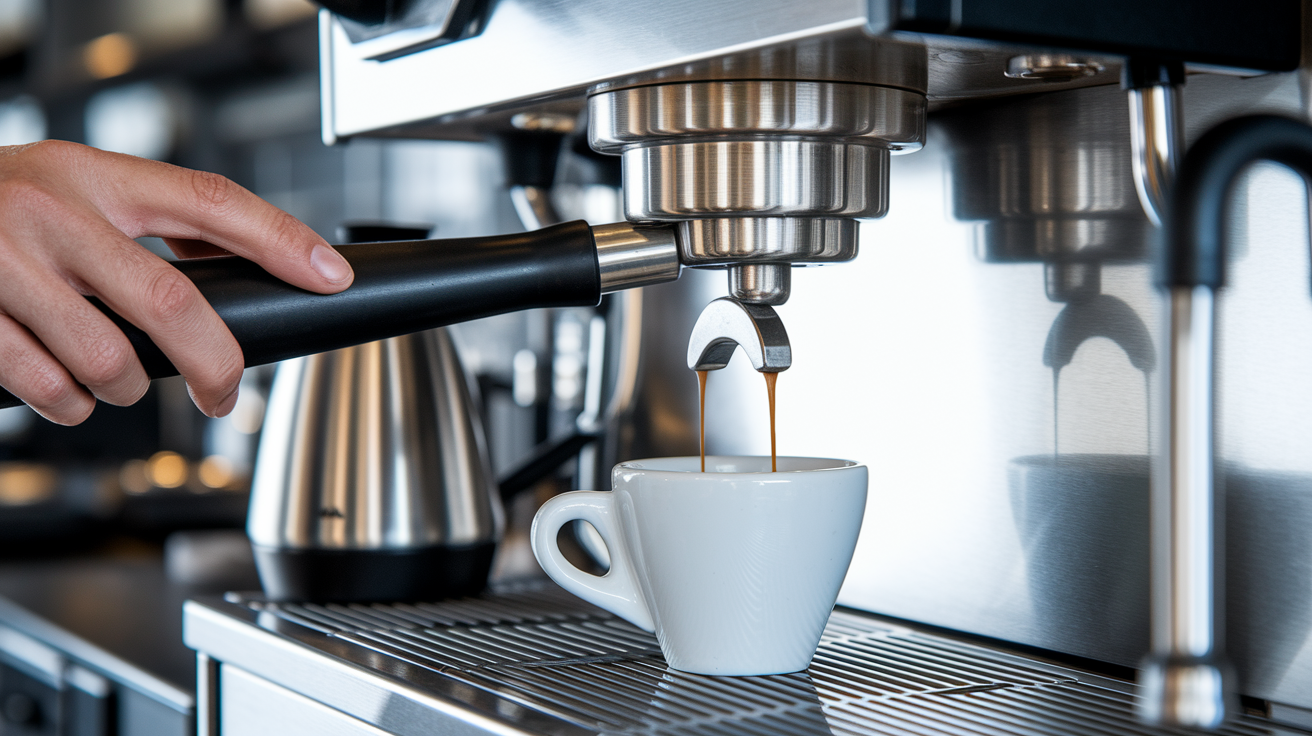
Switching to a precision basket requires a systematic redialing process to reestablish your target shot time, brew ratio, and flavor profile. Start by keeping your dose constant at the level you used with your previous basket, for example 18 grams in, targeting 36 grams out in 28 seconds. Don’t change your distribution or tamping technique. Pull a test shot with your old grind setting and observe what happens. If the shot runs faster than your target time, the precision basket has lower resistance or larger total open area, so you need to grind finer. If the shot chokes or runs slower, the basket has higher resistance, so grind coarser. Adjust in small increments, usually one notch or a quarter turn on stepless grinders, and pull another test shot after each change until you return to your target time and yield.
Once your shot time stabilizes, evaluate the taste and puck appearance. A properly dialed precision basket should produce a dry, evenly extracted puck with no large craters, a smooth flow visible on a bottomless portafilter, and a balanced flavor profile with clear sweetness and controlled acidity. If you taste sourness or the shot finishes too quickly despite hitting your target time, the grind may still be too coarse or the dose too low. If you taste bitterness or astringency, the grind may be too fine or the shot is running too long. Make one small adjustment at a time and compare before and after by tasting shots side by side. Precision baskets reward this methodical approach because they respond predictably to each variable change.
Step by step workflow for switching to a precision basket:
- Record your baseline recipe – Write down current dose (grams in), target yield (grams out), shot time, grind setting, and any sensory notes. This gives you a reference point.
- Install the precision basket and pull a test shot with the old grind setting – Keep dose, tamp, and technique identical. Measure shot time and yield weight. Note whether the shot ran faster, slower, or similar.
- Adjust grind in small increments – If the shot ran fast, go finer by one notch and pull again. If it choked or ran slow, go coarser by one notch. Repeat until shot time returns to your target range (typically 25 to 35 seconds for a double).
- Check the puck and flow – After hitting target time, knock out the puck and inspect for uniform extraction (dry, firm, no large craters). Use a bottomless portafilter to confirm even flow with no spraying or channeling.
- Taste and compare – Pull two or three shots at the new setting and taste them against your memory of the old basket. Look for improvements in sweetness, clarity, and balance. If the flavor is off, make a small grind or dose adjustment and test again.
- Document the new recipe – Once dialed, write down the final grind setting, dose, yield, and time with the precision basket. Use this as your new baseline for future adjustments.
Final Words
Pull a test shot with your new precision basket and watch the flow and timing closely. Precision baskets tighten hole tolerances and geometry, so resistance and shot time become more predictable and channeling drops.
Expect to go about 1 to 1.5 grind notches finer to match previous timings. You’ll usually hear steadier flow, see a cleaner puck, and taste a bit more balanced sweetness.
Do one quick grind tweak and a timed double to compare — that’s how precision baskets change shot time and extraction, and it usually means fewer wasted shots and happier cups.
FAQ
Q: How to adjust extraction time?
A: Adjusting extraction time means changing one brewing variable at a time: grind, dose, yield, or tamp. Start by moving the grind one notch finer to slow a fast shot (or coarser to speed a slow one), then reweigh and time.
Q: Does precision basket make a difference?
A: A precision basket makes a difference by creating uniform hole size and geometry that stabilizes flow, reduces channeling, and makes shot time more predictable; expect to dial the grind about one notch finer and check visual flow.
Q: What is the 80 20 rule for coffee?
A: The 80 20 rule for coffee means 80% of your results come from 20% of variables—grind, dose, distribution, tamp, and brew ratio; focus on these to reduce waste and improve consistency.
Q: What is the 30 second rule for espresso?
A: The 30 second rule for espresso means aim for a total extraction around 25–35 seconds for a double; if the shot runs much faster or slower, change grind one step and retest with the same dose and yield.