


Do your shots taste flat or bitter even with fresh beans?
That sticky film under the gasket and group head is usually coffee oil gone bad.
It bakes on with heat and pressure, clogs passages, and ruins extraction.
You can fix it fast without disassembling your machine.
This post gives a clear, repeatable backflush-and-scrub routine using a blind basket, espresso detergent, short pressurize cycles, and rinse so the gasket feels smooth and your next shot pulls clean.
How to Remove Oily Residue from Your Espresso Machine (Fast Step-by-Step Guide)
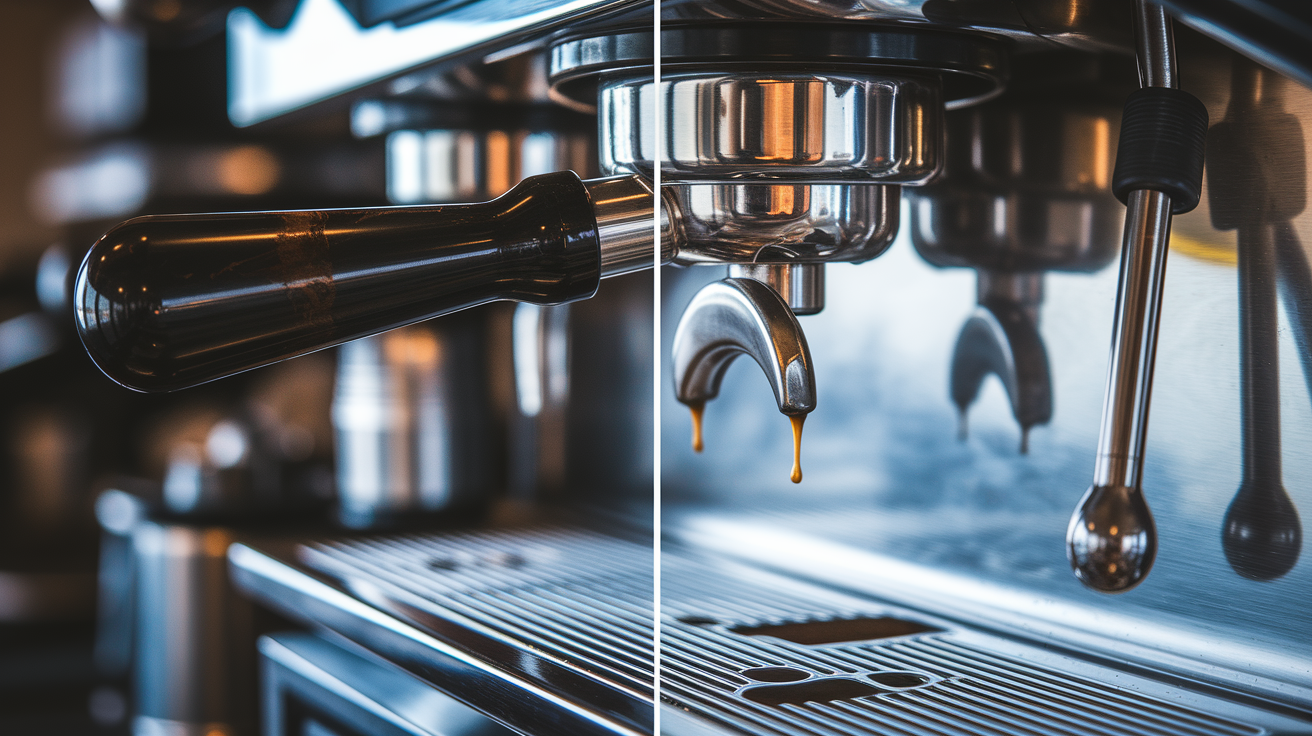
Coffee oils go rancid when they sit under heat and pressure, and that sticky film makes even fresh beans taste flat or bitter. Your group head and gasket trap these oils with every shot. Skip cleaning for more than a few days and that residue turns into a coating that ruins extraction and gets harder to scrub off.
Here’s the full cleaning sequence. You won’t need to disassemble anything major:
- Remove the portafilter and dump the spent puck.
- Brush loose grounds from the group head with a dedicated group brush. Scrub the gasket rim in small circles.
- Insert a blind basket (no holes) into the portafilter, or use a rubber backflush disk to cover your regular basket.
- Add espresso machine detergent to the blind basket. Usually half a teaspoon of powder or one cleaning tablet.
- Lock the portafilter into the group head.
- Start a brew cycle and let the machine pressurize for about 5 seconds, then stop. This forces detergent through the group head, valve, and solenoid.
- Repeat the 5-second cycle four more times to dissolve oil buildup inside the group.
- Remove the portafilter, dump the detergent, and rinse the blind basket.
- Run five rinse cycles with the blind basket still installed. No detergent this time, just flushing out chemical residue.
- Wipe the group head and gasket with a damp microfiber cloth to remove any loosened oil film.
After this routine, the group head should smell neutral. The gasket should feel smooth instead of sticky, and your next shot should pull clean without lingering bitterness from old oils.
Tools and Supplies You Need for Effective Cleaning
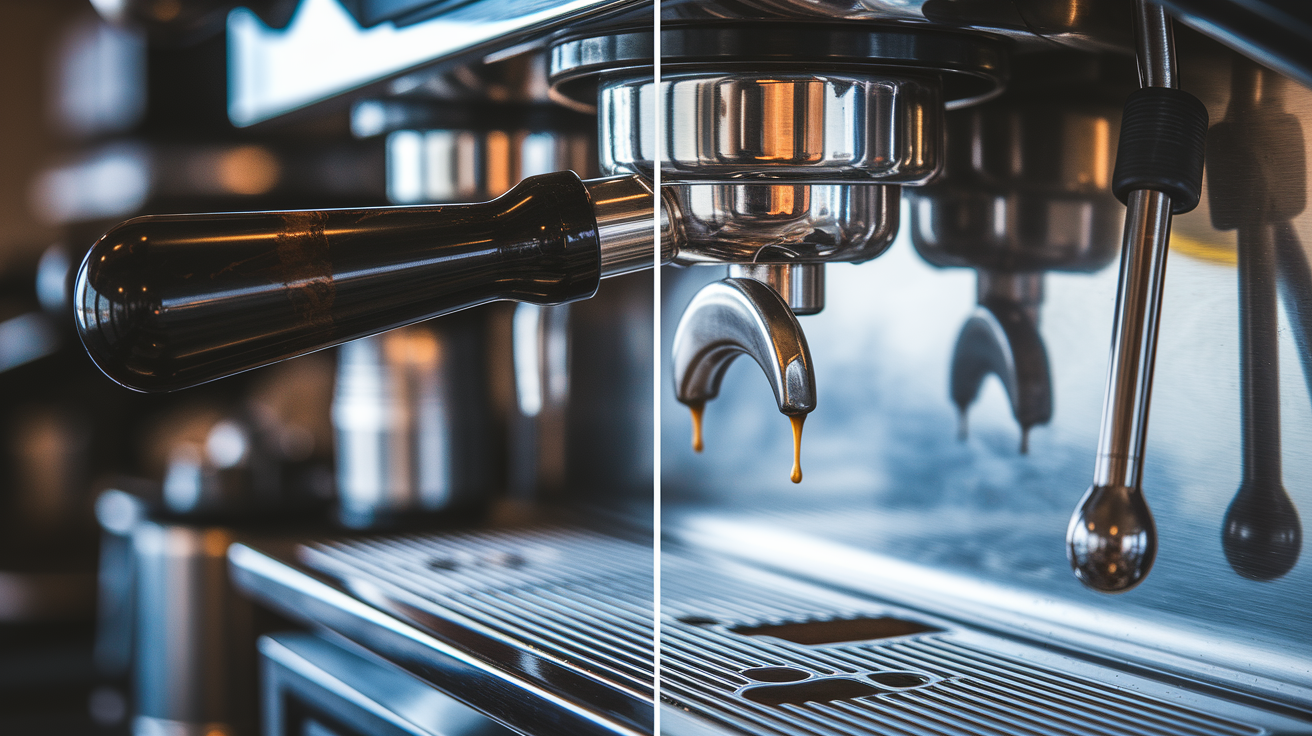
You can’t remove oil buildup with just water. Coffee oils need alkaline detergent to break them down, and you need the right tools to reach tight spaces without scratching metal surfaces.
Here’s what to have ready:
Espresso machine detergent (like Cafiza or similar). Breaks down polymerized coffee oils that water alone can’t touch.
Blind basket or backflush disk. Seals the portafilter so pressure builds and forces detergent through internal passages.
Group head brush (nylon bristles). Scrubs the gasket and dispersion screen without scratching chrome or stainless steel.
Microfiber cloths. Trap oily residue instead of smearing it around like paper towels do.
Hot water source. Warm detergent works faster. Most machines supply this through the group head itself.
Gasket pick or awl (optional but helpful). Reaches into the gasket groove to pull out compacted grounds or old gasket fragments.
Each tool has a specific job. The detergent does the chemical work, the brush does the mechanical scrubbing, and the blind basket redirects pressure so cleaning happens inside the group, not just on the surface.
Deep-Cleaning the Group Head
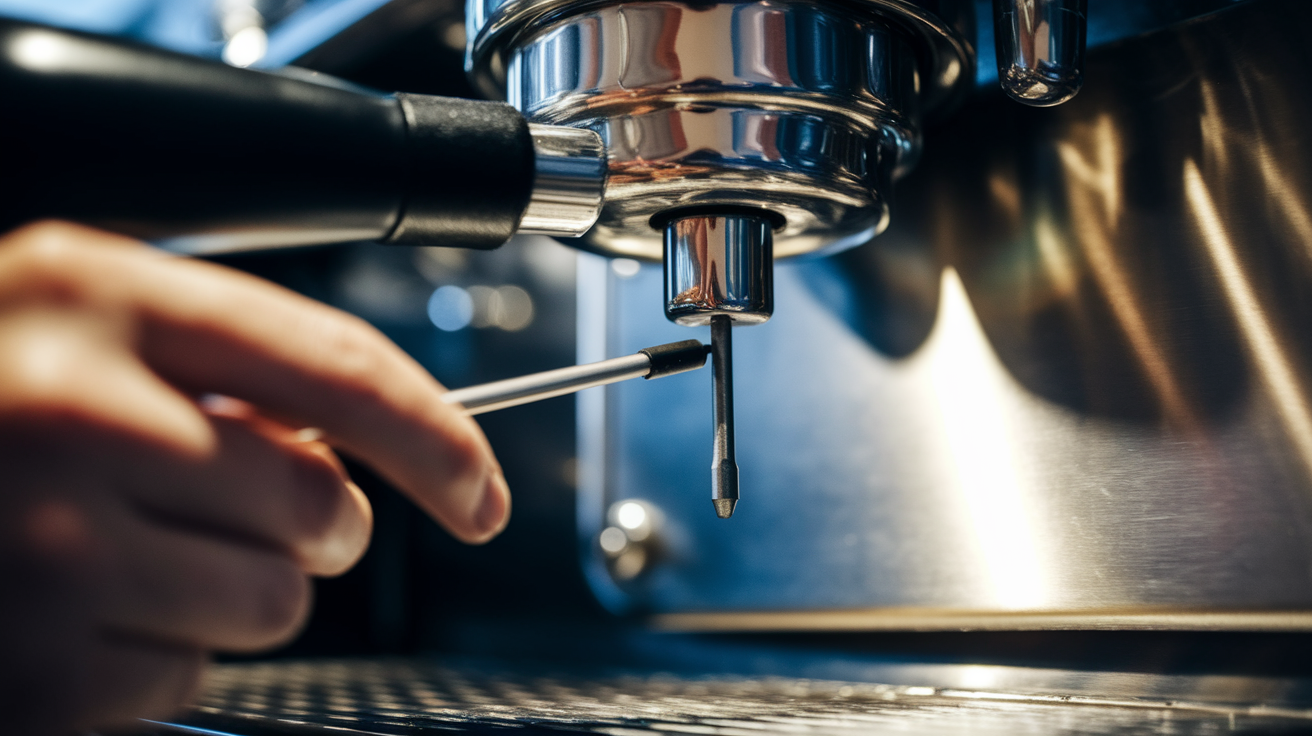
Backflushing clears the valve and solenoid, but it doesn’t scrub the dispersion screen or the inside walls of the group head where oils collect in corners and around screw threads. Those spots need direct mechanical action.
After your backflush routine, unscrew the dispersion screen if your machine allows it. Most screens are held by a single flathead or hex screw in the center. Use a stubby screwdriver or hex key so you don’t strip the head. Once the screw is out, the screen (and sometimes a dispersion plate or block behind it) lifts right out.
Drop the screen, screw, and any removable parts into a small bowl of hot water with a teaspoon of espresso detergent. Let them soak for 10 minutes, then scrub with the group head brush. Rinse everything under hot running water, check that no grounds are stuck in the screen holes, and reinstall. Run a blank shot (no portafilter) to flush any leftover detergent, and you’re done.
Cleaning and Inspecting the Espresso Gasket
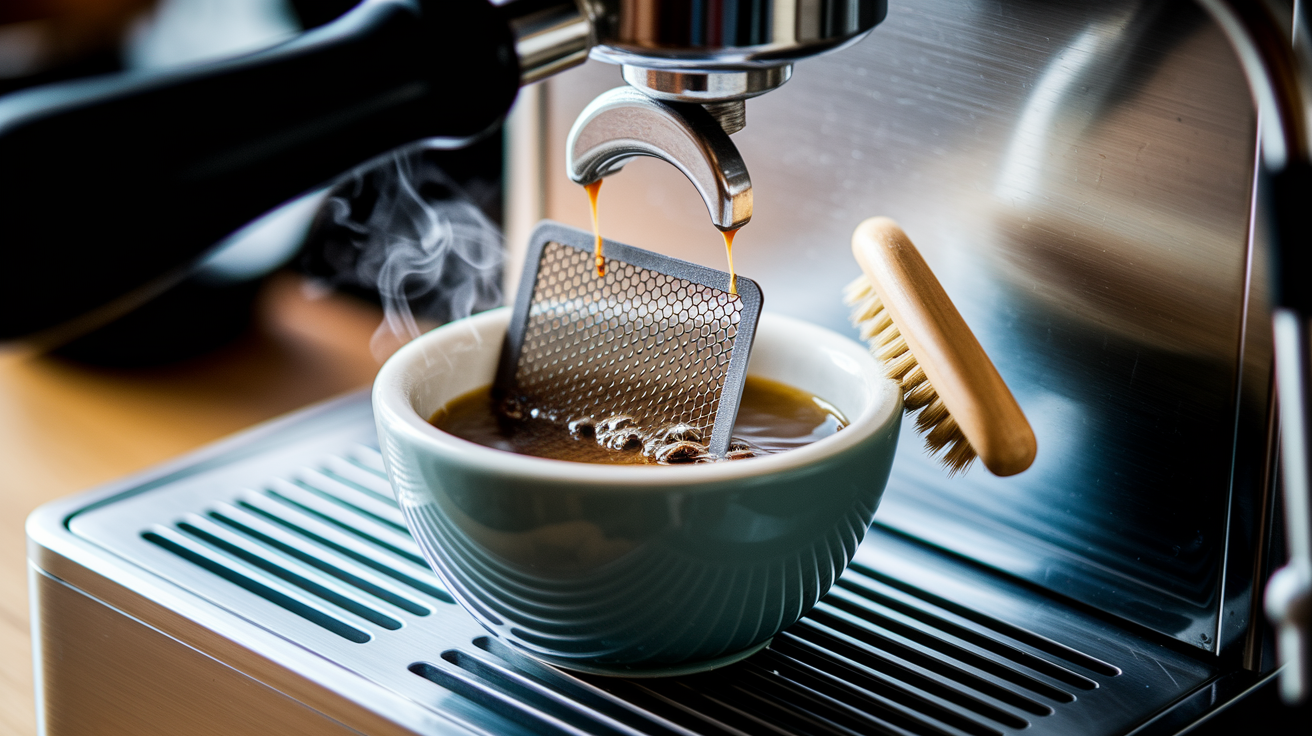
The gasket sits in a groove at the bottom of the group head. It forms the seal between the machine and the portafilter. When oil builds up on the gasket surface, it stops sealing properly, and you’ll see drips around the portafilter ears or need to crank the handle farther than usual to lock it in place.
After every backflush, scrub the gasket in small circular motions with your group head brush. Push the bristles gently into the groove to lift out compacted grounds and oily film. If the gasket feels slick or sticky even after scrubbing, it’s coated in polymerized oil and needs a longer soak or replacement.
Here’s when you know the gasket is failing and cleaning won’t fix it:
You see visible cracks or tears in the rubber.
The portafilter drips during extraction even when locked tight.
You have to pull the portafilter handle past center to get a seal.
The gasket feels hard or brittle instead of soft and flexible.
Dark oil stains won’t scrub off even with detergent.
Gaskets last about six months to a year in a home setup. If you’re seeing any of those signs, pull the old gasket out with a gasket pick, brush the groove clean, and press a new one in with the smooth side facing down.
Proper Backflushing Technique
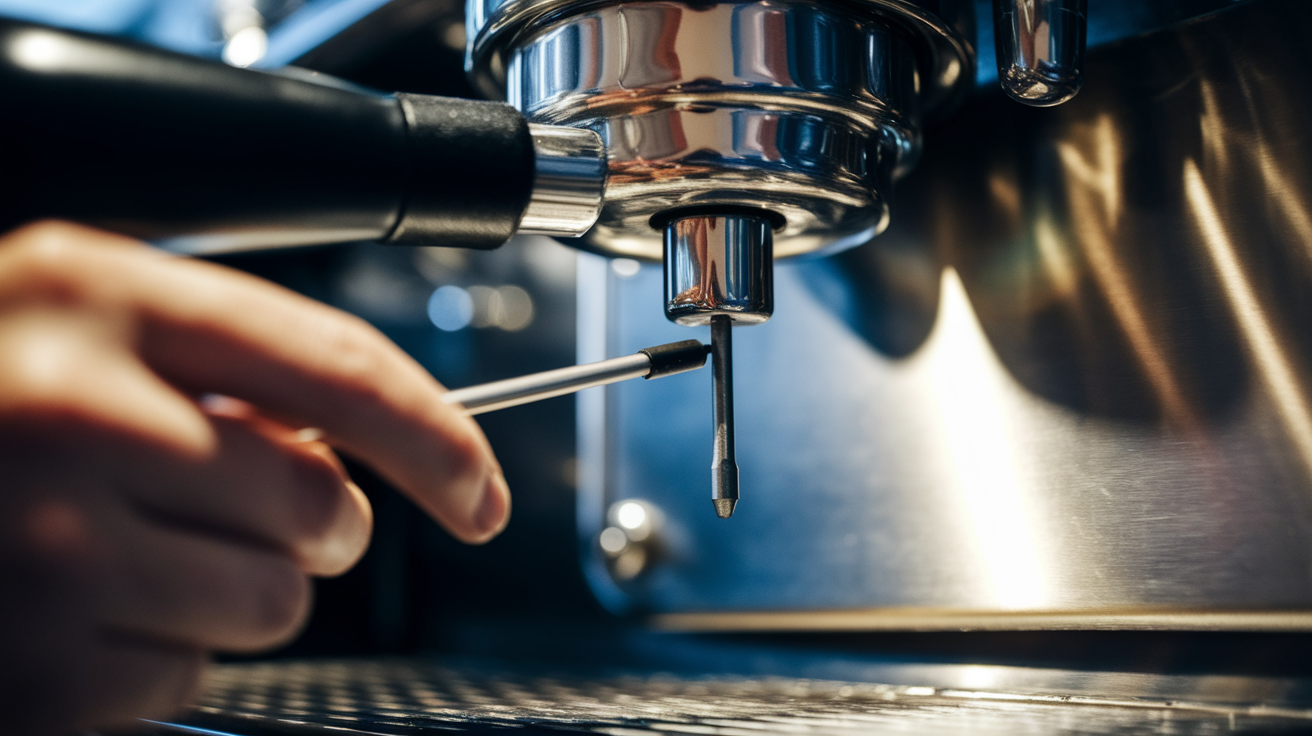
Backflushing is how you clean the parts you can’t see. The solenoid valve, the pressure relief system, and the internal passages where oil collects every time you pull a shot. If you skip backflushing or do it wrong, those oils harden and start blocking flow, which leads to inconsistent pressure and weird shot times.
Here’s the correct detergent backflush routine:
- Insert the blind basket into a clean portafilter.
- Add half a teaspoon of espresso detergent (or one tablet) to the basket.
- Lock the portafilter into the group head.
- Start a brew cycle and let it run for 5 seconds, then stop.
- Wait 3 seconds for pressure to drop, then start another 5-second cycle.
- Repeat the cycle five times total.
- Remove the portafilter, dump the dirty detergent water, and rinse the blind basket.
- Reinstall the blind basket (no detergent this time) and run five more 5-second rinse cycles to flush out chemical residue.
The most common mistake is skipping the rinse cycles or doing only one or two. Detergent left inside the group makes your next shot taste soapy and can damage seals over time. Run all five rinse cycles, then run one more blank shot just to be sure.
How to Identify Coffee Oil Buildup Early
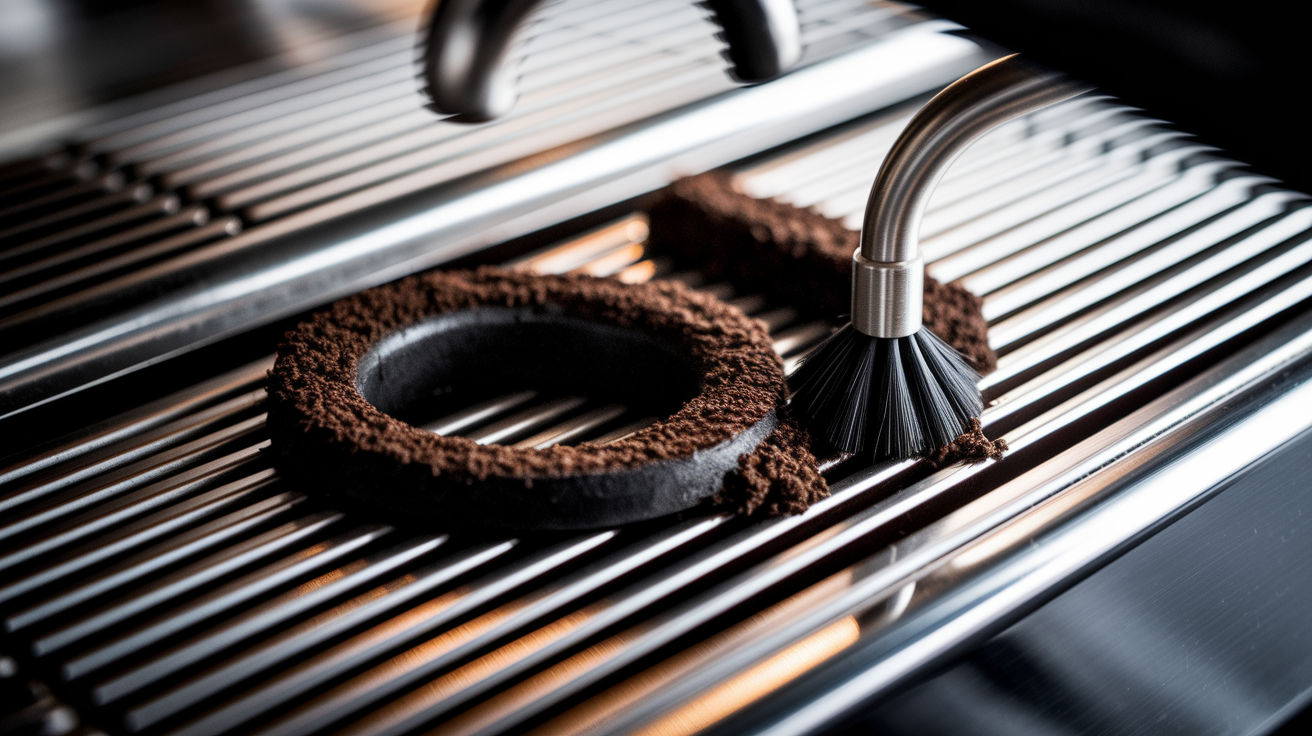
If you catch oil buildup early, a single backflush and scrub will clear it. If you wait too long, the oils polymerize into a hard, tar-like coating that needs soaking, scraping, or professional cleaning. The trick is knowing what to look for before it gets that bad.
Most people don’t realize they have a buildup problem until their shots start tasting off. By then, the oils have been sitting for days or weeks, oxidizing and going rancid with every heat cycle.
Watch for these early warning signs:
Shots taste bitter or flat even with fresh beans and a dialed-in grind.
The portafilter feels sticky when you pull it out after a shot.
You see a dark, oily ring around the gasket or on the dispersion screen.
The group head smells stale or rancid when you get close.
Extraction times drift slower without changing the grind.
You notice small brown flakes in the drip tray or around the group.
If you smell stale oil before you start cleaning, you already waited too long. The goal is to clean before you notice any of this.
Troubleshooting Stubborn Residue

Sometimes a normal backflush and brush scrub won’t cut it. If the oils have been baking on for weeks, or if you’ve been running very dark roasts that leave heavier residue, you’ll see hardened buildup that doesn’t dissolve with a quick detergent cycle.
Here’s what to try when standard cleaning isn’t enough:
Soak removable parts longer. Drop the dispersion screen, screw, and gasket into hot detergent water for 30 minutes instead of 10.
Use hotter water. If your machine has a steam wand, pull hot water from there instead of the brew head. Higher temps dissolve polymerized oils faster.
Run a double-dose backflush. Use a full teaspoon of detergent and increase the cycle count to 8 or 10 instead of 5.
Scrub with a brass brush. Nylon brushes are gentle, but brass bristles cut through tar-like buildup without scratching stainless steel. Never use steel wool.
If you’ve tried all of that and still see dark, sticky residue that won’t budge, or if your machine is pulling inconsistent pressure and flow even after cleaning, you’re past the point of non-disassembly cleaning. Book a professional descale and teardown so a tech can reach the valve seats, check gasket condition, and clear any internal blockages that backflushing can’t fix.
Safety Tips for Handling Espresso Machine Cleaning

Espresso detergents are alkaline and can irritate skin, especially if you have cuts or sensitive hands. The machine also holds heat long after you turn it off, so you can burn yourself on the group head, portafilter, or steam wand if you jump in too fast.
Let the machine cool for at least 10 minutes after your last shot before you start cleaning. The group head should be warm to the touch but not hot. Warm surfaces help dissolve oils faster, but you don’t want to burn your fingers or melt a brush.
Wear nitrile or rubber gloves when handling detergent, especially if you’re doing a long soak or scrubbing inside the group head. If detergent splashes into your eyes, rinse immediately with cool water for several minutes. Keep detergent containers sealed and away from food prep areas, and never use kitchen sponges or dishcloths for espresso cleaning. Cross-contamination can leave chemical residue on your counters or dishes.
Preventive Maintenance and Recommended Cleaning Frequency
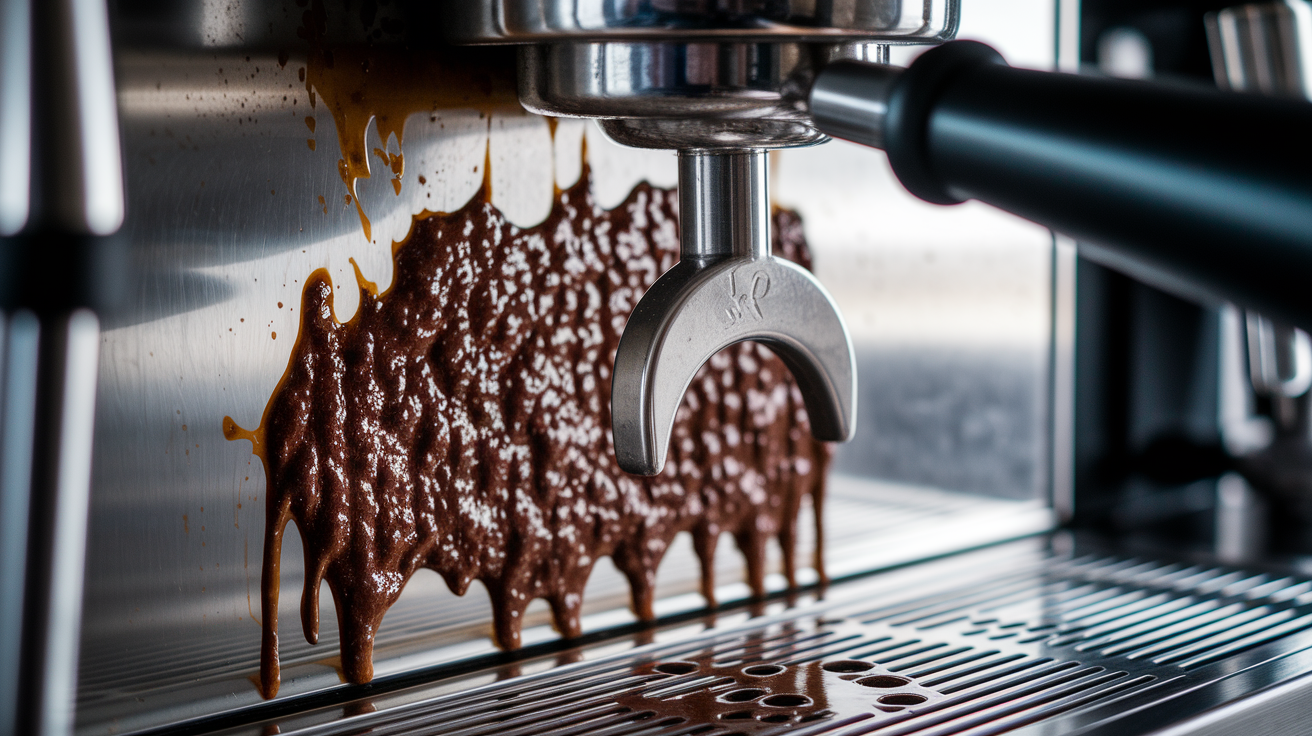
The best way to avoid heavy oil buildup is to clean lightly and often instead of waiting until the gasket is sticky and the group smells rancid. A few seconds of maintenance after every session keeps oils from polymerizing in the first place.
Here’s a realistic cleaning rhythm for a home espresso setup:
Daily (after your last shot):
Wipe the group head and gasket with a damp cloth.
Run a blank shot to flush loose grounds.
Weekly (or every 20 to 30 shots):
Full detergent backflush (5 cycles plus 5 rinse cycles).
Scrub the gasket and dispersion screen with a group head brush.
Monthly:
Remove and soak the dispersion screen.
Inspect the gasket for cracks or hardening. Replace if needed.
If you’re pulling more than 5 shots a day, or if you’re using very dark, oily beans, move the weekly backflush to every 3 or 4 days. High-volume setups and commercial machines should backflush daily and deep-clean weekly to stay ahead of buildup.
Final Words
Start by backflushing with a proper espresso detergent and brushing the group head. This is the quickest way to remove oil and get better-tasting shots.
You got a tools list, an 8-step cleaning routine, deep-clean tips, gasket inspection signs, troubleshooting, safety notes, and a simple maintenance schedule.
Next step: run one detergent backflush, wipe the gasket, and check for cracks. That single action addresses cleaning coffee oil buildup from espresso gasket and group head and keeps shots consistent. You’ll notice cleaner flow and fresher flavor. Keep this up weekly, and you’ll be set.
FAQ
Q: How to clean espresso group head?
A: Cleaning the espresso group head starts with removing the portafilter, brushing loose grounds, then backflushing with a blind basket and espresso detergent, rinsing, wiping the screen, and checking the gasket.
Q: What dissolves coffee buildup?
A: Coffee buildup is dissolved by alkaline espresso detergents (like Cafiza) and hot water; they break down polymerized oils better than vinegar. Use detergent in a backflush or to soak removable parts.
Q: What happens if the espresso machine group head is not properly cleaned?
A: If the espresso machine group head is not properly cleaned, oils and grounds build up, causing rancid taste, channeling, leaks, poor flow, and faster wear—regular cleaning prevents these problems.
Q: Does vinegar dissolve coffee oil?
A: Vinegar does not reliably dissolve coffee oil; it can remove mineral scale but won’t break down polymerized oils. Use a dedicated alkaline espresso detergent for proper oil removal.