
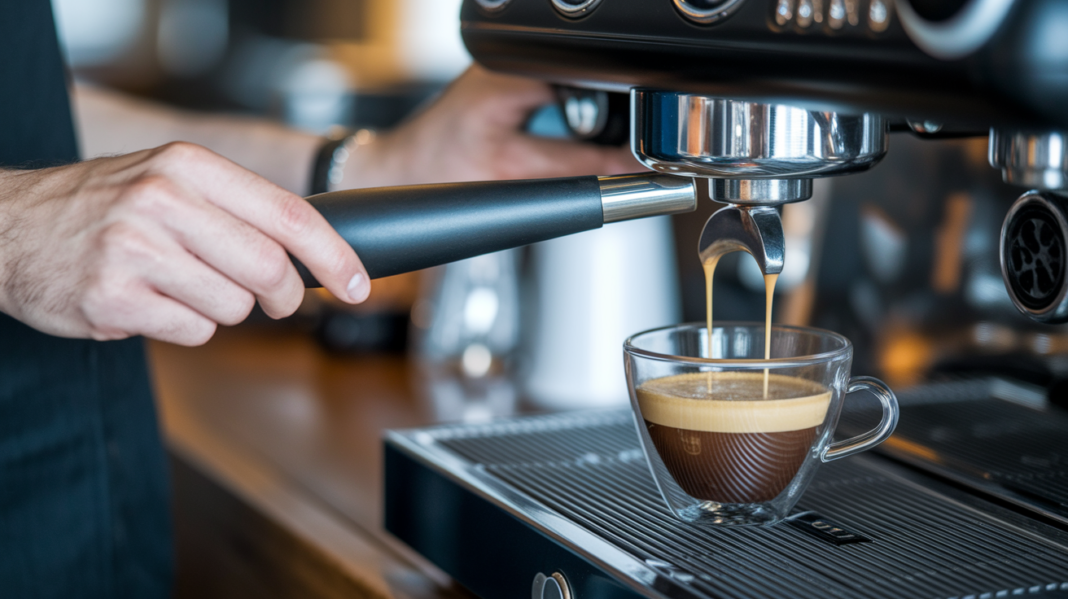

Want a quick answer: tamper shape isn’t a magic bullet.
Flat and convex change puck shape—flat makes a level surface; convex pushes grounds to the wall.
Both can pull great shots if diameter matches and your distribution and pressure are steady.
The real winner is your workflow and basket geometry; choose the base that fixes your main issue—edge leakage or an uneven puck.
This post breaks down pros, cons, and a one-change test so you can decide with a scale and a shot timer.
Defining Flat and Convex Tampers for Specialty Espresso Decisions
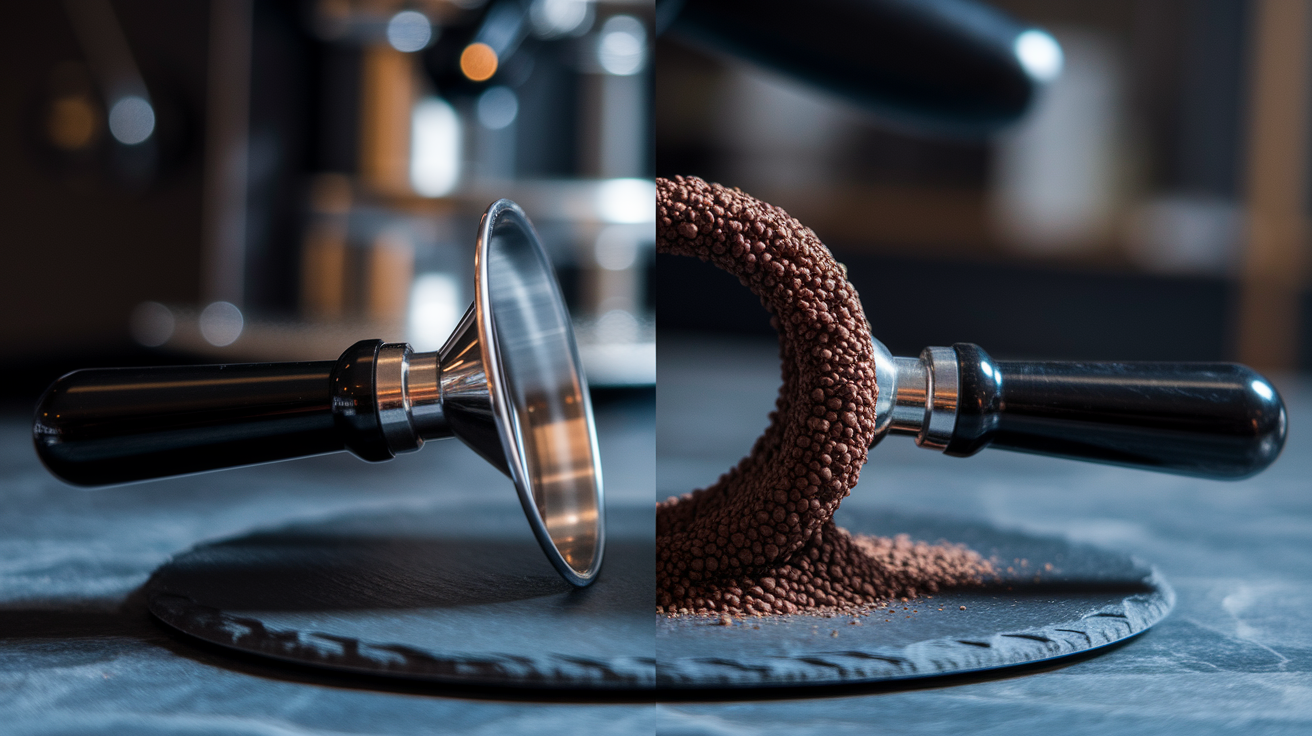
A flat tamper has a perfectly level base. Press down evenly and you get a straight, horizontal puck. The surface mirrors modern flat-bottom baskets, so there’s uniform contact across the whole coffee bed. You’ve got to keep the pressure even, though. Tilt it and you’re asking for trouble.
Convex tampers curve downward from center to edge. That rounded shape pushes grounds outward as you tamp, packing them tighter against the basket wall. How much curve depends on who made it. Some are gentle arcs, others are sharper domes. You end up with a puck that’s denser at the edges and slightly raised in the middle. Perfect Daily Grind has video demos showing this pretty clearly: flat bases leave everything level, convex ones create that dome and move coffee toward the sides.
Both shapes show up in good espresso workflows. Both can pull excellent shots if you know what you’re doing. The real difference is how they distribute coffee density and where water finds the easy path during extraction. Flat tampers go for surface uniformity and balanced flow. Convex ones seal the edges to stop side-channeling. Your choice depends on basket shape, how you like to work, and whether you want to touch the grounds during prep or let the tamper do the distribution.
What you’ll actually see in practice:
- Flat tampers make a level surface that extracts evenly when you combine it with proper leveling and steady pressure
- Convex tampers form that dome and push grounds out, improving contact between coffee and basket wall
- Flat bases pair well with fingertip leveling or distribution tools before you compress
- Convex bases can skip the ground-touching step since the curve redistributes as you go
- Both need precise diameter matching. Too small and you’re channeling no matter what shape you picked
- Your technique matters more than the base design
Flat Tamper Performance and Puck Behavior in Specialty Espresso
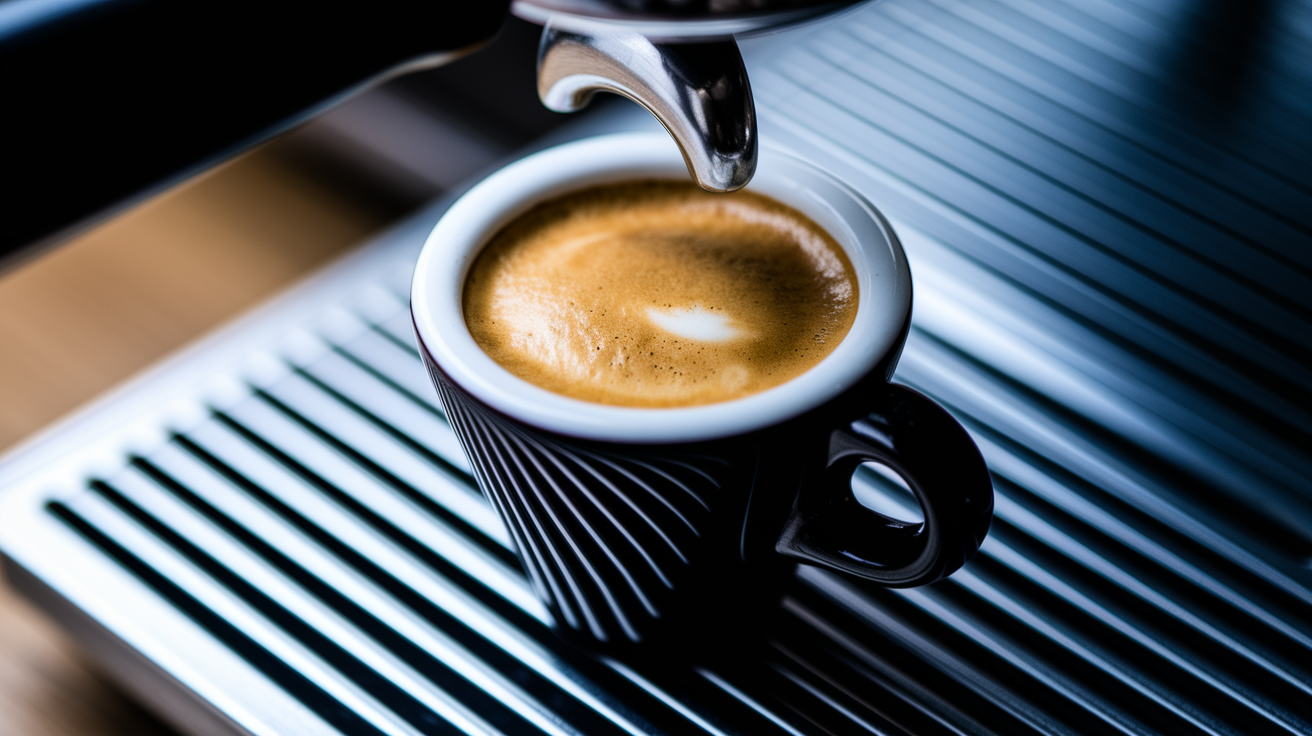
Flat tampers compress coffee into a horizontal plane that matches precision baskets. Apply pressure straight down and you get uniform thickness edge to center. That even surface helps water hit the entire bed at roughly the same moment, supporting balanced extraction. A lot of baristas say flat tampers work best when you level the coffee mound first. Run your fingertip across the loose grounds or use a leveling tool to create an even start, then the flat base keeps that uniformity as it compresses.
Side-channeling is your main risk. If the tamper diameter is even a hair smaller than the basket, or you tilt during the tamp, you create a gap between puck edge and wall. Water rushes through that gap, skips most of the coffee, and you get thin sour shots. People who’ve posted feedback report great consistency when they match diameter precisely to their 58 mm baskets and keep pressure steady and level. Pair a flat tamper with WDT or a simple leveling pass before compression and you cut down the chance of uneven density that triggers internal channels.
What you get with flat tampers:
- Level puck surface that lets water contact the coffee bed evenly
- Easier learning curve for beginners since you can see whether the tamper sits flat in the basket
- Some evidence and user reports suggest flat bases might pull higher extraction yields than convex
- Needs exact diameter matching and level pressure or you’ll get edge gaps and channeling
Convex Tamper Mechanics and Edge-Seal Benefits

A convex base curves down from center to edge, making a dome as it compresses. Press it into the basket and the rounded surface pushes grounds outward and up along the wall, packing the perimeter tighter. That redistribution creates a better seal between coffee and metal, shrinking the gap where water might run down the sides and skip extraction. Demos and reports from Roasty Coffee and Comiso Coffee back this up: convex tampers help cut side-channeling for people who struggle with edge leakage or don’t want to finger-level grounds.
The outward push also means the puck center may end up slightly less dense than the edges. Makes it trickier to apply perfectly even pressure across the whole bed. Press harder on one side and the dome shifts, creating an uneven puck. Some baristas notice a small drop in extraction efficiency with convex tampers, probably because that domed shape creates thickness variations that affect flow. Videos show convex angles vary a lot between brands. Shallow curves to steep domes, and each one changes how hard grounds get pushed to the wall.
Convex tampers work best when you want the tool itself to manage edge contact instead of manually leveling before compression. They’re especially useful if you’re working with tapered or slightly convex baskets, where the basket geometry already pushes toward radial flow and a rounded puck fits that design.
| Convex Angle Variation | Effect on Puck | Recommended Use Case |
|---|---|---|
| Shallow curve (gentle dome) | Modest outward push; slight edge-seal bump without major center thinning | You want mild edge-sealing help while keeping puck thickness fairly even |
| Medium curve (standard convex) | Clear dome; noticeable edge density increase and side-channeling drop | Frequent edge leakage with flat tampers or you’d rather not finger-level grounds |
| Pronounced curve (sharp dome) | Aggressive outward push; very dense edges but thinner center; harder to press evenly | Specific basket shapes or workflows where extreme edge sealing is the goal and you manage center extraction separately |
Comparing Flat vs Convex Tampers in Extraction, Channeling, and Puck Structure
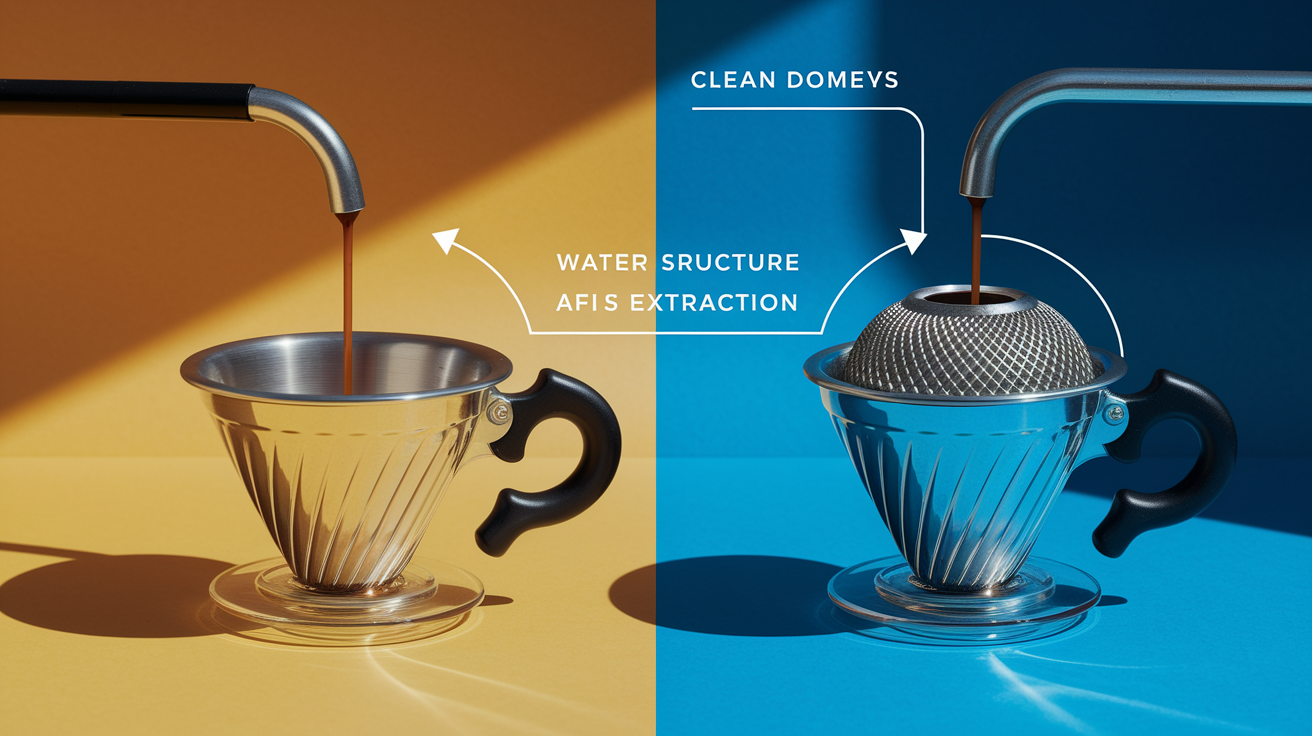
Video demos show clear visual differences in puck shape after tamping, but these aren’t lab measurements. Flat tampers leave a horizontal surface with even thickness. Convex tampers create a dome with denser perimeter and thinner middle. Those structure differences change how water moves through the bed during extraction. Water always takes the path of least resistance. If there’s a gap at the edge or a thin spot in the center, flow speeds up through that zone and skips surrounding coffee. Good technique and exact diameter matching matter more than base shape for stopping those weak points.
Taste differences between flat and convex are subtle and tie more closely to prep consistency than to base shape. When both are used with correct diameter, even pressure, and solid distribution, shots taste similar. Small variations you might notice (slightly sweeter or more balanced with one versus the other) usually trace back to how the tamper interacts with your specific basket geometry, dose, grind size, and pre-tamp routine. Change tamper shape but keep dose, grind, and distribution the same and extraction shifts a bit because puck density changed. But the flavor impact is minor compared to adjusting grind or dose.
Extraction Uniformity
Flat tampers support uniform extraction when the puck is level and diameter fits the basket precisely. Even surface means water contacts all particles at roughly the same time. If grind is consistent and the puck is clump-free, extraction moves evenly across the bed. Convex tampers introduce small thickness variations. Center slightly thinner, edges slightly thicker. That can create small differences in extraction timing. Water may move through the thinner center a bit faster, or get slowed by the denser perimeter, depending on basket geometry and flow resistance.
Channeling Patterns and Water Flow
Flat tampers risk side-channeling if diameter or technique is off. Small gap between puck edge and basket wall lets water rush down the sides, making thin fast shots and leaving dry coffee near the edges. Convex tampers cut that risk by actively sealing the edge, but they bring in a new variable: the domed center. If the center’s noticeably thinner, water may channel through the middle instead. In real use, both shapes can produce channels if pre-tamp distribution is poor or if you tilt during compression. Distribution tools and consistent technique prevent channeling better than base shape alone.
| Extraction Factor | Flat Tamper Tendency | Convex Tamper Tendency |
|---|---|---|
| Puck thickness uniformity | Even thickness edge to center when applied level | Slightly thinner center, denser edges because of dome shape |
| Side-channeling risk | Higher if diameter is undersized or tamper tilts | Lower because outward pressure seals puck to basket wall |
| Center-channeling risk | Lower, since center thickness matches perimeter | Slightly higher if dome makes a thin zone in the middle |
| Extraction capacity | Potentially higher because of even contact and consistent flow | May be slightly lower if dome shape creates uneven flow paths |
Basket Geometry and Tamper Diameter Considerations
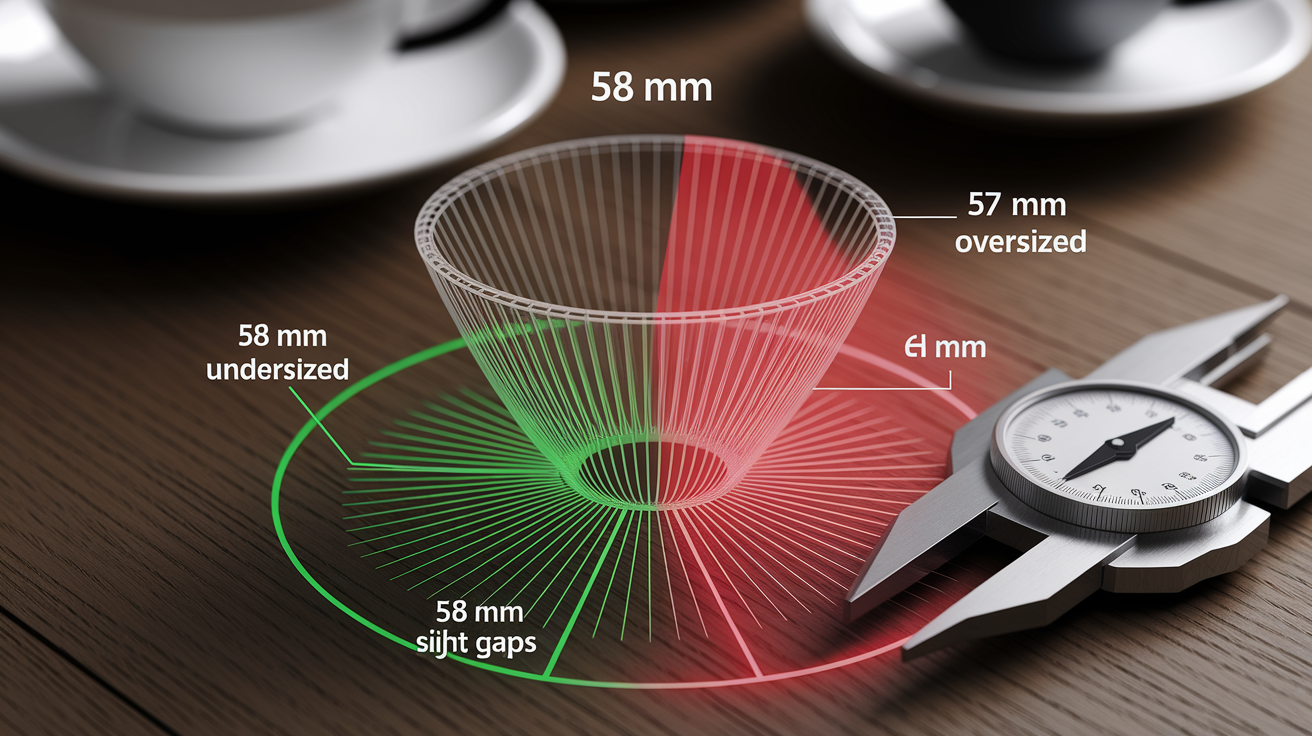
Matching tamper diameter to basket diameter isn’t negotiable for both flat and convex designs. 58 mm basket needs a 58 mm tamper. Use a 57.5 mm tamper and you leave a narrow gap around the puck where water runs free, skipping extraction. That gap causes side-channeling no matter what base shape you picked. Flat-bottom precision baskets (the specialty espresso standard) pair naturally with flat tampers since both share level geometry. The flat base mirrors the basket floor, creating uniform compression and minimal risk of uneven density.
Tapered or slightly convex baskets, which curve inward as they go down, may benefit from convex tampers. The rounded base follows the basket curve, pushing grounds into full contact with the sloped wall and cutting the chance of edge gaps. But most modern espresso baskets used in specialty coffee are flat-bottomed, so convex tampers in those baskets rely on outward pressure instead of geometric matching. Oversized tampers risk hitting the basket rim before fully compressing the coffee, creating a shallow puck or damaging the tamper edge. Undersized tampers leave gaps that guarantee channeling.
Basket depth affects tamping too. Deeper baskets give more room for dose and tamp, but they need consistent tamper placement to avoid tilting. Shallow baskets offer less tolerance for uneven pressure since a small tilt can create a noticeable slope across a thin puck.
What matters for diameter and geometry:
- Measure your basket diameter with calipers and buy a tamper that matches within 0.1 mm
- Flat-bottom baskets work equally well with flat or convex tampers, but flat bases naturally mirror basket geometry
- Tapered baskets may pair better with convex tampers if the curve matches the basket taper
- Oversized tampers hit the basket rim before fully compressing coffee, making incomplete tamps
- Undersized tampers always leave a perimeter gap that causes side-channeling, no matter what base shape
Workflow, Distribution Tools, and Technique Differences When Using Each Tamper Shape

Flat tampers fit naturally into workflows that include fingertip leveling or distribution tools before tamping. After dosing, plenty of baristas run a finger across the top of the coffee mound to spread grounds evenly and knock down high spots. That leveled surface becomes the starting point for the flat tamp, and steady downward pressure keeps the uniformity. Convex tampers often skip the finger-leveling step since the rounded base redistributes grounds as it drops. Baristas who’d rather not touch coffee appreciate this. The convex shape does some distribution work automatically by pushing grounds outward.
Technique consistency influences results more than tamper shape. A flat tamper used with uneven pressure or a tilted angle produces worse extractions than a convex tamper applied steadily and level. Practicing repeatable pressure (either by feel or with a calibrated tamper) matters more than picking one base design over the other. Calibrated tampers use an internal piston set to around 15 PSI, helping you apply the same force every time and cutting shot-to-shot variation. Available in both flat and convex versions.
Distribution tools like WDT needles and leveling tampers reduce the risk of uneven density before any tamp shape touches the coffee. WDT breaks up clumps and spreads grounds evenly across the basket. Leveling tools spin or press grounds into a flat, consistent layer. Both work with flat and convex tampers, but they’re especially useful with flat bases since a flat tamper can’t correct uneven distribution the way a convex base can.
Distribution Tools and Their Interaction With Tamp Shape
WDT and leveling tools create an even coffee bed before tamping, helping both flat and convex tampers perform consistently. Flat tampers benefit because the pre-leveled surface just needs steady compression to form a uniform puck. Convex tampers benefit because even starting density lets the dome form predictably without unexpected thin spots. Skip distribution and dose unevenly and a convex tamper may push clumps around unpredictably. A flat tamper may compress clumps into hard zones that resist water flow.
Tamper Build Quality, Materials, Ergonomics, and Calibrated Options
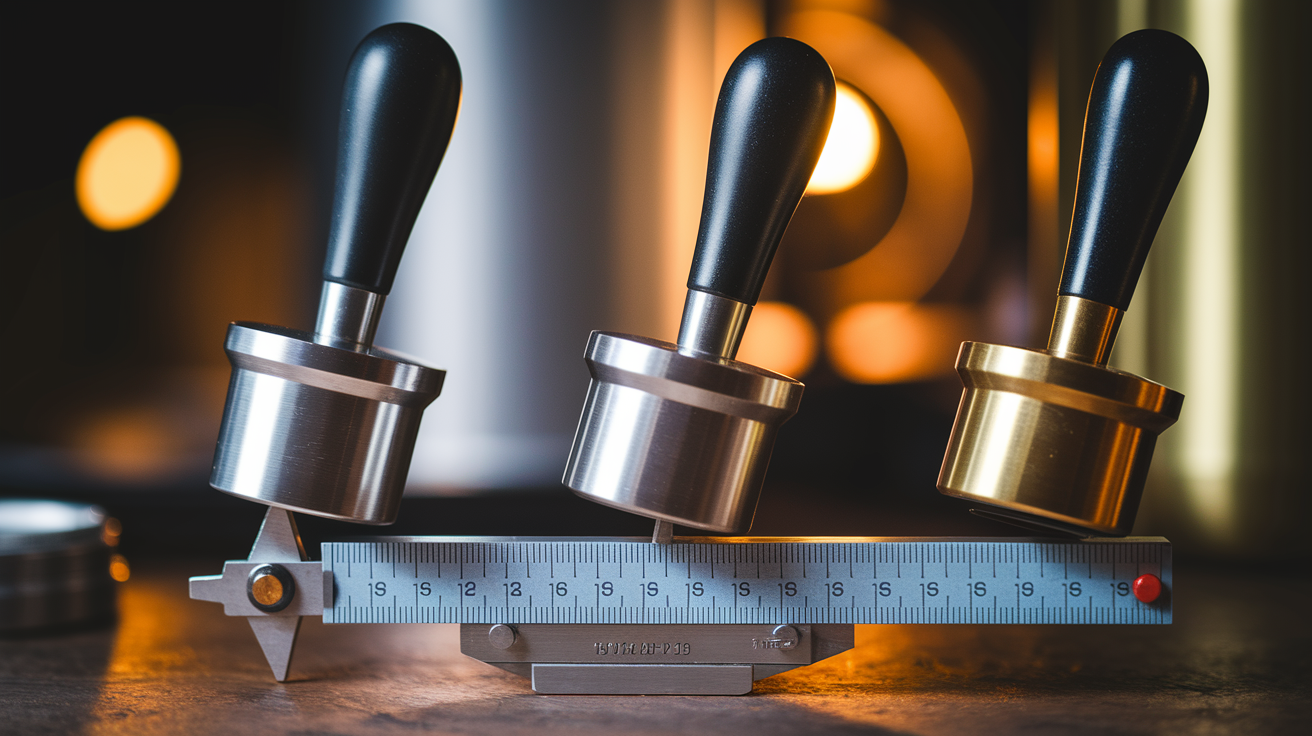
Tamper weight and material affect how easily you can apply consistent pressure. Heavier tampers, usually solid stainless steel, need less downward force from your arm because gravity helps. Light tampers, often plastic or hollow aluminum, demand more effort and make it harder to judge pressure by feel. Stainless steel is the most common pick for specialty espresso tampers because of its density, durability, and neutral thermal properties. Aluminum tampers are lighter and may suit baristas with wrist or shoulder issues, but they need more active pressure control. Brass holds heat slightly longer than stainless, which can matter in high-volume commercial settings but rarely makes a difference for home use.
Handle length and shape influence technique. Long handles give more leverage but can get in the way of fingertip leveling if the handle sits too high above the basket rim. Short knob-style handles fit comfortably in the palm and give closer control, but they need more wrist strength for even pressure. The best handle is the one that fits your hand and supports your tamping motion without causing strain after repeated shots.
Calibrated tampers include an internal spring or piston that clicks or gives way once preset pressure (commonly around 15 PSI) is reached. Takes out the guesswork and helps you apply the same force every time. ESPRO offers calibrated tampers in 58 mm and 49 mm sizes, available in both flat and convex base designs. Calibrated models are especially useful for beginners learning consistent tamping or for cafés training multiple baristas to use identical technique. Added cost is usually justified by the drop in shot-to-shot variation.
What to look for in build quality:
- Go for stainless-steel bases for weight, stability, and long-term durability
- Pick a handle shape and length that fits your hand and supports steady, repeatable pressure
- Consider calibrated tampers if pressure consistency is a challenge or if you’re training other users
- Skip free or included plastic tampers that come with entry-level machines. They’re too light to compress coffee well and are meant as temporary placeholders
Choosing Between Flat and Convex Tampers for Your Specialty Espresso Workflow
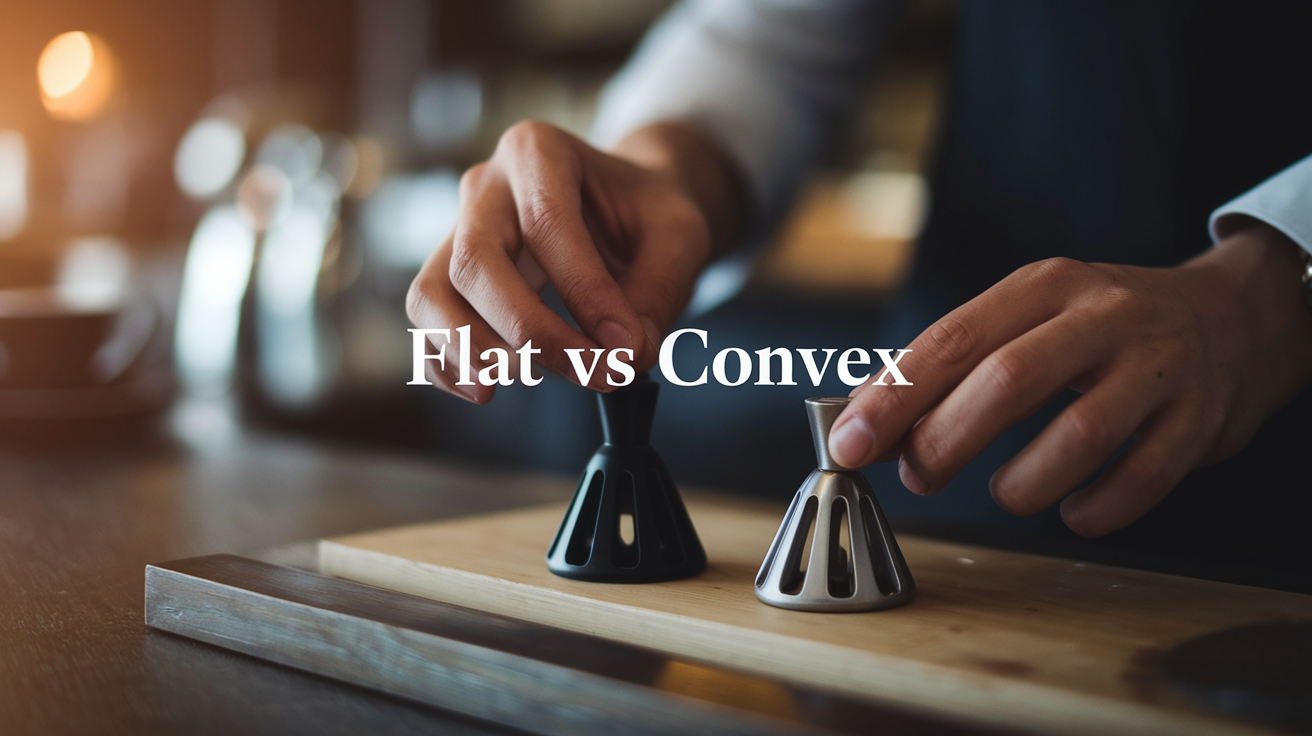
Technique and prep consistency drive shot quality more than tamper base shape. Both flat and convex tampers produce excellent espresso when you pair them with precise diameter matching, even pressure, good distribution, and correct dose. Choosing between them comes down to your workflow preferences, basket geometry, and how you want to manage edge contact and puck uniformity. If you’re comfortable leveling grounds with your fingertip or a distribution tool and want simple, repeatable compression that mirrors your flat-bottom basket, a flat tamper is the straightforward pick. If you get frequent side-channeling, prefer not to touch grounds, or want the tamper itself to manage edge sealing, a convex tamper may fit your process better.
Testing both shapes is the most reliable way to decide. Borrow or buy an inexpensive version of each, dose and grind identically, and compare shots over several days. Track extraction time, yield, and taste. Note whether one shape makes it easier to hit consistent results. Pay attention to puck appearance after knocking out. Wet spots, channels, or uneven extraction? Adjust your distribution or tamping pressure before blaming the base shape. Many baristas find that improving WDT or leveling technique kills channeling problems no matter which tamper they use.
Pair your tamper choice with a complete puck-prep routine. Dose accurately with a scale, distribute evenly with WDT or a leveling tool, tamp with steady pressure, and evaluate each shot. Adjust one variable at a time (grind size, dose, or tamp pressure) so you can identify what changes extraction. Tamper shape is one part of a bigger system that includes grinder quality, basket precision, water temperature, and brew ratio. A well-chosen tamper supports that system, but it can’t fix poor grinding, stale coffee, or inconsistent dosing.
| Category | Flat Tamper Recommendation | Convex Tamper Recommendation |
|---|---|---|
| Best for users who… | Prefer fingertip leveling or use distribution tools; want simple repeatable compression; prioritize extraction yield and even flow | Want to skip touching grounds; get frequent side-channeling; prefer edge-sealing effects and are comfortable managing slight puck dome |
| Basket compatibility | Ideal for flat-bottom precision baskets (58 mm, 54 mm, etc.); works with any basket if diameter matches exactly | Works with flat-bottom baskets and may offer additional benefit with tapered or convex baskets; diameter matching still critical |
| Suggested starting point | 58 mm stainless-steel flat tamper with a comfortable handle; pair with WDT and leveling tool for even distribution | 58 mm stainless-steel convex tamper with medium curve; test without finger-leveling to see if edge sealing cuts channeling |
Final Words
Pull a shot and watch the flow: we defined flat and convex tampers, explained how each shapes the puck, and covered extraction, channeling, basket fit, and workflow.
Follow the simple checks — match tamper diameter, try fingertip leveling or WDT, keep tamp pressure steady, and change one variable at a time. Use time, yield, and flow as your guide.
Use the flat vs convex tamper pros and cons for specialty espresso to pick, test, and repeat. Try both, note what’s more consistent, and stick with the technique that makes tasty, repeatable shots. You’re almost there.
FAQ
Q: Which tamper is best for espresso?
A: The best tamper for espresso is one that matches your basket diameter, feels comfortable, and suits your technique—flat for level shots, convex for edge sealing, stainless-steel 58 mm is common.
Q: What is the 30 second rule for espresso?
A: The 30 second rule for espresso means a typical extraction completes around 25–30 seconds; much faster usually under-extracts (sour), much slower usually over-extracts (bitter).
Q: Why convex tamper?
A: A convex tamper is used because it pushes grounds outward toward the basket wall, improving edge seal and reducing side-channeling; the tradeoff is a slightly less flat puck and need for steady pressure.
Q: What is the golden rule of espresso?
A: The golden rule of espresso is change only one variable at a time and measure grams and seconds so you can see each adjustment’s effect; consistency beats guessing.