
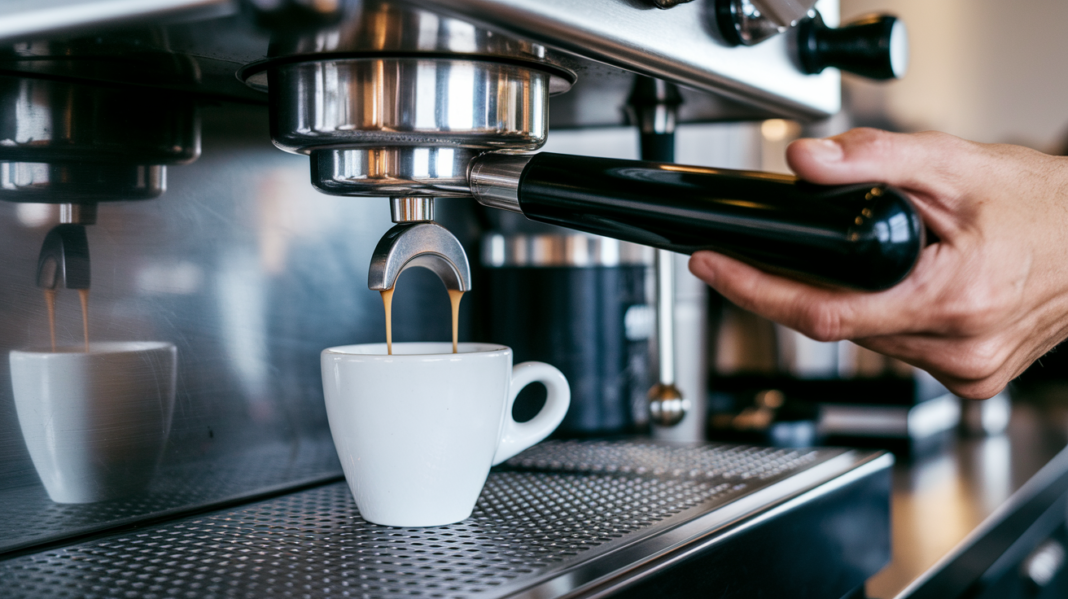

Are calibrated tampers a crutch or the secret to steadier shots?
They remove guesswork by delivering the same force every time, usually around 30 pounds.
If your shots drift because people, fatigue, or sloppy tamping change pressure, a calibrated tamper tightens your shot time window and makes yield and crema more repeatable.
But they only help when tamp pressure is the variable, not when grind, dose, or distribution are the culprits.
This post shows when a calibrated tamper actually moves the needle and gives simple, step-by-step usage tips so your tamp becomes a reliable part of dialing in.
How Calibrated Tampers Improve Shot Consistency and When They Make a Noticeable Difference
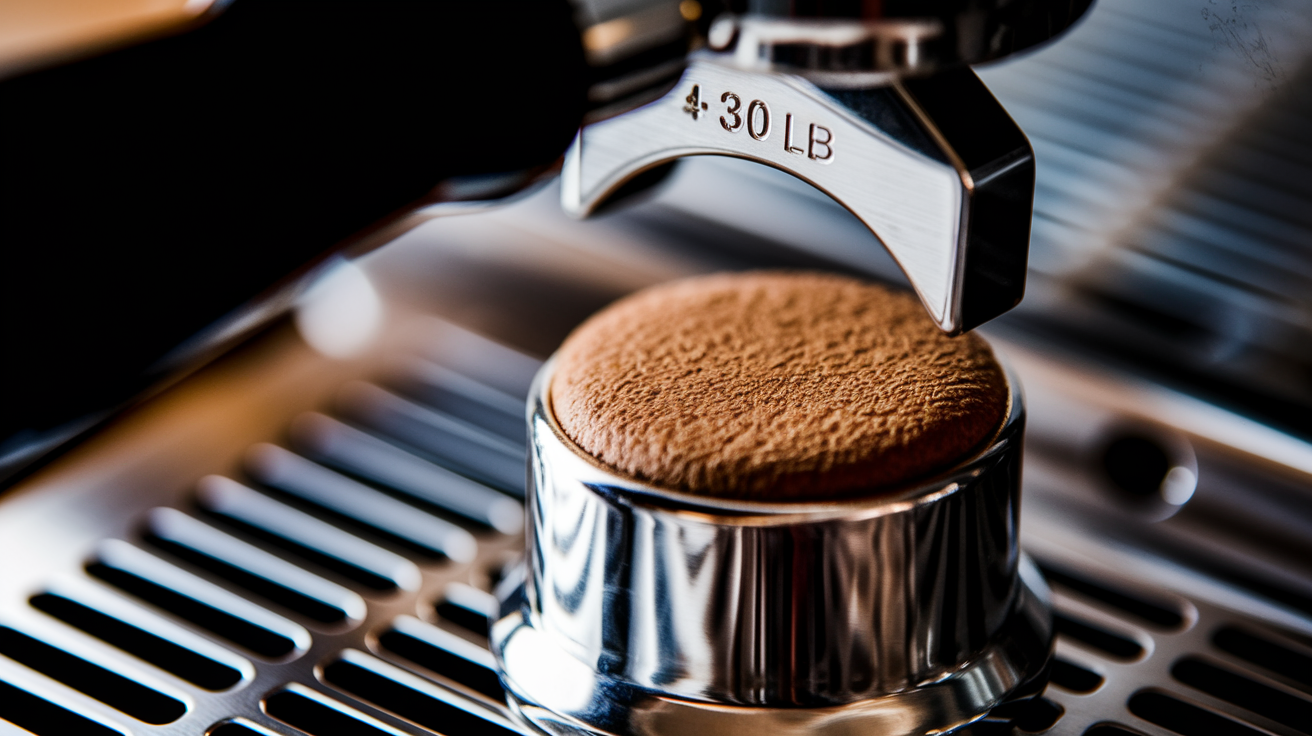
Calibrated tampers lock in a preset force, usually around 30 pounds (roughly 15 kilograms), so you’re compressing the puck the same way every single time. When you tamp by feel, you’re guessing. Sometimes you press a little harder, sometimes lighter. Water finds the soft spots and rushes through, pulling sour coffee from the loose area while the tight sections over-extract and turn bitter. A calibrated tamper takes that guesswork out of the equation.
Spring-loaded versions compress until the internal spring hits its limit, then you feel it, a click or sudden resistance shift. Impact models store energy in a spring and release a precise 30-pound punch when you press down. You get an audible click that tells you it’s done. Digital types show the exact force on a screen. All three remove the same problem: you not knowing what 30 pounds actually feels like.
You’ll know it’s working when:
- Shot time lands in a tighter window, say 25 to 30 seconds, pull after pull.
- Yield stays within half a gram when you’re using the same dose and grind.
- Crema looks more stable, fewer weird streaks or blotchy spots.
- Puck surfaces come out cleaner after extraction, fewer craters or wet patches.
- Flow stays thick and even instead of spraying early or running in thin jets.
Calibrated tampers shine in setups where more than one person pulls shots. Training schools, cafés with rotating staff, homes where your partner also makes coffee. They’re also great for beginners because the feedback is instant. You learn what correct pressure feels like without needing a bathroom scale under your portafilter.
Types of Calibrated Tampers and How Their Mechanisms Create Consistent Pressure
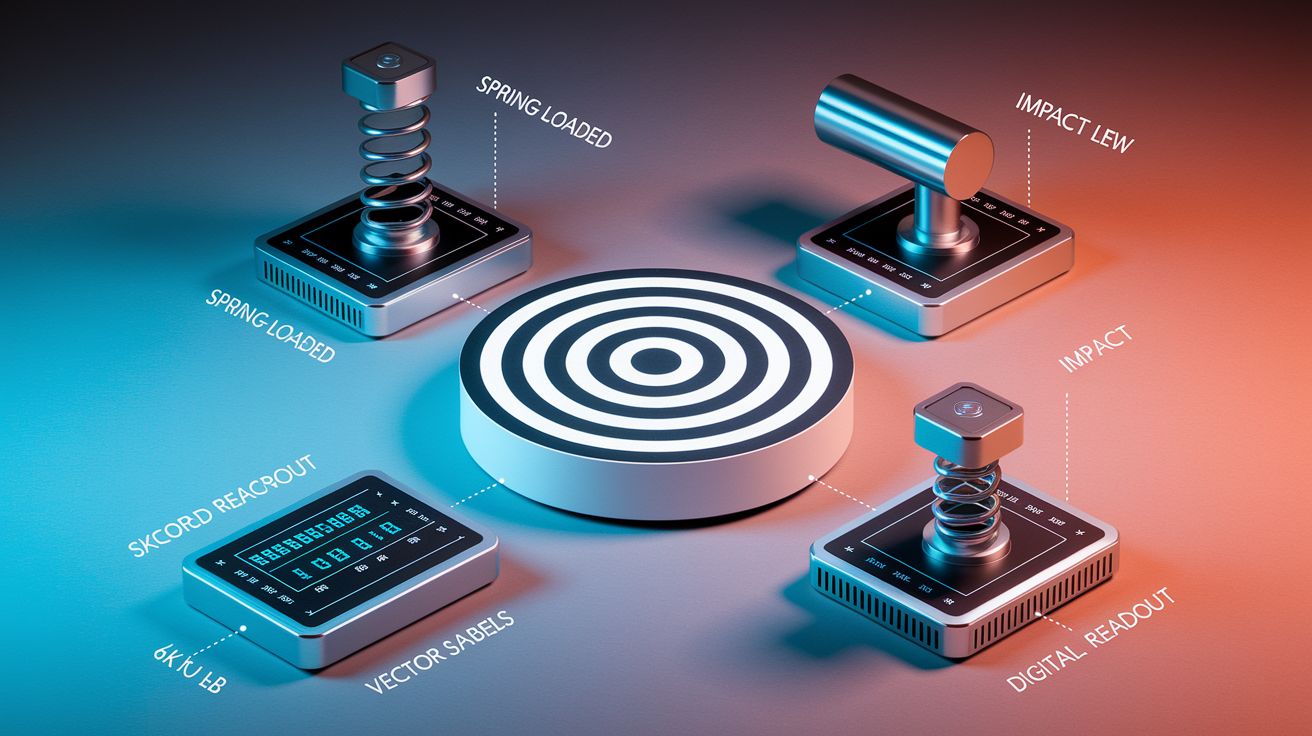
There are three main types. Spring-loaded tampers use single or dual springs to give you tactile feedback when you hit the preset pressure. Impact tampers release a roughly 30-pound impulse through a spring-driven mechanism. Digital or visual tampers display applied force on a screen or LED readout.
Spring-loaded models compress smoothly until resistance spikes and the handle clicks or stops moving. That’s the spring hitting its calibration point. Impact designs store energy as you push, then snap a weighted plunger against the puck when the spring trips. The force gets delivered instantly. Digital units measure load in real time and beep or light up when you reach the target, which is helpful for advanced training or logging quality-control data.
Mechanical resistance systems stop compressing once preset pressure is reached because the spring physically can’t compress further without breaking. That hard stop removes guesswork. If you keep pushing, the tamper base stays at the same depth and just transfers extra force into the portafilter lugs instead of the puck. Impact clicks confirm force completion by sound. You hear the snap and know the preset impulse was delivered, even if you barely felt the press.
Digital readouts help with training. You can see exactly how much force you’re applying in pounds or kilograms, so instructors can demonstrate correct technique and students can verify their pressure before locking in muscle memory. Some models log force data over time, useful in high-volume or competitive environments. Mechanical spring and impact tampers deliver simple, battery-free repeatability without screens or maintenance, making them tougher for daily café use where durability and speed matter more than data tracking.
Step‑by‑Step Guide: How to Use a Calibrated Tamper for Repeatable Espresso Shots
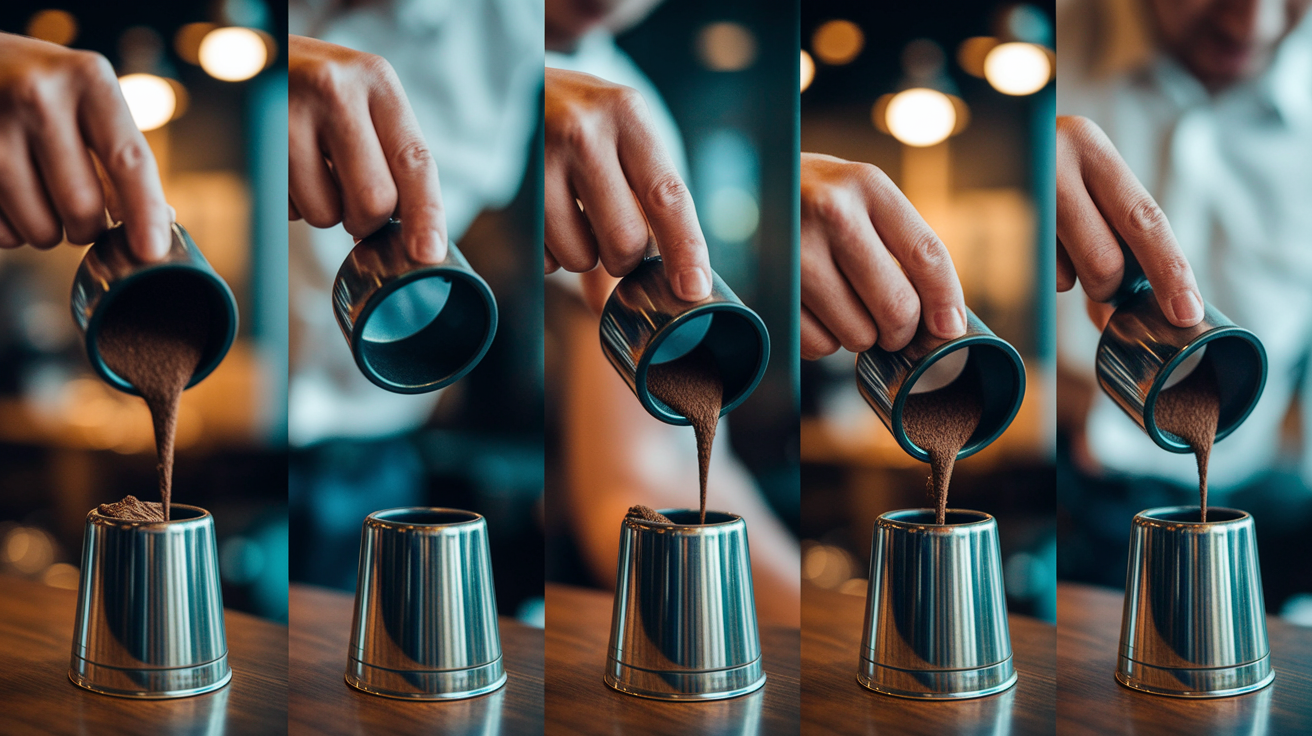
Using a calibrated tamper correctly turns tamping from a guessing game into a controlled step. Follow this sequence to get consistent puck prep every time and make grind or dose adjustments more predictable.
-
Dose accurately. Weigh your grounds (18 to 20 grams for a typical double) on a scale before dropping them into the portafilter. Consistency starts here.
-
Distribute evenly. Use WDT (Weiss Distribution Technique), a distribution tool, or finger-leveling to break up clumps and fill the basket edge to edge. Air pockets and dense clumps cause channeling no matter how you tamp.
-
Level the surface. Tap the basket gently or use a leveler to create a flat, horizontal coffee bed. An uneven surface before tamping produces an uneven puck after.
-
Position the tamper. Place the calibrated tamper squarely and centered over the basket. Keep the handle vertical, 90 degrees to the counter, and your wrist straight to prevent angled tamping.
-
Press until feedback. Push down smoothly and steadily until you hear the click, feel the resistance change, or see the digital readout hit your target (typically 30 pounds or 15 kilograms). Stop immediately. Adding more force after the calibration point does nothing useful.
-
Lift straight up. Withdraw the tamper vertically without twisting or rocking. Twisting disturbs the puck and can create micro-channels around the edge.
-
Check the puck. Look at the surface. It should be flat, level, and evenly compressed. Wipe the basket rim, lock into the group, and pull your shot.
These steps integrate into dialing in by making tamping the constant. When tamp force stays identical shot after shot, changes in extraction time or taste trace directly back to grind size, dose, water temperature, or distribution. You can adjust one variable at a time and actually see what each change does.
Comparing Calibrated vs. Traditional Tampers: Which Produces More Consistent Shots?
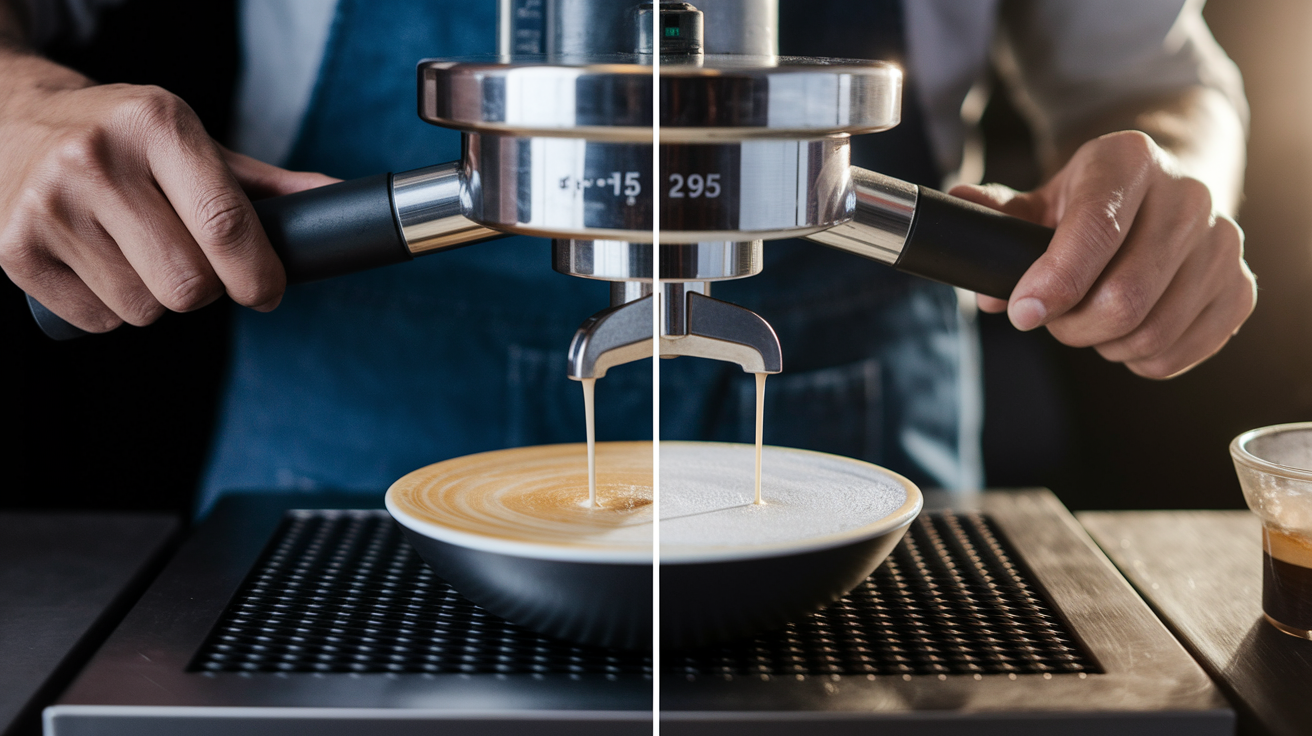
Human-applied tamping varies a lot. Fatigue from a busy shift, slight angle errors when you’re rushing, inconsistent estimates of what 30 pounds feels like, different hand sizes or strengths between baristas. All of that introduces variability. A traditional tamper relies entirely on the user’s technique and sense of pressure, making it prone to under-tamping (loose puck, fast channeling) and over-tamping (compressed too hard, choking the shot or cracking the puck). Calibrated tampers give a consistent endpoint (click, stop, or readout) that removes that judgment call and helps train muscle memory. Beginners learn correct pressure immediately instead of after weeks of trial and error.
Experienced baristas often prefer traditional tampers because they’ve already built reliable muscle memory and value speed. Adding a click or spring mechanism can feel slower or less intuitive when you’ve pulled thousands of shots by feel. Some high-end baristas argue that slight pressure variation is part of adapting to different coffees or grind settings, though research and competition results suggest that holding tamp constant and adjusting grind produces more repeatable outcomes.
Main advantages of calibrated tampers:
- Identical tamp force shot after shot, regardless of who’s behind the machine.
- Immediate feedback that training is correct, accelerating skill development.
- Reduced risk of over-tamping injuries or repetitive strain from excessive force.
- Clear diagnostic value. When tamping is controlled, other variables (grind, dose, distribution) become easier to isolate and fix.
Optimal Tamping Pressure: Understanding the 30‑Pound Guideline and How Calibrated Tampers Enforce It

The widely cited tamping pressure of around 30 pounds (approximately 13.6 to 15 kilograms) emerged from espresso research and barista consensus as the sweet spot where puck density is high enough to resist channeling but not so extreme that water can’t flow through. Below about 20 pounds, the puck stays loose and water finds gaps. Above 40 pounds, you compress the coffee so tightly that extraction slows or stops, and you risk cracking the puck or damaging your wrist. The 30-pound target balances extraction uniformity, workflow comfort, and equipment longevity.
Calibrated tampers reliably reproduce that pressure by locking in the force mechanically or electronically. A spring-loaded tamper calibrated to 30 pounds compresses its internal spring until exactly 30 pounds is applied, then stops. Press harder and the base doesn’t move. An impact tamper releases a spring-driven plunger that delivers a 30-pound impulse, confirmed by a click. Digital models display force in real time, showing 30.0 lb or 13.6 kg on the screen so you know when to stop. This enforcement removes the variability of estimating force by feel and guarantees that every puck sees the same compression, pull after pull.
Troubleshooting Tamping Issues Even When Using a Calibrated Device
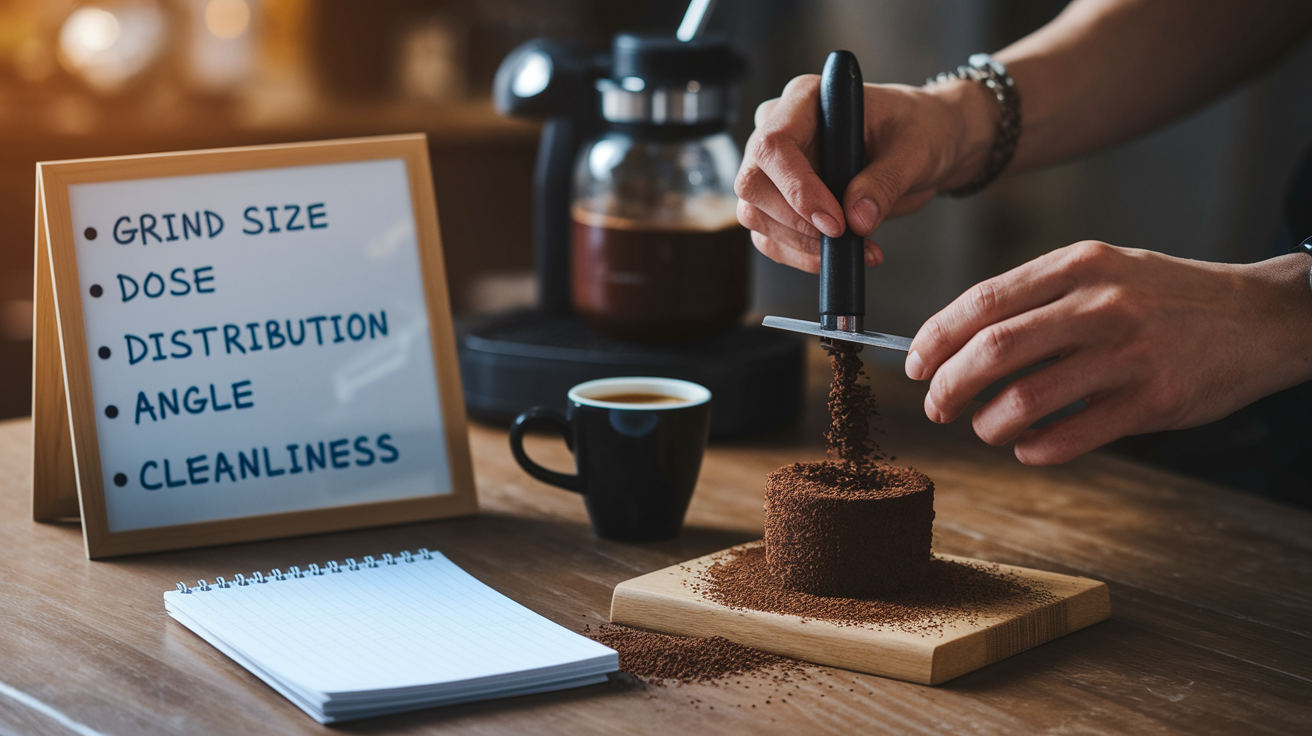
Calibrated tampers control pressure, but they can’t fix uneven distribution, incorrect grind size, a tamper that doesn’t fit the basket, or machine problems. If your shots still channel or taste inconsistent after switching to a calibrated tamper, the issue lies elsewhere in your workflow. Common culprits include clumpy grounds that weren’t broken up before tamping, dose that drifts shot to shot because you’re not weighing, grind that’s too coarse (water rushes through) or too fine (choking and cracking), and baskets or shower screens that need cleaning.
Angled tamping remains possible even with a calibrated tool if you tilt the handle while pressing, so check that you’re keeping the tamper perpendicular. A tamper diameter that’s too small leaves an untamped ring around the basket edge where water preferentially flows, creating a doughnut channel. Machine pressure or temperature that’s unstable will cause extraction swings unrelated to your puck prep.
Diagnostic checklist when consistency is still poor:
- Grind size. Adjust finer if shots run fast and sour, coarser if they choke or taste bitter and slow.
- Distribution. Use WDT or a distribution tool to eliminate clumps and air pockets before tamping.
- Tamp angle. Verify the tamper sits flat and level. Use a small spirit level for training if needed.
- Tamper diameter match. Confirm your tamper is 0.5 to 1 mm smaller than the basket ID (58 mm basket = 58 mm or 57.5 mm tamper).
- Dose accuracy. Weigh every dose. Even 0.5 gram drift changes flow and flavor.
- Machine cleanliness. Backflush weekly, check the shower screen, replace gaskets if water leaks around the portafilter.
To isolate tamping from other variables, fix everything else first. Dose consistently, distribute thoroughly, grind to a known baseline, check machine temp and pressure. If shots become consistent only after you start using the calibrated tamper, tamping was the problem. If they’re still erratic, work through the checklist above one item at a time.
Choosing the Right Calibrated Tamper: Sizes, Features, Springs, and Compatibility
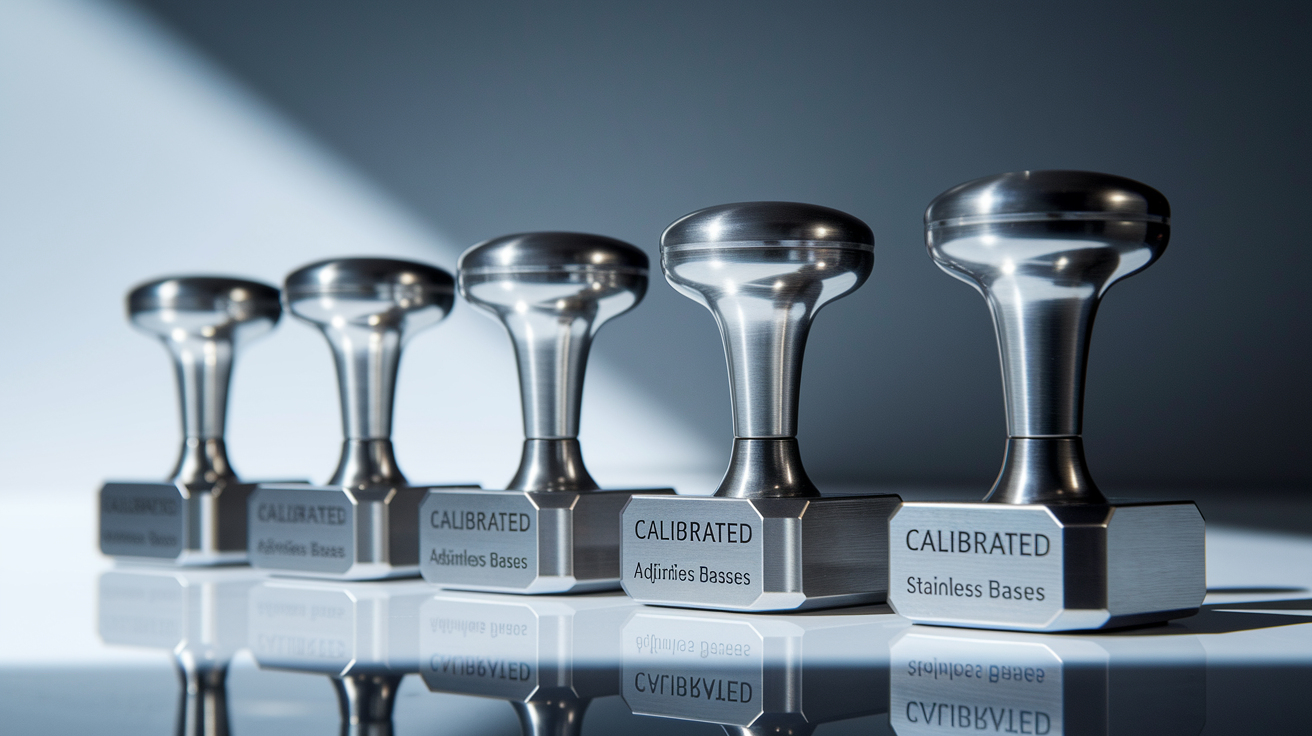
Common portafilter basket sizes are 51 millimeters (some Breville and Sage consumer machines), 53 millimeters (mid-range home machines like Rancilio Silvia or Gaggia Classic), and 58 millimeters (commercial standard and high-end home machines like E61 groups). Many calibrated tampers offer interchangeable stainless-steel bases so you can swap sizes without buying a whole new tool. Check your basket’s inside diameter (measure with calipers or check the manufacturer’s spec) and choose a tamper that’s 0.5 to 1 millimeter smaller to prevent binding while still covering the entire puck.
Some models include self-leveling bases that automatically adjust to sit flat even if you press at a slight angle, helpful for beginners or multi-user setups. Dual-spring systems claim finer pressure control by splitting the load across two springs, though single-spring designs work just as well when properly calibrated. Adjustable-pressure tampers let you dial the force up or down, useful if you want to test different pressures or switch between light and dark roasts, but fixed 30-pound models are simpler and faster for daily workflow.
Handle comfort matters if you’re pulling dozens of shots per shift. Look for a grip diameter that fits your hand comfortably and a handle material (wood, composite, aluminum) that doesn’t slip when wet or get too cold. Durability comes down to spring quality and base material. Stainless steel outlasts aluminum or coated bases, and sealed springs resist coffee oil buildup better than exposed mechanisms.
| Model Feature | Why It Matters |
|---|---|
| Spring type (single, dual, impact) | Single springs are simple and durable; dual springs claim finer control; impact delivers instantaneous force with a confirming click. |
| Diameter (51/53/58 mm) | Must match your basket size within 0.5–1 mm to avoid edge channeling or binding. |
| Self-leveling base | Corrects minor angle errors automatically, reducing training time and improving puck flatness. |
| Handle ergonomics | Comfortable grip reduces strain during high-volume shifts and prevents slipping when hands are wet. |
How to Measure Improvement: Shot‑Consistency Metrics After Using a Calibrated Tamper

Measuring whether a calibrated tamper improved your consistency requires tracking objective metrics before and after the switch. Start by logging shot time, yield, and sensory notes for ten pulls using your old tamper, then repeat the test with the calibrated tool while keeping dose, grind, and distribution identical. Consistent shot time (shots landing within a two to three second window, for example 27 to 30 seconds, instead of swinging between 20 and 35) indicates more uniform puck density. Stable yield means weighed output varies by less than half a gram shot to shot, a sign that extraction resistance is repeatable.
Visual and sensory cues confirm the numbers. Even crema with consistent color and no streaky patches suggests uniform extraction across the puck. Balanced taste (less sourness from under-extraction and less harsh bitterness from over-extraction in the same shot) points to fewer channeling events. After knocking out the puck, inspect the surface. Fewer craters, wet spots, or radial cracks mean water flowed more evenly. Mechanical and digital tampers help isolate tamp force as a controlled variable, so any remaining inconsistency traces to grind, dose, distribution, or machine issues, making troubleshooting faster and more targeted.
Five key metrics for evaluating improvement:
- Shot time variance. Tighter spread (for example, 28 to 30 seconds vs. 22 to 35 seconds) across ten consecutive pulls.
- Yield consistency. Output weight ±0.2 to 0.5 grams when dose and grind stay constant.
- Crema stability. Uniform thickness and color, fewer light or dark patches.
- Taste balance. Reduced sour or brassy notes and harsh bitterness; more sweetness and body.
- Puck appearance. Dry, evenly colored surface with minimal craters or channeling marks after extraction.
Final Words
You set the tamper to click and pull a steady 25–30 second shot. The post explains how locking ~30 lb improves puck uniformity, outlines spring, impact, and digital models, walks through a step-by-step tamp routine, and contrasts calibrated vs traditional tampers.
It also gives a quick troubleshooting checklist, advice on choosing sizes and features, and five simple metrics to measure improvement: shot time, yield, crema, channeling, flow.
If you wonder do calibrated tampers improve shot consistency and how to use them, yes. Use one where multiple people work or when training, change one variable at a time, and you’ll pull steadier, less wasteful espresso.
FAQ
Q: Does a calibrated tamper make a difference?
A: A calibrated tamper makes a difference by enforcing a consistent tamp (commonly ~30 lb), reducing barista variability, cutting channeling, stabilizing shot time and yield, and producing steadier flow and crema.
Q: How to get consistent tamping?
A: Consistent tamping is achieved by distributing grounds, using a WDT, centering the tamper, pressing to a steady preset force, keeping the tamper perpendicular, then lifting straight and inspecting the puck for evenness.
Q: How heavy should you tamp and is it possible to tamp too hard?
A: You should tamp about 30 lb (≈14 kg); tamping harder can choke the shot, cause overextraction and bitterness. Calibrated tampers help avoid over‑tamping by enforcing repeatable pressure.