
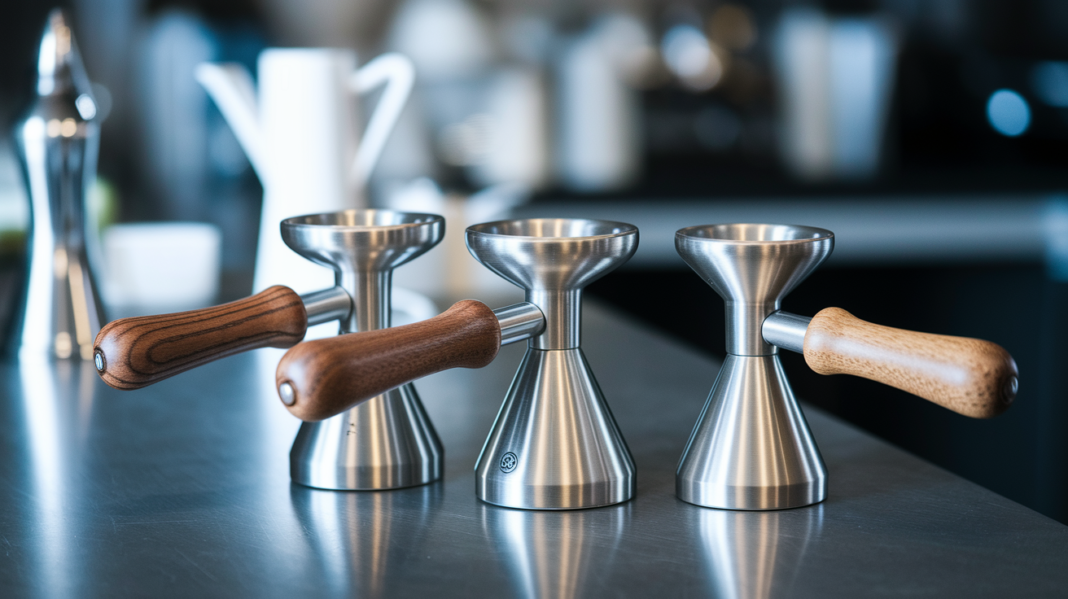

Think the tamper material doesn’t matter? Think again.
Material shapes weight, feel, and durability, and that directly affects how repeatable your shots are.
If you pull lots of shots, stainless steel’s heft and flatness make it the reliable choice.
Aluminum trims weight and cost for travel or occasional home use.
Wood handles bring warmth and grip but need hand washing and oiling.
This post compares stainless, aluminum, and wood so you can pick the right tamper for your workflow.
Core Comparison of Espresso Tamper Materials for Making the Right Choice
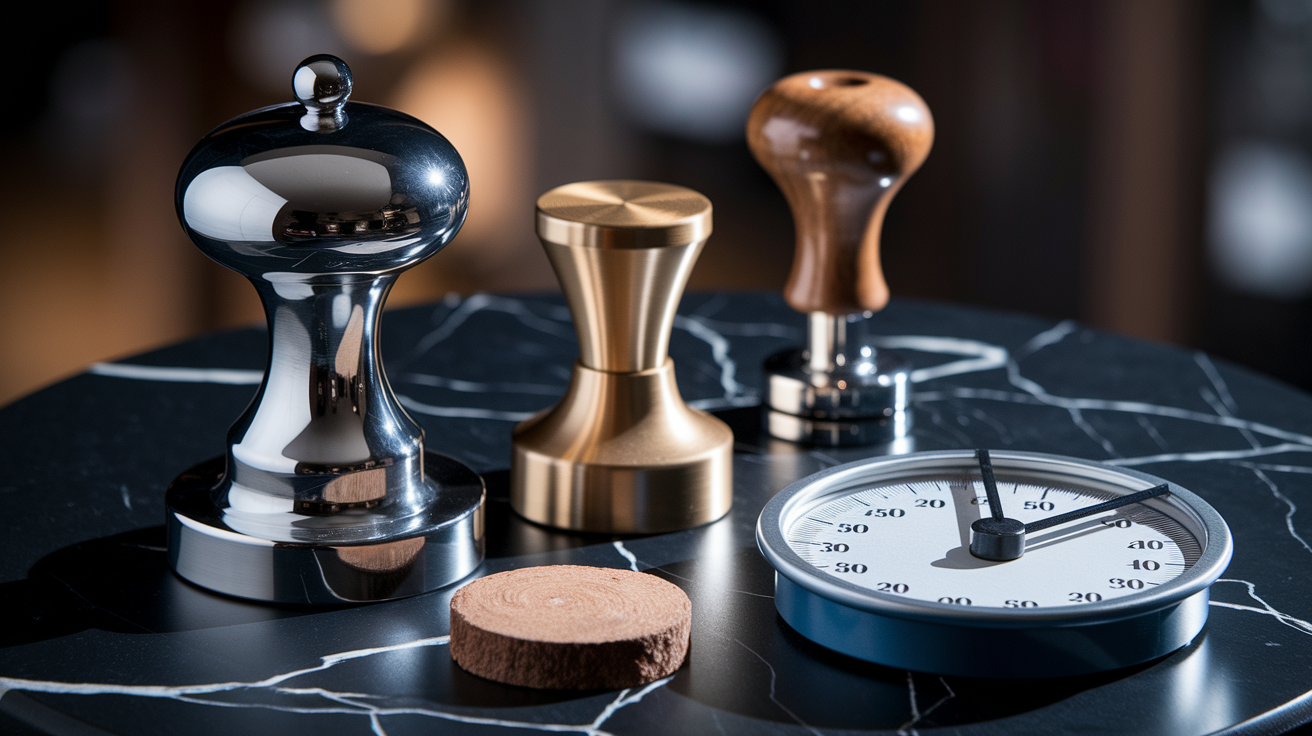
Material choice controls how your tamper performs over time, how it feels when you’re tamping, and whether you can compress the puck evenly shot after shot. Stainless steel gives you the most weight and the longest life. Aluminum is lighter and cheaper but won’t last as long. Wood handles feel warmer in your hand, though you’ll need to keep them dry.
Weight matters because you’re trying to hit around 30 pounds of tamping force. A heavier stainless base lets you lean into the tamp without fighting it. Lighter aluminum means your wrist does more work. Durability shows up fast when you’re pulling shots every day. Stainless resists scratches and stays flat for years. Aluminum can dent or oxidize unless it’s anodized. Wood stays comfortable but splits if you leave it wet.
If you’re pulling multiple shots each day, stainless proves its value. Wipe it dry and you’re done. Aluminum costs less up front and works fine for occasional home use, but surface wear and scratches show up sooner, especially on budget models without anodized protection. Wood handles paired with stainless bases give you both: the warm grip of wood combined with the reliable performance of metal. You’ll need to hand wash and oil the handle periodically to stop it from drying out or cracking. Price follows performance. Aluminum starts around $8 to $40, mid-range wood-and-stainless sits between $30 and $80, and premium stainless climbs from $80 past $250. The Pullman Big Step runs $130 to $160.
Professional baristas stick with stainless because high volume demands tools that stay flat, resist corrosion, and deliver repeatable results without babysitting. Home enthusiasts who care about ritual often pick wood-handled stainless combos for the tactile satisfaction and visual warmth. Budget-conscious or occasional users find anodized aluminum perfectly serviceable if they’re okay with shorter longevity and lighter feel. Travel setups favor compact aluminum that weighs less in a bag and won’t corrode in different climates, as long as the base is well machined and the diameter matches the portafilter basket.
| Material | Durability | Weight | Maintenance Needs | Best For |
|---|---|---|---|---|
| Stainless Steel | Highest; resists dents and long-term wear | ~350–700 g (58 mm) | Wipe dry after use; minimal care | Professionals, high-volume, long-term investment |
| Aluminum | Moderate; scratches and oxidizes faster | ~150–350 g (58 mm) | Avoid abrasive cleaners; prefer anodized | Budget buyers, travel, occasional use |
| Wood (handle + metal base) | Handle varies by species; metal base durable | Depends on base (handle adds ~30–150 g) | Hand-wash, re-oil handle every 1–6 months | Home enthusiasts, aesthetic-focused setups |
Stainless Steel Espresso Tamper Material Breakdown

Stainless steel bases, usually food-grade 304 alloy, resist corrosion, hold their machined flatness across thousands of tamps, and deliver the mass you need to apply consistent pressure without grinding your wrist. A typical 58 mm stainless tamper weighs between 350 and 700 grams. That weight becomes an advantage when you’re aiming for the recommended 30 pounds of tamping force. The tool’s own heft does part of the work, so you can focus on keeping the tamp level rather than driving downward with full arm strength. This combination of durability and useful weight explains why stainless dominates professional environments. Baristas pulling fifty or more shots per shift need a tool that stays flat, resists denting from accidental drops, and requires almost no maintenance beyond a quick wipe.
Stainless also serves as the base material for calibrated and self-leveling tampers, where internal springs or click mechanisms depend on precise, stable contact surfaces that won’t deform over time. The metal’s low thermal conductivity compared to aluminum means it stays cooler to the touch during back-to-back shots, though in practice the base temperature has no real effect on extraction since contact time is so brief. Long-term reliability is the standout trait. A well-made stainless tamper can outlast the espresso machine it was purchased with, maintaining a dead-flat contact surface that keeps puck compression even year after year.
Longevity and resistance to denting even under heavy use and accidental impacts. Optimal weight for hitting tamping pressure with less force from you. Flatness retention over years of use, which is critical for preventing channeling. Minimal maintenance. Rinse, dry, store. Professional-level reliability in high-throughput café workflows. Common use in calibrated or self-leveling tampers due to stable dimensional tolerances.
Wood Espresso Tamper Handles and Their Role in Comfort and Technique
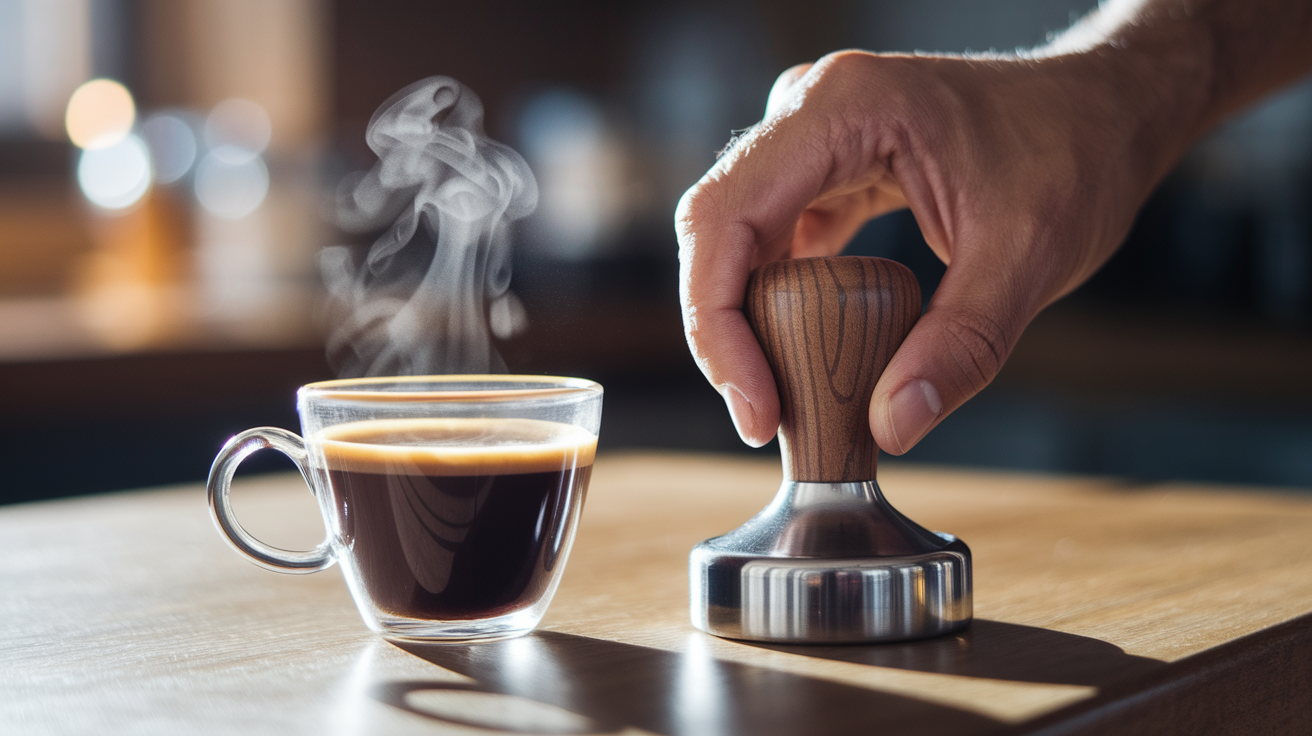
Wood handles offer the warmest tactile grip and strongest ergonomic comfort of any tamper material, which makes them popular among home baristas who value ritual and the physical feel of the brewing process. A well-shaped wooden handle conforms naturally to your palm, stays warm to the touch even during cool mornings, and provides a non-slip surface that builds confidence during the tamp. Those qualities translate into more consistent technique because your hand isn’t slipping or adjusting mid-press. Most wooden-handled tampers pair the handle with a stainless steel base to preserve extraction performance while adding aesthetic and ergonomic appeal. Many higher-end models use exotic hardwoods like walnut or maple with food-safe oil or varnish finishes that develop a subtle patina over months of use.
The trade-off is maintenance sensitivity. Wood absorbs moisture, so prolonged soaking or dishwasher cycles can cause the handle to swell, crack, or delaminate at the join with the base. Hand washing and periodic re-oiling, every one to six months depending on climate and use frequency, keep the finish protective and the wood dimensionally stable. Wood species matters too. Denser hardwoods resist wear and moisture better than softer options, and sealed finishes prevent staining from coffee oils. When you care for it properly, a wooden handle can last for years and offer a level of tactile satisfaction that stainless or aluminum simply can’t match. It turns each tamp into a small moment of craft rather than just a functional step.
Warm ergonomic grip that feels natural in your hand and reduces slipping. Requires moisture-sensitive maintenance: hand wash only, periodic oiling. Aesthetic customization options through wood species, grain patterns, and finish types. Handle durability varies by wood species. Choose dense hardwoods with sealed finishes for longevity.
Aluminum Espresso Tamper Materials for Lightweight Workflow
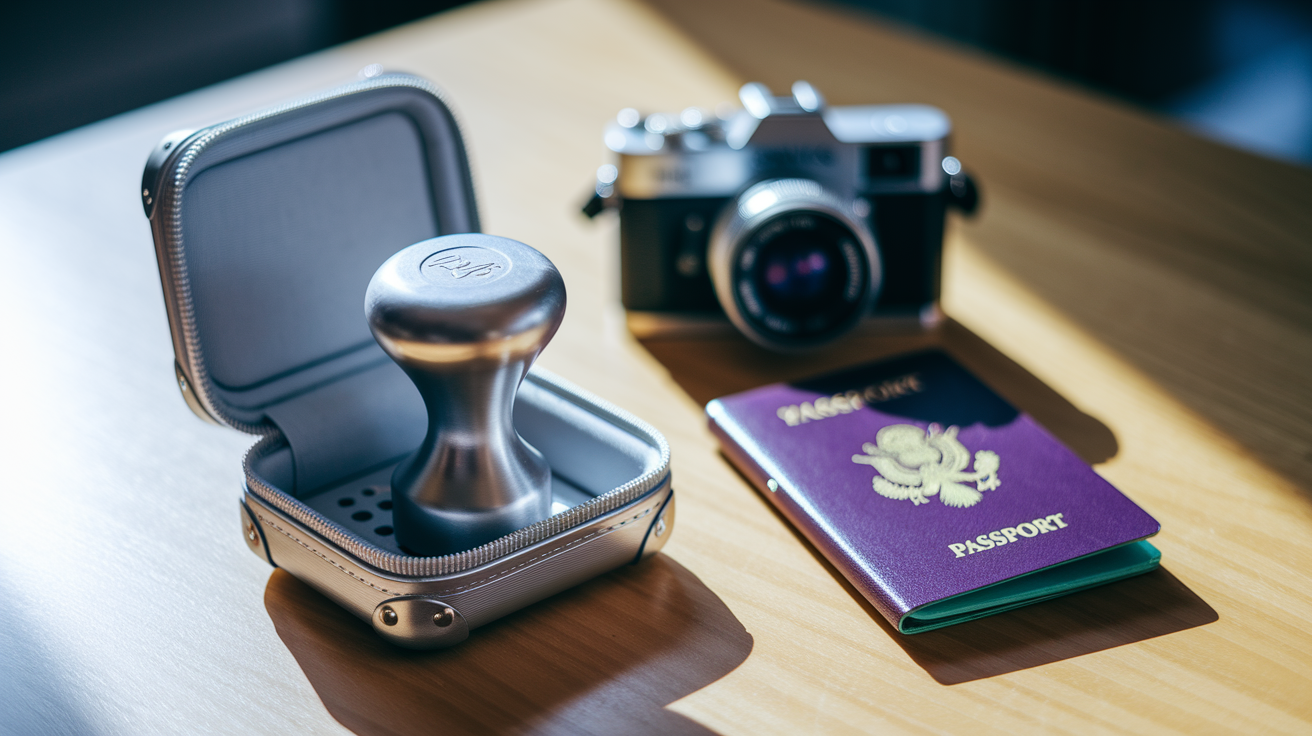
Aluminum tampers weigh roughly half what stainless models do, typically 150 to 350 grams for a 58 mm base, which makes them easier to handle during quick tamping sequences and ideal for travel setups where every ounce matters. That lighter mass also means you’ll need to apply more deliberate downward force to reach the target 30 pounds of tamping pressure, so consistency depends more on your technique and less on the tool doing part of the work. Aluminum’s high thermal conductivity causes the handle to warm or cool quickly in your hand, though the brief contact time during tamping makes this a comfort issue rather than an extraction variable.
The metal is softer than stainless steel, so untreated aluminum scratches easily and can oxidize over time, developing a dull gray patina unless protected by anodizing or powder coating. Anodized aluminum resists corrosion, reduces surface wear, and opens up color options. Many budget and mid-range tampers use anodized finishes to combine affordability with acceptable longevity. For occasional home use or as a starter tamper, aluminum delivers good value. Prices start around $8 for basic models and climb to $40 for well-machined anodized versions. The lighter weight reduces hand fatigue if you’re only pulling a few shots per week. In high-volume or professional settings, aluminum’s faster wear and lower mass make it less suitable unless you’re willing to replace the tamper more frequently.
Weight advantages for travel or mobile setups where portability matters. Risk of surface scratching and faster wear compared to stainless steel. Value-priced entry points starting under $10, accessible for beginners. Anodizing benefits: corrosion resistance, color variety, improved surface hardness. Suitability for occasional or light use. Less ideal for daily high-volume workflows.
Espresso Tamper Material Effects on Extraction Performance

Material choice doesn’t directly change the taste of your espresso. Extraction quality depends on base flatness, matched diameter to the portafilter basket, and consistent application of the recommended 30 pounds of tamping force. What material does affect is how easily you can reproduce that pressure shot after shot. A heavier stainless steel tamper uses its own mass to help you reach target force with a controlled, level push. A lighter aluminum tamper requires more deliberate effort and stable wrist control to avoid tilting the base. Wood handles improve ergonomics and grip confidence, which indirectly supports better technique, but the handle material itself doesn’t compress the coffee puck. That job belongs to the base.
Machining precision matters far more than the metal used. A perfectly flat, well-finished stainless base and a perfectly flat, well-finished aluminum base will both create even puck compression if you tamp with the same force and levelness. The difference shows up in how forgiving each material is. Stainless retains that flatness across years of drops and heavy use, while aluminum can develop small dings or wear patterns that eventually create uneven contact. Full-wood tampers (rare and typically decorative) compress and wear much faster than metal, making them unsuitable for performance-focused workflows.
| Material | Weight Influence | Ease of Consistent Pressure | Extraction Stability |
|---|---|---|---|
| Stainless Steel | High mass aids reaching target force | Easiest; weight reduces user effort | Excellent; flatness stable long-term |
| Aluminum | Low mass requires more user force | Moderate; technique-dependent | Good if anodized and well-maintained |
| Wood Handle + Steel Base | Base mass determines performance | Good; ergonomic grip supports technique | Excellent (base); handle comfort aids repeatability |
| Full-Wood Variant | Very low mass | Poor; compresses and wears quickly | Not suitable for consistent extraction |
The takeaway: invest in a flat, well-machined base in your correct basket diameter, then pick the material that best matches your budget, workflow volume, and ergonomic preferences. A cheap stainless tamper with a warped base will perform worse than a well-made aluminum tamper with a true flat surface.
Durability, Longevity, and Maintenance Differences Between Tamper Materials
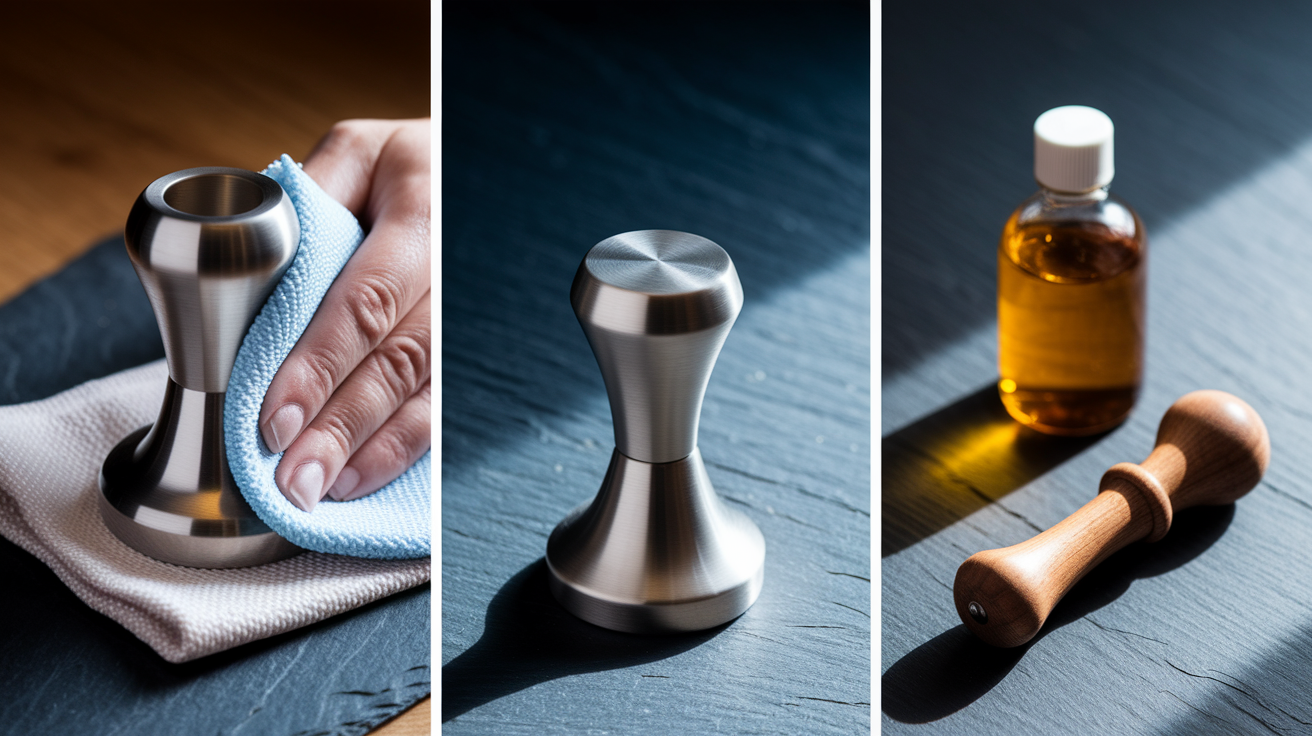
Stainless steel requires the least ongoing care. Wipe the base dry after use, store it away from standing water, and it’ll maintain corrosion-free flatness for years to decades. Food-grade 304 stainless resists rust even in humid café environments, and the metal’s hardness means daily tamping won’t deform or scratch the contact surface under normal use. Aluminum oxidizes when exposed to air and moisture, forming a dull gray layer that’s harmless but cosmetically unappealing. Anodized finishes prevent this oxidation and harden the surface to resist scratches, but abrasive cleaners or harsh detergents can strip anodizing over time. Wood handles demand the most attention. They must be hand washed and dried promptly to prevent swelling or cracking. Periodic re-oiling with food-safe mineral oil or beeswax keeps the finish protective and the grain from drying out. Expect to oil every one to six months depending on your climate’s humidity and how often you pull shots.
Longevity follows durability. A well-maintained stainless tamper can outlast multiple grinders and machines. An anodized aluminum tamper should provide several years of reliable service under home use but may show cosmetic wear sooner. A wooden handle will remain comfortable and functional as long as you keep it dry and finished. The base flatness check is material-agnostic. Annually place your tamper on a known-flat surface under good light and look for gaps or rocking. Any wobble indicates the base has worn or deformed and will cause uneven puck compression.
Wipe stainless dry after use to prevent water spots and maintain shine. Avoid abrasive cleaners on aluminum. Use mild dish soap and soft cloths. Ensure aluminum is anodized for longevity and corrosion resistance. Keep wood dry and re-oil periodically. Never soak or put in a dishwasher. Inspect base for flatness annually by checking for wobble on a flat surface. Store tampers away from humidity and direct heat to prevent finish degradation.
Cost and Value Comparison Across Espresso Tamper Materials

Aluminum tampers offer the lowest entry price, starting around $8 for basic models and topping out near $40 for well-machined anodized versions with comfortable handles. Ideal for beginners testing whether espresso is a lasting hobby or for travel setups where loss or damage is a risk. Stainless steel spans the widest price range, from budget $30 models with simple handles to premium precision pieces like the Pullman Big Step at $130 to $160, which use tight-tolerance machining and ergonomic design to fit high-end baskets from VST, IMS, and Weber. Wood-and-stainless combos typically land in the mid-range, $30 to $80, where you’re paying for both the aesthetic warmth of a hardwood handle and the reliable performance of a stainless base. Examples include the Clive Wood Tamper at $85, which balances form and function for home baristas who value ritual.
The best long-term value depends on your shot volume and upgrade timeline. If you pull espresso daily and plan to keep your machine for years, an $80 to $130 stainless tamper pays for itself through durability and consistent extraction, eliminating the need to replace cheaper models as they wear. Occasional users or those still experimenting with grind, dose, and technique can start with a $20 to $40 aluminum or basic stainless option and upgrade later once preferences solidify. Premium tampers justify their cost through precision machining, calibrated pressure mechanisms, or custom ergonomics that reduce technique variability. Features that matter most to enthusiasts chasing repeatable, café-quality shots at home.
Budget: aluminum or basic stainless ($8 to $40). Accessible entry points for beginners, travel tampers, or low-volume home use. Expect shorter lifespan and more technique dependence.
Mid-range: wood/stainless combos ($30 to $80). Balance of aesthetics, ergonomics, and performance. Suitable for home baristas who value comfort and are willing to maintain the handle.
Premium precision stainless ($80 to $250+). Highest durability, tightest machining tolerances, often includes calibrated or self-leveling features. Best for enthusiasts, prosumers, and professionals seeking long-term reliability and shot-to-shot consistency.
Selecting the Best Tamper Material for Your User Profile

Beginners benefit most from either a budget aluminum tamper to learn the motion and pressure feel without a large upfront cost, or a mid-range calibrated stainless tamper that enforces consistent pressure through a built-in click mechanism. Removes one variable while you dial in grind, dose, and distribution. The calibrated option costs more but speeds up the learning curve by guaranteeing you’re applying roughly the same force every time, letting you focus on grind adjustment and puck prep instead of worrying whether you tamped too hard or too soft. Once you’ve pulled fifty or a hundred shots and developed muscle memory, you can decide whether to stick with your starter tamper or upgrade based on comfort and workflow preferences.
Home enthusiasts who pull one to five shots per day and value the ritual of espresso should consider wood-handled stainless tampers in the $30 to $80 range. These combine the ergonomic warmth and aesthetic appeal of wood with the reliable, low-maintenance performance of a stainless base. The tactile satisfaction of a well-shaped wooden handle makes each tamp feel intentional, and the added cost over basic aluminum pays off in comfort and longevity if you commit to simple hand washing and periodic oiling. If aesthetics matter less than pure function, a solid stainless tamper in the same price range delivers maximum durability and flatness retention with zero handle maintenance.
Professionals and high-volume home setups need stainless steel tampers in the 450 to 600 gram range (for 58 mm baskets) to maintain consistency across dozens of shots per session without inducing hand or wrist fatigue. The tamper’s mass does much of the work, letting you focus on speed and levelness. Calibrated or automatic tampers (like the PUQpress Mini for commercial environments) further reduce technique variability, ensuring every puck receives identical compression regardless of who’s pulling the shot or how tired their arm is at the end of a shift. Avoid aluminum in professional settings unless it’s a backup tool. The faster wear and lighter weight make repeatability harder when throughput matters.
Beginners: budget aluminum ($8 to $30) to learn technique, or mid-range calibrated stainless ($40 to $80) to enforce consistent pressure while building skills.
Home enthusiasts: wood-handled stainless combos ($30 to $80) for ergonomic comfort and aesthetics, or solid stainless ($30 to $100) for durability and low maintenance.
Professionals: heavy stainless steel ($80 to $160) or calibrated/automatic systems for high-volume repeatability and minimal hand fatigue.
Travel/portable setups: compact anodized aluminum (under $40) for light weight, corrosion resistance, and low replacement cost if lost or damaged.
Final Words
Match the tamper to how you work. Go stainless for heavy use and steady tamp, choose a wood handle for comfort, or pick aluminum for travel and light duty.
This guide showed how material changes weight, durability, maintenance, and price. Stainless gives the easiest repeatability, aluminum saves weight and money, and wood adds grip but needs care.
Quick rule: prioritize a flat, well-machined base, then pick the material that fits your workflow, espresso tamper materials stainless steel vs wood vs aluminum. Do that, and your shots get more consistent.
FAQ
Q: Which tamper is best for espresso?
A: The best tamper for espresso is a flat, well‑machined stainless tamper that matches your basket diameter (usually 58 mm). It gives weight, durability, and consistent pressure for repeatable tamping.
Q: What is the golden rule of espresso?
A: The golden rule of espresso is to change only one variable at a time and measure the result — grind, dose, tamp, yield, or brew time — so you get consistent, repeatable shots.
Q: Is 9 bar or 15 bar better for espresso?
A: Choosing 9 bar or 15 bar depends on machine design: extraction near 9 bar is the common target for balanced flow, while 15 bar often enables pressure profiling but doesn’t guarantee better taste.
Q: Is 53.3 espresso tamper the same as 54 mm?
A: A 53.3 mm tamper is not the same as 54 mm; a 0.7 mm gap can cause uneven tamping. Use a tamper that matches your basket diameter for the best seal and consistency.