


What if your tamper is why your wrist aches after 100 shots a week?
Traditional knob handles force your wrist into a bent, twisted position and that adds up fast.
Ergonomic tampers change the angle and how force travels through your hand.
Palm tops, angled grips, spring-assist, and better weight balance lower peak force, keep your wrist neutral, and help you tamp more consistently.
Read on to see which features actually reduce strain and one simple change you can try at home right now.
Key Ergonomic Tamper Designs That Actively Reduce Wrist Strain
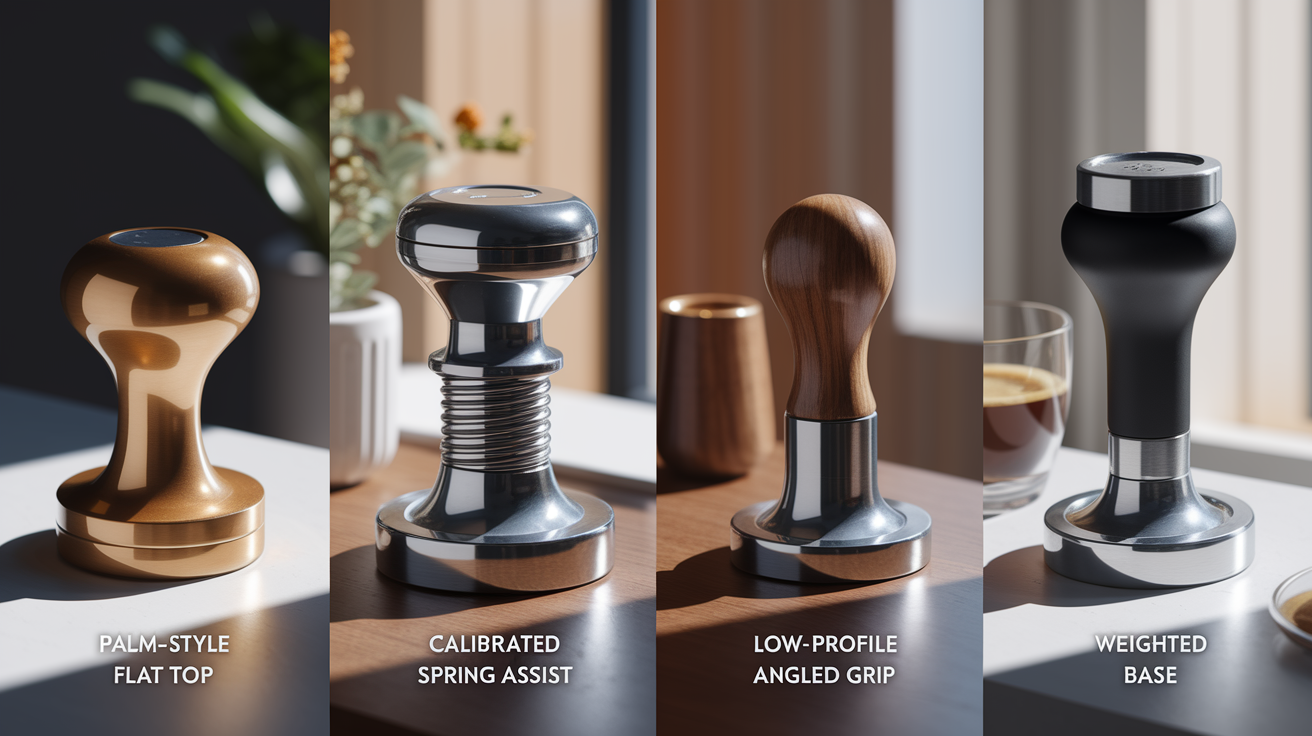
Traditional tamper handles force your wrist into an awkward flexed or rotated position to apply 10–30 lbs. of force straight down. That bent wrist angle compresses the flexor tendons running through your carpal tunnel, and over hundreds of shots per week, you’re setting yourself up for median nerve irritation and chronic wrist pain. The problem isn’t the tamping itself. It’s the angle your wrist gets stuck in while you press.
Ergonomic tamper designs solve that by changing where and how force travels through your hand. The main categories are palm style (flat top tampers like the PUSH Ergonomics tamper), calibrated spring assist devices, low profile angled grips, and weighted base tampers with improved balance. Palm style tampers use a flat “hockey puck” top so you can push straight down with your palm flat and wrist neutral. A published study from Waterloo (April 23, 2026) tested the PUSH tamper on 10 baristas and found it lowered peak tamping force by 7 percent (from 93.8 N down to 87.2 N), reduced lumbar and thoracic spine angles in all three planes, and significantly decreased upper limb injury risk compared to traditional handles. Because the flat top spreads pressure across your palm instead of concentrating it in your fingers, PUSH style tampers also let you alternate hands between shots, further cutting cumulative strain.
Five specific tamper features that reduce wrist strain:
Flat palm tops spread pressure across your entire palm and allow wrist neutral pressing.
Angled grips tilt the handle slightly to match your natural forearm alignment and reduce compensatory wrist rotation.
Calibrated pressure systems have built in springs or click mechanisms that limit peak force to safe targets (usually 15–30 lbs.) and prevent over tamping.
Weighted base designs place the center of mass low and close to the puck so gravity helps align the tamper vertically without extra wrist torque.
Low wrist angle geometry uses shorter overall height or contoured shapes that keep your wrist straighter throughout the tamp cycle.
Comparing Ergonomic Tamper Handle Shapes and Grip Styles

Tamping force travels from your shoulder through your elbow, wrist, hand, and finally into the handle. Your flexor tendons (which curl your fingers) and the median nerve share a narrow tunnel on the palm side of your wrist. When you grip a traditional knob style tamper and press down with a bent wrist, those tendons slide back and forth under increased tension while the carpal tunnel narrows. Do that motion a few hundred times per week and the nerve starts complaining.
The exact spot where stress builds depends on handle shape. A knob concentrates force into your fingertips and the webbing between thumb and index finger. A flat palm style top spreads the same 20 lbs. over a much bigger surface, so individual pressure points drop and your wrist can stay flat.
Different shapes alter wrist angle and torque in measurable ways. A classic ball or mushroom knob feels intuitive but forces most users into a cocked wrist, fingers down posture. Tapered handles (wider at the top, narrower at the base) encourage a wrap grip and can reduce side to side torque if the taper matches your hand size. Contoured ergonomic grips add curves or finger grooves to guide hand placement and discourage twisting. Palm top tampers eliminate the knob entirely, so your wrist stays neutral and force flows straight through the heel of your hand. The trade off is less tactile feedback during the polish spin at the end of the tamp.
| Handle Shape | Ergonomic Benefit | Wrist Risk Notes |
|---|---|---|
| Knob style (ball or mushroom) | Familiar feel; precise spin control | High wrist flexion; finger only force common; hot spots under thumb web |
| Palm style (flat top) | Wrist neutral pressing; spreads force across palm; reduces peak load | Less tactile polish feedback; requires relearning hand placement |
| Contoured grip (tapered or grooved) | Guides wrap grip; reduces side torque; fits range of hand sizes | Can still permit wrist bend if taper is too aggressive or too short |
Weighted Bases, Center of Mass, and Pressure Distribution for Safer Tamping
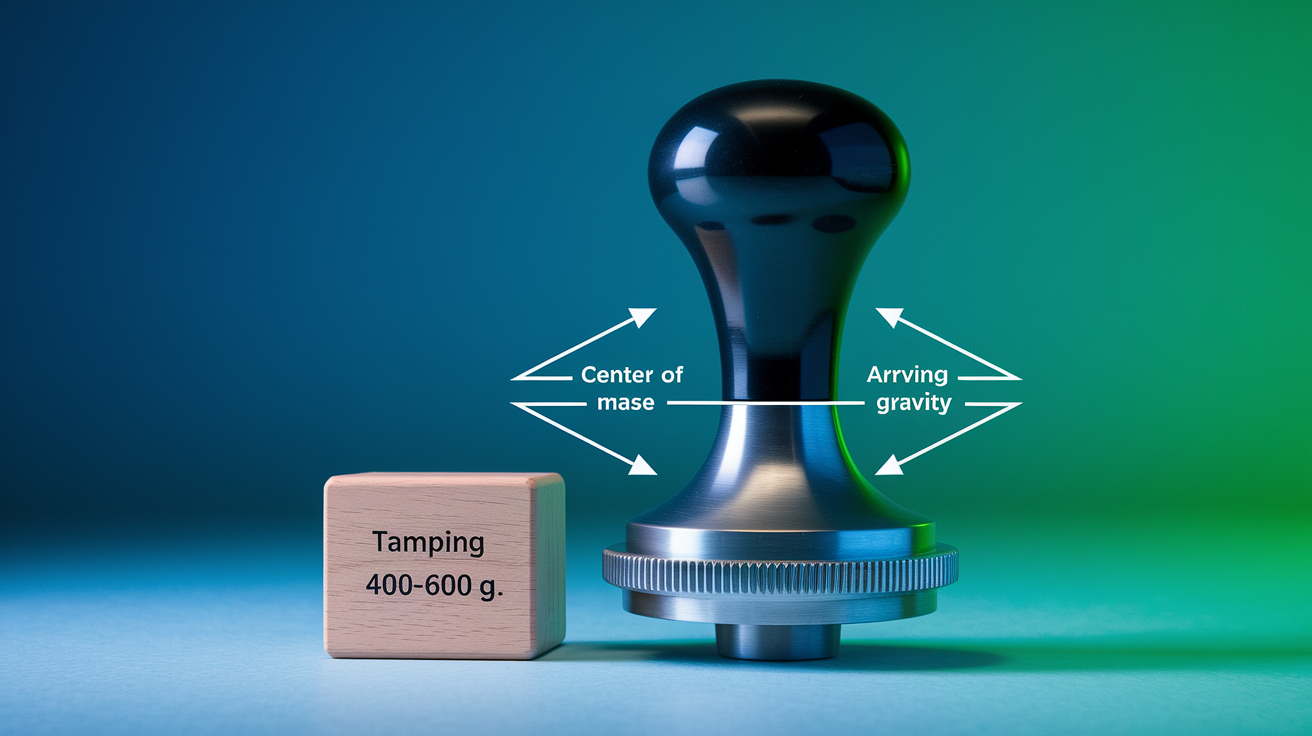
A tamper’s center of mass controls how much effort you spend keeping the base flat and aligned over the puck. If most of the weight sits high in the handle, any small tilt turns into a big wobble at the basket rim, and you end up using wrist muscles to steer and stabilize instead of just pressing straight down. That extra torque adds rotational strain on top of the vertical load. Moving the center of mass lower and closer to the piston makes the tamper want to drop straight into the basket. Gravity does the alignment work, your wrist stays quiet, and you only supply the final push.
The Waterloo study used six electromagnetic sensors to track forces and joint angles during tamping. When baristas switched to the PUSH style tamper (which has a flat, low profile top and weight balanced near the base), peak force dropped 7 percent and spinal angles improved. That force reduction matters because once you cross about 15 lbs., most of the load shifts from your fingers up to the top of the handle. If the top is narrow or poorly weighted, that 20–30 lbs. concentrates into a small contact patch and your wrist has to work harder to keep everything centered. A well balanced tamper weighs enough to feel stable (usually 400–600 grams total) but not so heavy that the mass itself becomes a repetitive load on your shoulder.
Safe tamper weight sits in the 400–700 gram range for most home setups. Lighter tampers (under 350 grams) feel nimble but can drift during the press, forcing micro corrections that add up over dozens of shots. Heavier tampers (over 750 grams) reduce drift but increase the cumulative load on your shoulder and elbow, especially if your counter is too high. The sweet spot combines moderate weight with a low center of mass. Stable distribution prevents the tamper from rolling or twisting in your hand, so you don’t over rotate your wrist to compensate and you can release cleanly after each tamp without fighting the tool.
Calibrated and Spring Assisted Tamping Devices for Wrist Relief
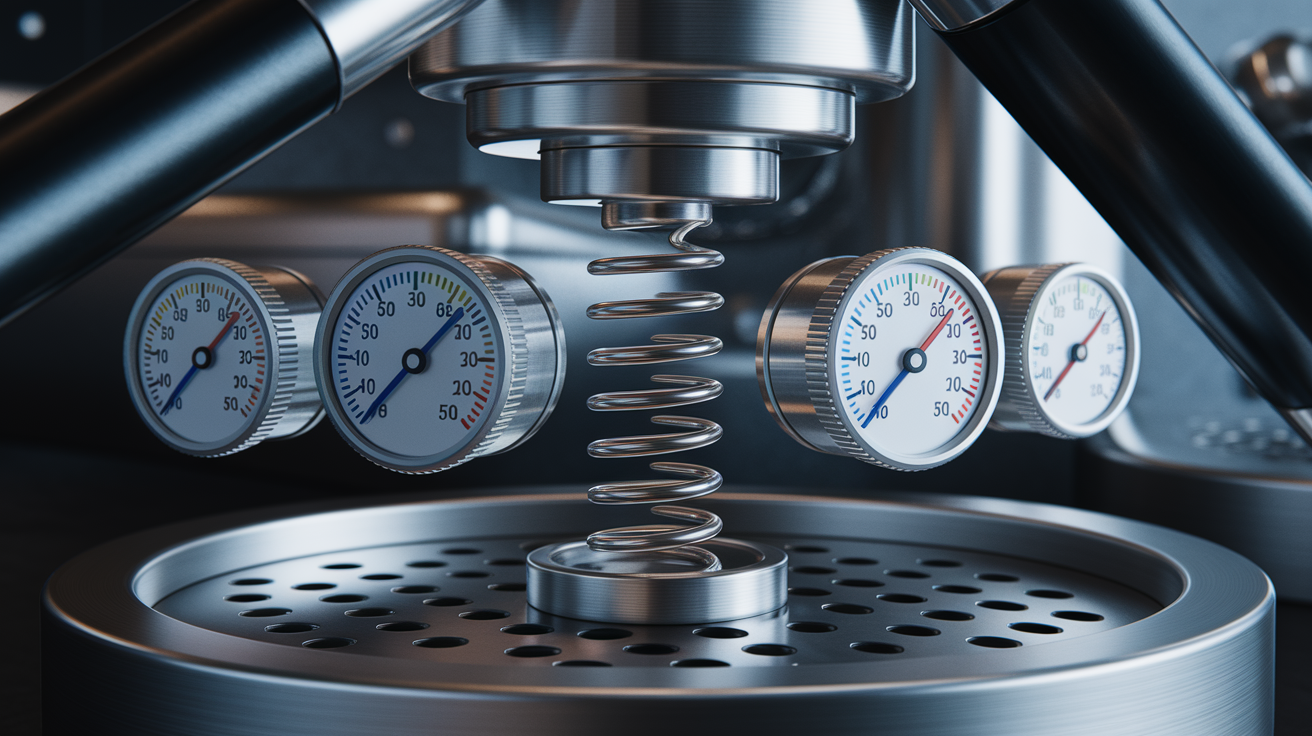
Calibrated and spring assisted tampers cap the maximum force you can apply, so even if you push hard out of habit, the mechanism clicks or compresses at a preset threshold (typically 15, 20, or 30 lbs.). That ceiling protects your wrist by eliminating the over tamp reflex. When you know the device will stop or signal at the right pressure, you relax your grip and let the spring do the final work instead of white knuckling the handle. The New Study Finds Push Tampers… research confirms that reducing peak tamping force by even 7 percent measurably lowers injury risk. Spring assist devices typically cut peak load by 10–20 percent because the spring absorbs part of the compressive shock and spreads it over a slightly longer time.
Traditional manual tamping asks you to judge 10–30 lbs. by feel, shot after shot. Most people guess high to avoid under extraction, which drives flexor tendon stress upward. A calibrated tamper gives instant feedback, either a click, a color change ring, or a depth stop, so you learn the correct pressure through repetition without risking chronic overload. Some models include a visible gauge or LED; others rely on tactile resistance. Either way, the training effect is the same. Your nervous system builds a reliable force map, your grip softens, and wrist strain drops.
Four wrist relief tamping devices to consider:
Calibrated tampers have a fixed spring inside the handle that compresses at a factory set threshold (common targets are 15, 20, 30 lbs.). An audible or tactile click confirms target pressure, prevents accidental over tamping and reduces peak wrist load.
Spring assist tampers use a coil spring between handle and base to absorb initial force and smooth pressure application. This lowers peak impact on tendons and maintains vertical alignment through compression travel.
Pressure gauge training devices incorporate an inline force sensor with digital or analog readout. Use during practice sessions to calibrate your natural press, then remove once muscle memory is dialed. Helps identify if you’re consistently pushing too hard.
Hybrid manual assist mechanisms combine a calibrated spring with a traditional top or palm plate. The click confirms target pressure while retaining manual control for polish spin, bridging the gap between full automation and pure manual technique.
Proper Wrist Alignment and Low Strain Tamping Technique

Keeping your wrist neutral during the tamp means your forearm, wrist, and knuckles form a straight line when viewed from the side. In that posture, the flexor tendons glide smoothly and the carpal tunnel stays open. The Waterloo study measured lumbar, thoracic, and upper limb angles with six electromagnetic sensors and found that baristas using ergonomic tampers held significantly smaller (safer) spinal and wrist angles across all three movement planes. Traditional bent wrist tamping collapses that straight line, pinching the median nerve and compressing tendons against the carpal ligament. The fix is technique, not just gear.
Start the tamp with light finger pressure to center the base in the basket. Your fingers guide alignment while your wrist stays flat. Once the piston touches the coffee, shift your hand into a wrap or full palm grip and press vertically. Let your shoulder and body weight supply the force. Your wrist is just the hinge, not the engine. Many baristas bend forward and push with their chest instead of curling their wrist down. That posture change alone drops wrist flexion by 10–20 degrees. At the end of the press, release pressure gradually and add a quick spin or polish with your fingertips, keeping wrist rotation minimal. For lighter tamp targets (under 20 lbs.), most force can stay in your fingers at the base without needing a full palm press.
Four wrist neutral tamping cues:
Check forearm to knuckle alignment. Hold your tamper at counter height and look in a mirror or take a quick photo from the side. Your wrist should form a straight continuation of your forearm, not a bent “L” shape.
Measure wrist angle with a smartphone clinometer app. Place your phone along the back of your hand during a practice tamp. Safe wrist extension is under 15 degrees; anything over 25 degrees raises injury risk.
Ensure knuckle clearance above the counter. If your knuckles graze the counter when the piston is fully inserted, your wrist is forced into flexion. Raise the portafilter with a tamping mat or lower your counter (or step onto a low platform).
Use progressive force, not a single jab. Apply 30–50 percent pressure to settle the puck, pause, then ramp to full tamp weight. The gradual ramp lets you self correct alignment before peak load and reduces tendon shock.
Workspace Setup and Counter Height Factors That Influence Tamping Comfort

Counter height dictates elbow angle, shoulder position, and how much your wrist has to bend to reach the portafilter. A counter that’s too high forces your elbows up and out, creating an acute angle at the elbow joint and rotating your shoulders forward. That posture compresses the ulnar nerve where it passes through the cubital tunnel at your elbow and can show up as tingling in your pinkie and ring finger within a few months of daily tamping. A counter that’s too low makes you hunch and reach down, shifting the strain into your lower back and forcing wrist extension to keep the tamper vertical. One fixed counter height can’t safely fit all body sizes, so either the counter needs to adjust or you do.
Ideal tamping height places the top of the portafilter roughly at your hip bone when you’re standing upright. In that position, your elbow hangs near 90 degrees, your wrist stays flat, and your shoulder stays relaxed. If you can’t change your counter, use a thick tamping mat or a raised portafilter stand to lift the basket closer to that sweet spot. Anti slip tamping stations with rubberized bases prevent the portafilter from sliding during the press, so you don’t waste grip strength stabilizing the handle. Clamp mounted tamping jigs lock the portafilter in place and let you tamp one handed if wrist pain is already present, though most home setups won’t need that level of immobilization.
Three workspace accessories that reduce tamping strain:
Tamping mats are thick silicone or rubber pads (10–20 mm) that raise portafilter height and cushion counter impact. Choose mats with edge lips to catch loose grounds and prevent portafilter drift.
Portafilter stands or cradles are fixed angle holders that lock basket orientation and height. Particularly useful for users with limited grip strength or pre existing wrist issues.
Clamp mounted tamping jigs bolt to counter edge and secure portafilter with a spring clamp. They allow single hand tamping and eliminate all stabilization effort. Overkill for most home users but valuable during injury recovery.
Material Choices and Handle Textures That Improve Grip and Reduce Fatigue
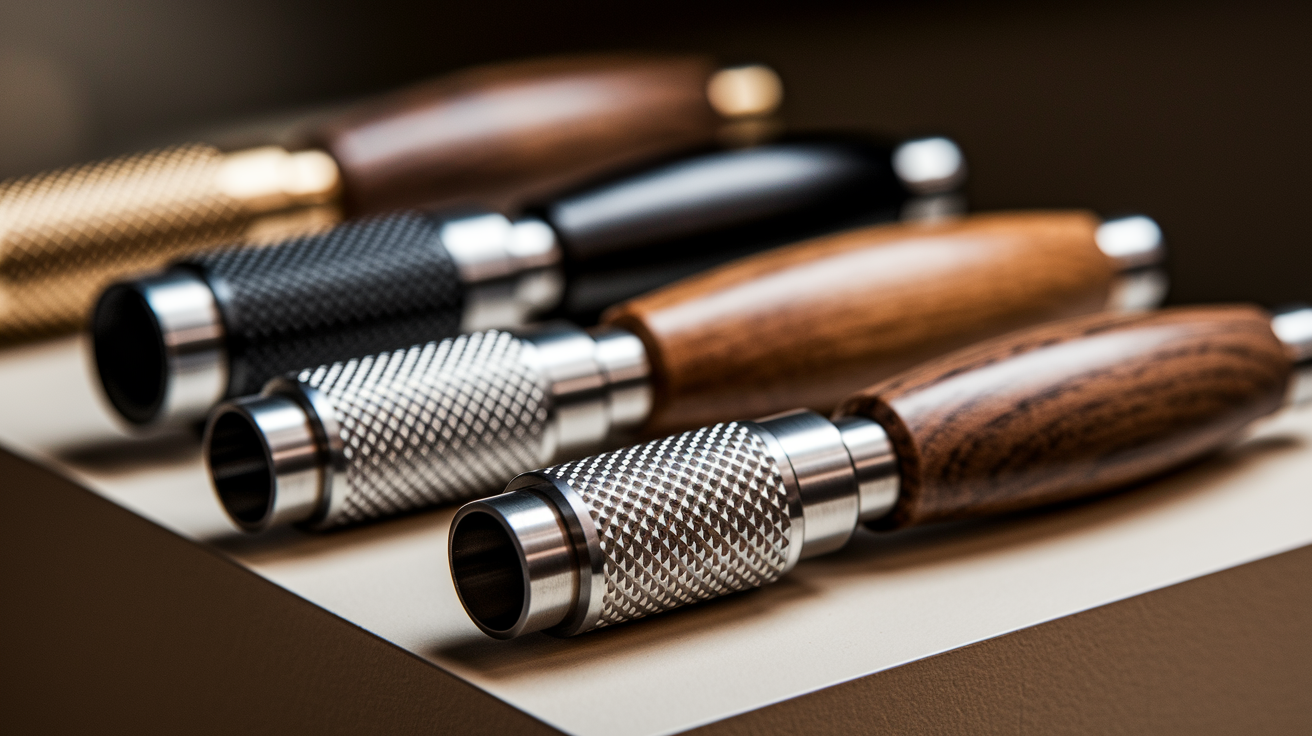
The material and surface finish of a tamper handle control how securely you can hold it and how much force your hand has to generate to prevent slipping. Smooth stainless steel or polished aluminum look clean but offer almost no friction when wet or oily. That lack of grip makes you squeeze harder, which tires your forearm flexors and increases tendon stress. Adding texture, either through knurling, powder coating, rubberized inserts, or a wooden surface, lets you maintain the same control with a lighter grip. A lighter grip means less cumulative fatigue and lower risk of trigger finger or flexor tendinitis over hundreds of tamps.
Wood handles (walnut, maple, rosewood) provide natural friction and a softer tactile feel than metal. They also insulate your hand from temperature swings if the tamper sits near the group head. The downside is that wood can absorb oils and water, so it needs occasional cleaning and light oiling to prevent cracking. Stainless steel and aluminum are durable and easy to wipe down, but they conduct heat and cold, which can be uncomfortable during long sessions. Powder coated or anodized finishes add a thin layer of texture and color without changing the underlying material’s weight or balance. Knurled metal (diagonal cross hatching) gives excellent grip but can feel aggressive against bare skin; most users prefer a medium knurl depth. The PUSH flat top tamper uses a broad, lightly textured surface to spread palm pressure comfortably without any sharp edges or hot spots.
| Material | Grip Quality | Comfort Notes |
|---|---|---|
| Stainless steel (polished) | Low friction; can slip when wet | Cold to touch; requires firm grip; easy to clean; very durable |
| Wood (walnut, maple, etc.) | Moderate natural friction; warm feel | Absorbs oils; needs periodic maintenance; insulates against temperature; softer tactile feedback |
| Knurled or textured metal | High friction; secure even with light grip | Can feel rough on bare skin; excellent control; may trap coffee oils in grooves |
Portafilter Size Compatibility and How It Influences Ergonomic Tamping
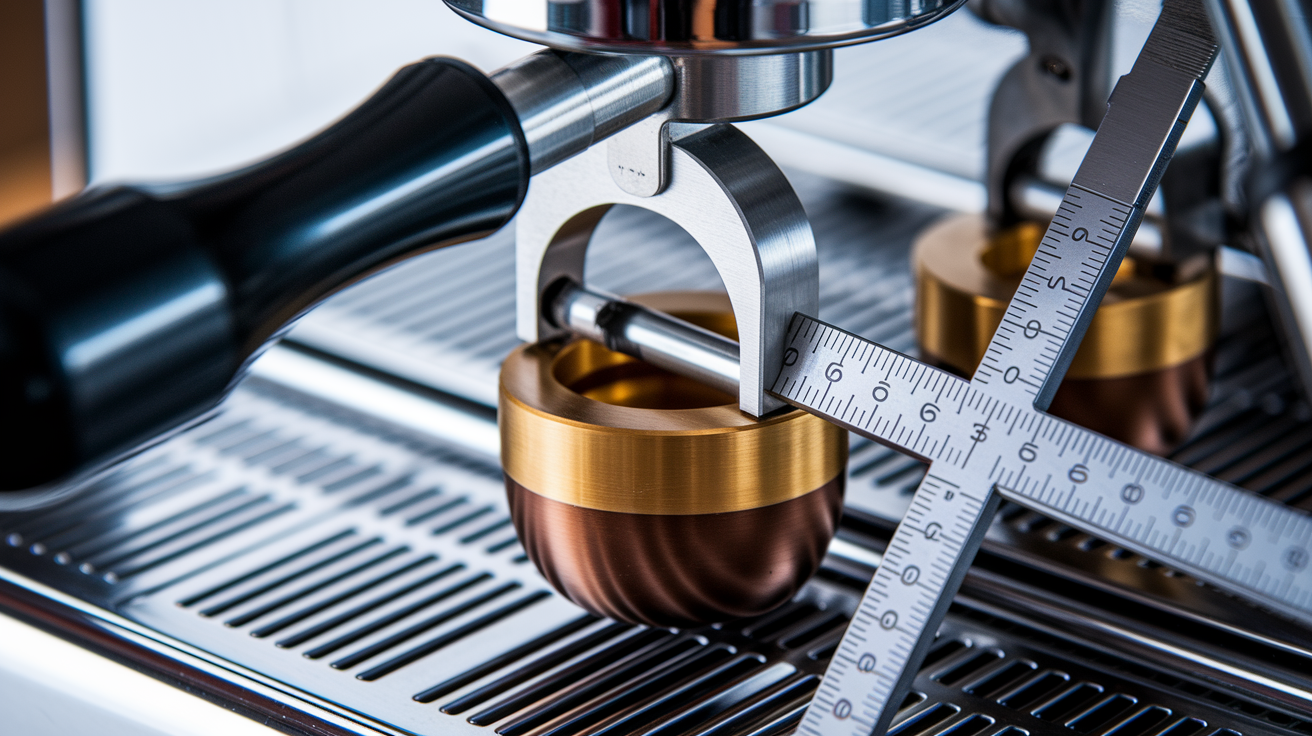
A tamper base that doesn’t fit your portafilter basket precisely forces you into compensatory wrist movements every single tamp. If the base is too small, you’ll tilt and steer to cover the edges of the puck, adding rotational strain. If it’s even slightly too large, it won’t drop into the basket at all, and you’ll press at an angle or resort to rocking the tamper side to side. Both scenarios replace smooth vertical pressing with repeated micro corrections that accumulate as wrist fatigue and eventual pain. Precision fit (within 0.1–0.2 mm of your basket’s inner diameter) is the difference between effortless alignment and constant steering.
Most home espresso machines use 58 mm portafilters, but basket dimensions vary by manufacturer and model. Some aftermarket “precision” baskets measure 58.3 or 58.5 mm, and a few run slightly under 58 mm. Check your basket with calipers or consult the manufacturer’s spec before buying a tamper. Adjustable diameter tampers exist but add mechanical complexity and can introduce wobble. A single well fit fixed diameter base is simpler, more stable, and reduces the risk that alignment errors will force your wrist out of neutral during the critical first few seconds of the tamp when you’re settling the puck and establishing vertical pressure.
User Feedback and Case Studies on Wrist Relief After Switching Tampers

Home baristas who switched from traditional knob style tampers to ergonomic designs consistently report noticeable wrist relief within the first week, especially when pulling multiple back to back shots. The 2026 Waterloo study provided controlled, sensor based confirmation of what many users already felt: flatter wrist angles, lower peak force, and less day after soreness. PUSH style tampers, in particular, allow users to alternate hands between shots, which spreads cumulative load across both wrists instead of overloading the dominant side. One semi professional home user reported that after six months of twice daily four shot sessions, chronic thumb web pain disappeared entirely once they moved to a flat palm tamper and calibrated their tamp pressure down to 20 lbs.
Professional baristas contributing feedback noted that ergonomic tampers don’t just reduce pain. They also improve shot to shot consistency because the tools encourage repeatable technique. When your wrist isn’t fighting the handle to stay aligned, it’s easier to apply the same vertical pressure every time. A Sydney café reported that after equipping their bar with palm top tampers and raising counter height by 5 cm, two baristas who had been experiencing early carpal tunnel symptoms saw measurable symptom reduction within three months, confirmed by follow up nerve conduction testing arranged through their occupational health provider.
Three commonly reported improvements after switching to ergonomic tampers:
Elimination of post shift wrist stiffness. Users report waking up without the tight, sore feeling in the flexor tendons that used to appear after heavy tamp days.
Ability to tamp longer sessions without breaks. Home users pulling 6–10 shots in a row for weekend guests no longer need to pause and shake out their wrists mid session.
Reduced compensatory shoulder and neck tension. When wrist posture improves, the body stops recruiting shoulder and neck muscles to stabilize the arm, leading to less overall upper body fatigue.
Buyer Checklist: Choosing the Right Ergonomic Tamper for Your Home Setup

Start by measuring your portafilter basket’s inner diameter with calipers and confirming your counter height relative to your hip when standing upright. Those two numbers determine whether a tamper will fit your basket and whether your workspace allows neutral wrist posture. Next, decide whether you’re willing to relearn tamping technique. Palm style tampers like the PUSH Ergonomics model deliver measurable ergonomic benefits but require a different hand placement and eliminate the traditional polish spin. If you prefer a familiar grip feel, look for contoured or calibrated handle designs that preserve the knob style top while adding wrist friendly features like angled grips or spring assist mechanisms.
Check whether the tamper’s handle height and diameter match your hand size. Custom Tamper Handle Considerations explains that handles too short force finger only pressing or bent wrist postures, while handles too long shift force to the top and increase tendon stress. Wrap your hand around the handle (or measure your palm width) and confirm that your fingers can comfortably reach the base while the heel of your thumb contacts the top without forcing your wrist into flexion. Weight balance matters. Lift the tamper and let it hang loosely in your hand. The base should want to drop straight down, not tilt to one side. If the center of mass feels top heavy, you’ll spend extra effort stabilizing it during every tamp.
Finally, compare tested designs to unverified marketing claims. The PUSH tamper has published study data showing a 7 percent reduction in peak force, smaller spine angles, and lower upper limb injury risk across multiple users. The Titan ET58 and similar spring calibrated models also show measurable force reductions. Generic ergonomic tampers without independent testing may still be comfortable, but you’re relying on subjective feel rather than biomechanical validation. If wrist pain is already present, prioritize designs with peer reviewed ergonomic research or endorsements from occupational health professionals.
Six essential criteria for choosing an ergonomic tamper:
Precise basket fit. Measure your portafilter basket inner diameter with calipers and select a tamper base within 0.1–0.2 mm of that measurement to ensure drop in alignment and eliminate steering corrections.
Handle height and diameter matched to your hand. Confirm that your fingers reach the base comfortably while your thumb heel contacts the top without forcing wrist flexion. Try a wrap grip to test full hand control.
Low center of mass and stable weight distribution. Lift and release the tamper loosely. The base should drop straight and not tilt. Total weight between 400–700 grams balances stability and reduced shoulder load.
Wrist neutral geometry. Choose flat palm tops, angled grips, or contoured shapes that permit forearm to knuckle alignment under 15 degrees of wrist extension during full tamp pressure.
Calibrated or spring assist pressure control (optional but helpful). If you tend to over tamp or are recovering from wrist injury, a built in click or compression stop caps peak force and trains consistent pressure without trial and error.
Validated ergonomic testing or professional endorsement. Prioritize tampers with published biomechanical studies, occupational health reviews, or collaboration with independent ergonomics experts. Measurable force and angle reductions confirm real world wrist protection.
Final Words
You’ve seen what causes wrist pain and what to change: handle shape, flat-palm tops, weight balance, calibrated or spring-assist options, technique, and counter height.
Pick one thing and test it for a week. Try a palm-style or PUSH tamper, or adjust counter height, and note how your wrist feels.
If you want to start small, swap to a tamper with a flat-palm top and proper weight. That often makes the biggest difference.
Try focusing on ergonomic tamper designs to reduce wrist strain for home baristas, and you’ll pull shots with less ache and more confidence.
FAQ
Q: What causes wrist strain when using traditional tampers?
A: Wrist strain from traditional tampers happens because they force wrist flexion and finger-only pressure, concentrating force on flexor tendons and encouraging bent-wrist posture that repeats over many shots.
Q: Which tamper designs reduce wrist strain and which is best for wrist pain?
A: Tamper designs that reduce wrist strain include palm-style, calibrated, angled, and low-profile tampers; palm-style (palm-down motion) is often best for wrist pain because it keeps the wrist flat and neutral.
Q: How do PUSH-style and palm-pressure tampers help reduce wrist strain?
A: PUSH-style and palm-pressure tampers reduce wrist strain by enabling a palm-down motion, lowering peak force and improving posture—see PUSH Ergonomics for the tested design and benefits (https://clockworkespresso.com/pages/push-ergonomics).
Q: Which tamper features specifically reduce wrist strain?
A: Tamper features that reduce wrist strain include flat-palm tops, angled grips, calibrated pressure limits, weighted balance for stability, and low-wrist-angle geometry that keeps the wrist neutral.
Q: How does tamper handle shape affect wrist posture and fatigue?
A: Tamper handle shape affects where tendon stress builds; correct diameter, length, and a contoured top let you use a full grip, reduce torque, and avoid finger-only tamping that tires the hand.
Q: How should tamper weight and balance be chosen to lower wrist load?
A: Tamper weight and center-of-mass should stabilize the portafilter without forcing extra force; choose a moderately weighted, well-balanced tamper so pressure stays vertical and you don’t over-rotate or compensate with your wrist.
Q: How do calibrated and spring-assisted tampers relieve wrist strain?
A: Calibrated and spring-assisted tampers relieve wrist strain by limiting peak pressure, promoting consistent force, and keeping alignment; studies report lower peak loads and less repetitive tendon stress (see study link: https://sprudge.com/new-study-finds-push-tampers-significantly-decrease-risk-of-injury-127879.html).
Q: What tamping technique prevents wrist strain?
A: Proper technique that prevents wrist strain uses a vertical, flat-wrist posture, progressive-force tamping, and a wrap grip for stability—start with small force, check the puck, then add finishing pressure.
Q: How should my workspace and counter height be set to reduce tamping strain?
A: Workspace should position the portafilter so your forearms are roughly parallel to the floor and elbows near 90 degrees, with anti-slip mat and reachable station to avoid shoulder or wrist elevation.
Q: How do material and handle textures affect grip and fatigue?
A: Handle materials and textures affect control and comfort: knurled or textured grips reduce slippage, wood gives softer feel, and metal conducts heat—pick a texture that lets you hold the tamper without squeezing.
Q: Does portafilter size and fit matter for tamping ergonomics?
A: Portafilter size matters because misfit diameters force tiny wrist corrections; use a tamper that matches your basket diameter precisely to avoid repetitive tilt and micro-adjustments.
Q: Will switching to an ergonomic tamper reduce my wrist pain?
A: Switching to an ergonomic tamper often reduces wrist pain—users report less peak force, better posture, and the option to alternate hands; studies and case reports show measurable improvements after switching.
Q: What should I check when buying an ergonomic tamper for home use?
A: When buying an ergonomic tamper, check handle height/shape for your hand, weight and center-of-mass balance, portafilter compatibility, grip texture, and any independent testing or validation of injury reduction.